What Is Vocal Culture?
A practical guide to voice development, vocal technique, modulation, range, resonance, diction and expressive singing — and how these ideas connect in modern vocal training.

Vocal culture is structured practice used to develop awareness and control of the voice. For singers, it can include breathing, warm-ups, pitch, resonance, range, flexibility, diction, tone, modulation and expressive singing.
What Is Vocal Culture?
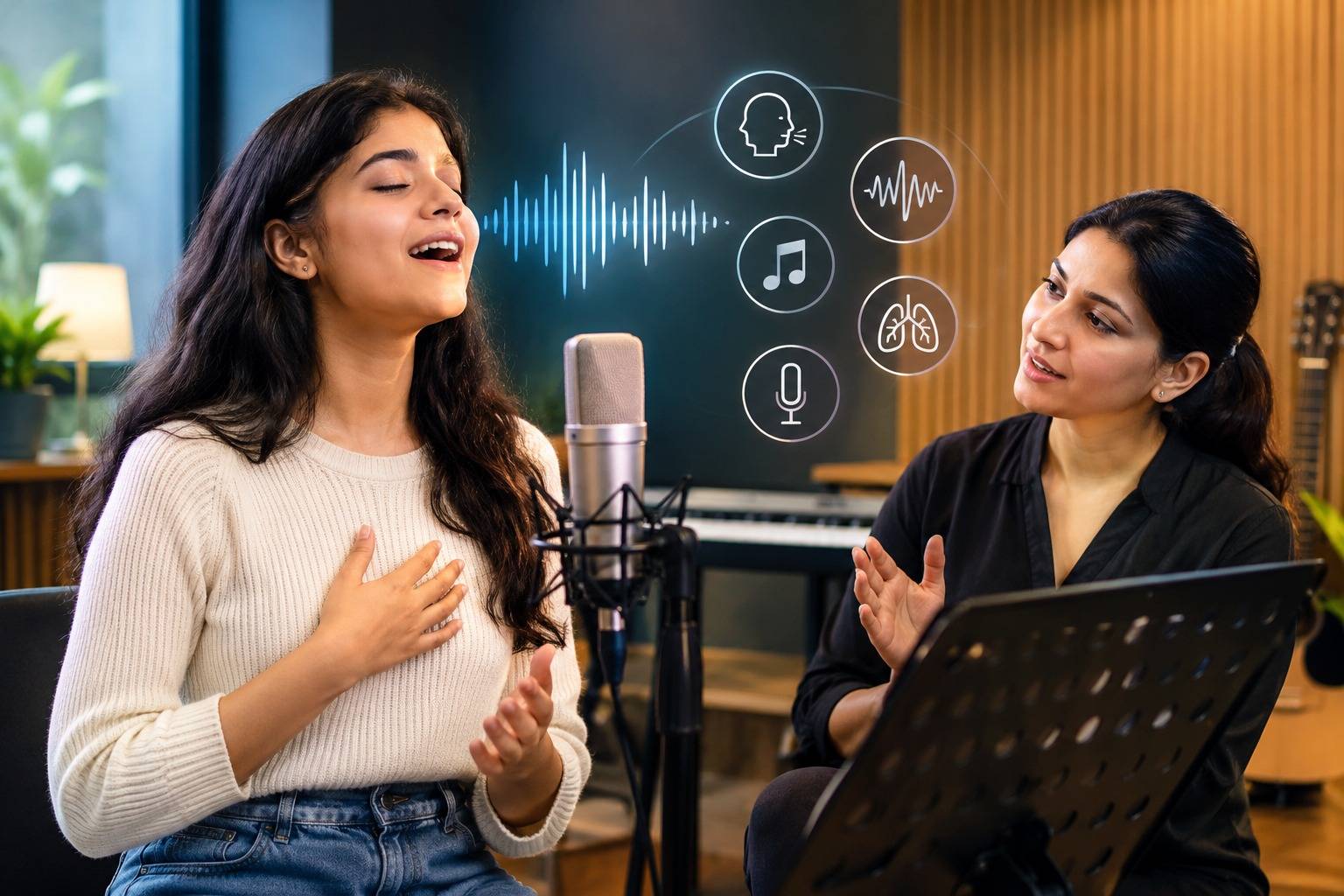
Vocal culture is the systematic practice of developing the voice so that a learner can use it with greater awareness, consistency, control and expression. In singing, the idea can cover breath management, warm-ups, pitch, tone, resonance, vocal range, flexibility, diction and expressive delivery.
The exact curriculum varies between teachers and schools. Some programs use the term voice culture, while others combine it with singing technique, vocal training, voice modulation, diction, performance or microphone work.
Vocal Culture vs Voice Modulation: What Is the Difference?
These terms overlap, but they point to different parts of the learning process.
Vocal Culture
Think of vocal culture as the broader development of the singing voice: breath, warm-ups, pitch, tone, resonance, range, flexibility, diction and technique.
Voice Modulation
Modulation focuses on how the voice changes in pitch, tone, pace, emphasis, dynamics and expression to suit a song, character or communication context.
“Build the instrument first. Then learn how to control and express with it.”
What Does Vocal Culture Training Include?
Build awareness of breathing and controlled airflow during vocal practice and singing.
Create a repeatable warm-up routine using appropriate exercises before practice or performance.
Develop note awareness and more consistent pitch control through guided practice.
Explore lower, middle and higher registers progressively rather than forcing extreme notes.
Explore tone quality, resonance and the way vocal placement affects perceived sound.
Improve clarity of words and lyrics so that musical expression remains understandable.
Vocal Flexibility
Flexibility work can help a singer move more smoothly through patterns and changes in pitch, depending on the learner's voice and training approach.
Expression & Dynamics
Singing is not only about accuracy. Changes in intensity, phrasing, tone colour and delivery shape musical expression and interpretation.
Why Is Vocal Culture Important for Singers?
A structured vocal practice routine gives singers a framework for understanding and developing their voice. Instead of treating every song as a separate challenge, students can work on repeatable skills such as breath awareness, pitch, tone, range, diction and expressive control.
- Better awareness of breath and vocal coordination.
- More organised practice habits.
- Greater attention to pitch and tonal consistency.
- Progressive work on range and vocal flexibility.
- Clearer diction and more intentional expression.
- Better preparation for performance and microphone work.
Who Can Learn Vocal Culture?
Vocal culture can fit different learning goals because the emphasis can be adapted to the student. A beginner may need foundational exercises, while a performer may spend more time on expression, microphone use and performance application.

What Types of Vocal and Voice Courses Are Available?
Course names vary across academies and training schools. You may see several overlapping terms, so read the curriculum rather than relying on the title alone.
Vocal Culture for Singers
These programs generally focus on vocal development, breathing, range, flexibility, pitch, tone and singing technique.
Voice Modulation Courses
These focus more directly on pitch variation, tone, pace, emphasis, expression, pronunciation and controlled delivery. They can be useful for singing as well as acting, voice-over, anchoring or presentation.
Voice Training Courses
A broader label that may combine voice improvement, diction, modulation, expression and professional communication.
Voice-Over, Dubbing & Voice Acting Training
These may add narration, script interpretation, microphone technique, dubbing and recording practice to general voice skills.
Classical Vocal Training
Classical programs can combine voice development with swaras, alankars, raga-based learning, compositions and performance practice.
Can You Learn Vocal Culture Online?
Yes. Online vocal and voice-training programs can be structured around live instruction, guided exercises, practice review and remote performance application.
Online learning is especially useful for students who are outside Mumbai or who need flexible scheduling. A quiet practice environment, suitable camera framing, stable internet and consistent practice can make remote lessons more useful.
What Should You Look for in a Vocal Culture Course?
Look at the actual syllabus. Two courses may both call themselves a “voice modulation course” while having very different objectives.
A useful learning pathway
Voice assessment → breathing → warm-up → pitch → resonance → range → diction → modulation → expression → practice → performance
Check these details
- Beginner, intermediate or advanced level
- Online, offline or hybrid format
- Private or group training
- Classical, contemporary or multi-genre focus
- Practice and performance components
Vocal Culture for Playback and Bollywood Singing
Playback singing demands more than accurate notes. Singers may need to work on expression, interpretation, modulation, diction, microphone handling and adapting the vocal delivery to the musical context.
SoulFul Musik Academy's Playback Singing Course connects vocal training with breathing, pitch, tone, modulation, expression and studio recording skills. Vocal culture can therefore act as a foundation and supporting topic rather than a replacement for specialised playback training.
Vocal Culture in Mumbai, India and Online
Students searching for vocal culture classes, voice training or voice modulation courses should match the course to their goal. A singer may need deeper vocal technique and musical practice, while an actor or voice artist may prioritise diction, projection and expressive delivery.
SoulFul Musik Academy operates from Goregaon East and Malad East, Mumbai, while its broader online learning model can support students outside the immediate local area.
Frequently Asked Questions
What is vocal culture?
Vocal culture is structured practice designed to improve control, quality, flexibility, technique and expression of the voice, particularly for singing.
Is vocal culture the same as voice modulation?
No. They overlap, but vocal culture is generally broader voice development, while modulation focuses on changing and controlling vocal delivery.
Is vocal culture only for singers?
No. Singers are a major audience, while related voice-training programs can also serve actors, presenters, voice artists and other professional voice users.
Can beginners learn vocal culture?
Yes. Beginners can start with structured breathing, warm-ups, pitch awareness, basic vocal exercises and progressive practice.
Can vocal culture improve vocal range?
Range-development exercises are commonly included in vocal training, but progress differs between individuals and should be approached progressively.
Can I learn vocal culture online?
Yes. Online vocal and voice-training formats are available, including individual and workshop-based learning.
What is a voice modulation course?
A voice modulation course generally teaches controlled changes in pitch, tone, pace, emphasis, dynamics and expression for singing or other professional voice use.
What does vocal training include?
Depending on the program, vocal training can include breathing, warm-ups, pitch, resonance, range, diction, flexibility, modulation and performance application.
Move from understanding your voice to training it.
Explore SoulFul Musik Academy's dedicated Vocal Culture & Voice Modulation Course for structured learning in Mumbai or online.
Explore the Course