
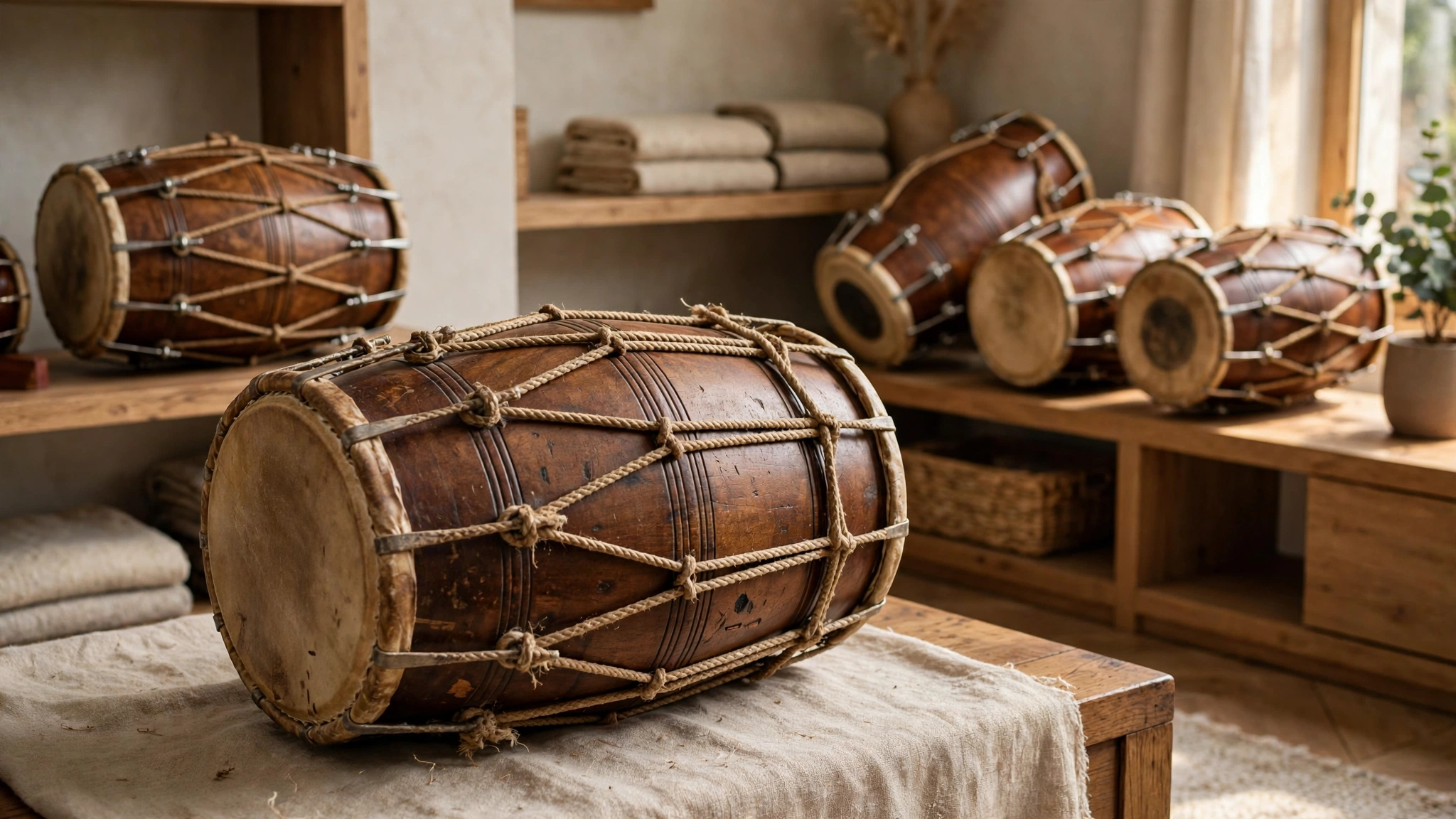
What Is a Dhol?
History, Structure, Sound and Uses
Discover the traditional Dhol through its history, construction, powerful sound, playing approach and role in Indian music, festivals, cultural celebrations and modern performances.
A Dhol is a large double-headed drum traditionally made with a resonant wooden body and played with sticks. Different regional traditions can vary in construction, tuning, playing technique and musical context.
The Dhol is one of the most recognizable large percussion instruments associated with South Asian musical culture. Its deep resonance and strong rhythmic projection make it especially effective in celebrations, processions, folk traditions, cultural programs and live performances.
Unlike smaller percussion instruments designed for subtle accompaniment, the Dhol is built to make its rhythm travel. Its large body, two drumheads and playing sticks allow performers to create contrasting low and high rhythmic sounds.
There is no single universally accepted historical narrative that explains every Dhol tradition. The instrument exists in different regional forms, and its construction and musical role can vary according to tradition.
A Brief History of the Dhol
The history of the Dhol is broad and spans different musical communities and regions. Its exact origin is not established with complete certainty, so it is more accurate to understand the instrument through the traditions that developed around it.
Historical and cultural research has closely associated certain Dhol traditions with Punjab and other parts of South Asia. Research has also discussed possible connections between the Dhol and Persian double-headed drums, while historical references place related instruments within older South Asian and Mughal-era musical contexts.
Over time, the Dhol developed strong associations with community celebrations, dance, folk music, agricultural communities, processions and public gatherings. Its ability to project a powerful rhythm made it particularly effective in outdoor settings.
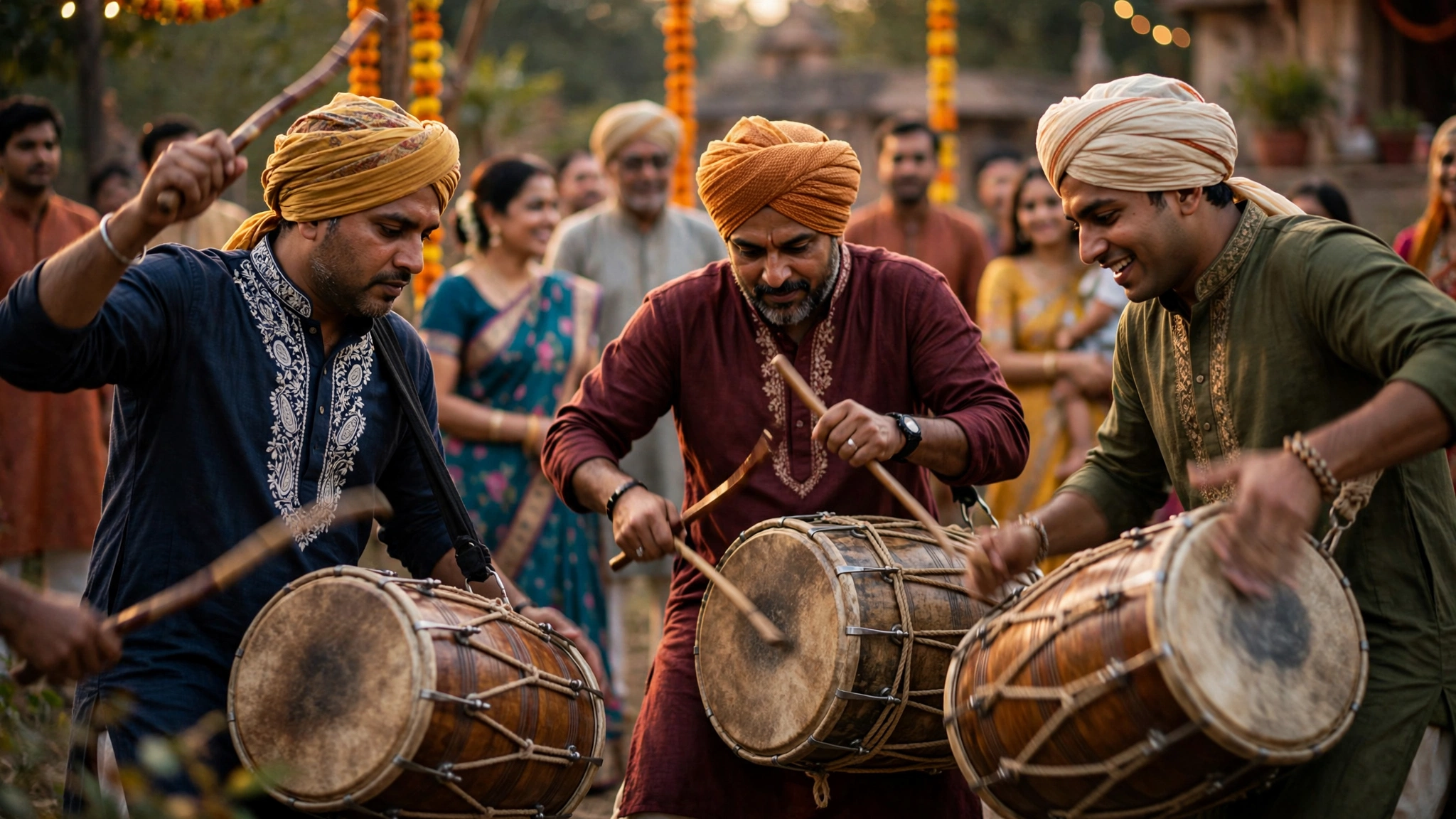
What Is the Structure of a Dhol?
A Dhol is built around a resonant body with a drumhead on each end. Traditional construction can vary by region, maker and musical purpose, but several basic components are common to the instrument.
Resonant Shell
The central wooden body forms the main resonating chamber. Its dimensions, shape, material and craftsmanship can influence the instrument's response and projection.
Two Playing Surfaces
The Dhol uses two heads. Their characteristics and tension contribute to the contrasting tones produced by the two sides.
Rope or Tension System
Traditional Dhols can use rope-based systems to secure and tension the drumheads against the body.
Rhythmic Control
Dhol is commonly played with sticks. The player's stroke, speed, angle and force all influence the resulting rhythmic character.
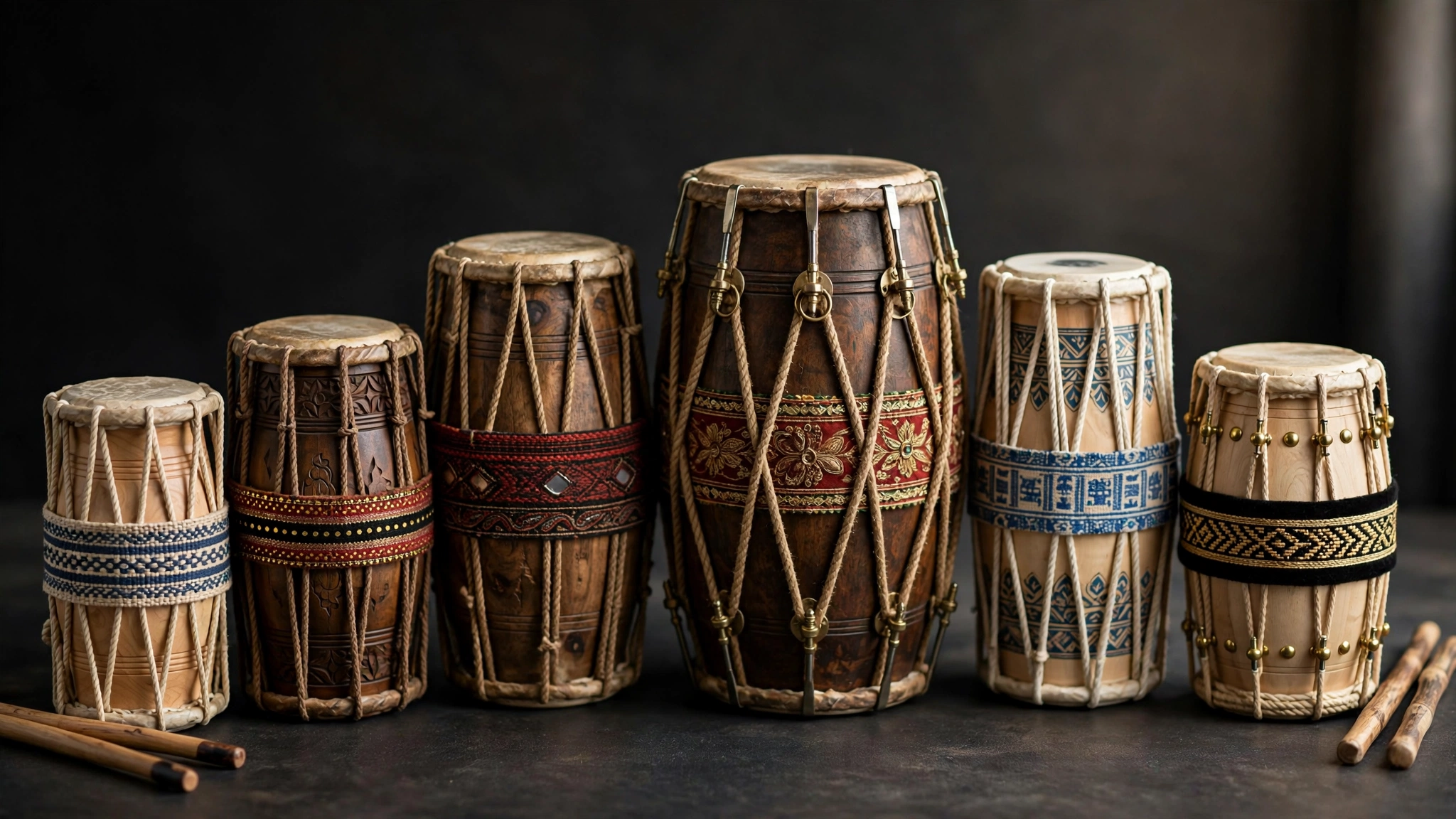
What Does a Dhol Sound Like?
The Dhol is known for its strong rhythmic projection and energetic tonal character. The large resonant body supports a powerful low-frequency presence, while the two heads can provide contrasting tones and accents.
A performer can combine deeper strokes with sharper attacks, repeated rhythmic patterns and carefully controlled dynamics. The result is a sound that can remain prominent even in a large outdoor gathering.
The precise sound of a Dhol depends on its dimensions, drumhead construction, tension, sticks, playing technique, acoustic environment and regional style.
A Dhol's identity is not simply its loudness. Its musical character comes from the interaction between its shell, drumheads, tension, sticks, rhythm and the performer.
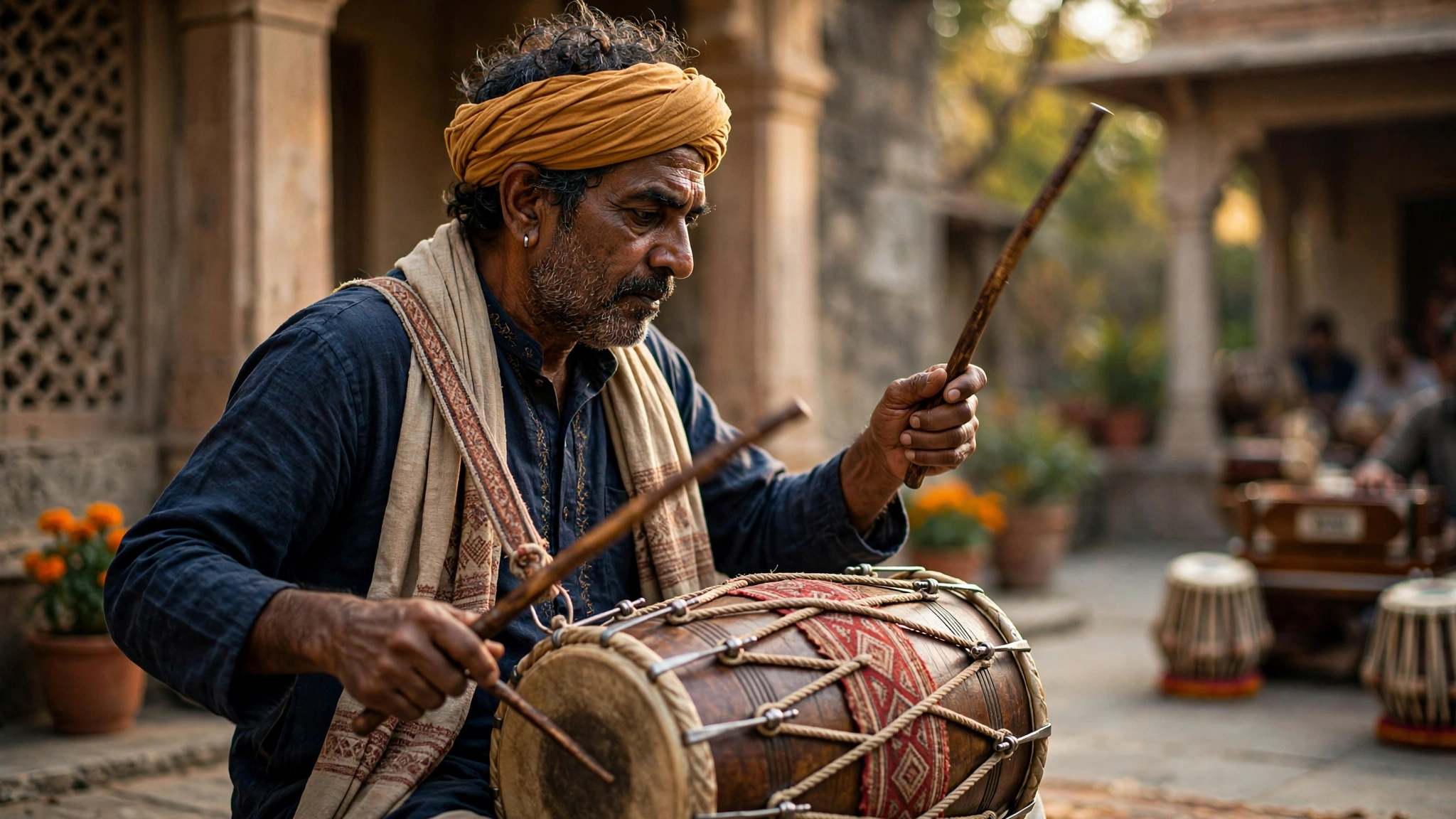
How Is a Dhol Played?
Dhol is generally carried using a shoulder strap or harness, allowing the performer to position the instrument across the body. The two sides are then played with sticks using coordinated strokes and rhythmic patterns.
The foundations of Dhol playing
- Comfortable and stable instrument positioning
- Correct stick handling and stroke control
- Consistent pulse and timing
- Coordination between both drumheads
- Progressive development of speed and rhythmic patterns
Beginners benefit from developing accuracy before trying complex or extremely fast rhythms. Good posture, controlled strokes and steady timing create a stronger foundation for later performance.
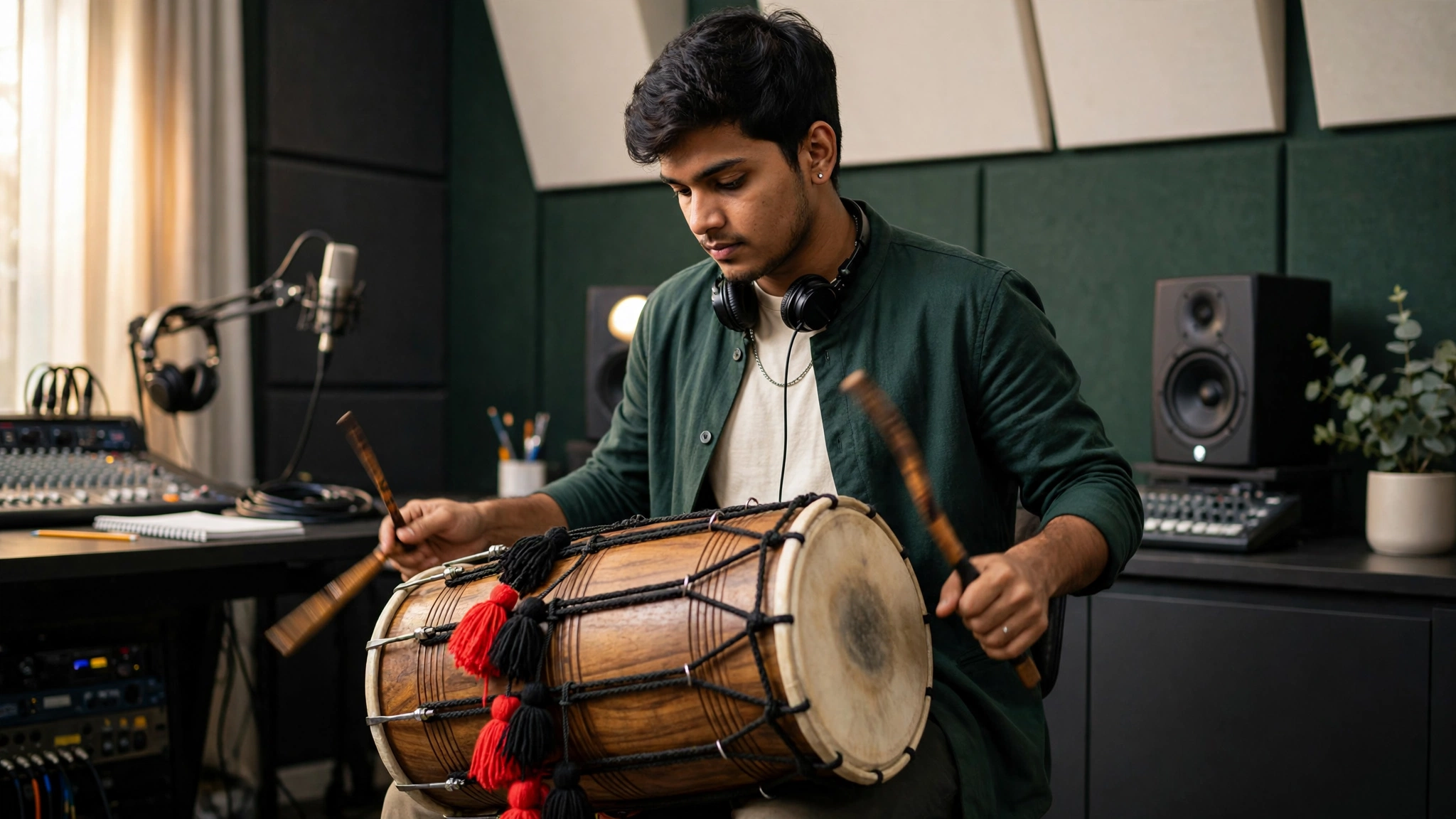
What Is the Dhol Used For?
The Dhol's projection and rhythmic energy make it suitable for a wide range of musical, cultural and performance situations.
Festivals
Dhol is widely associated with festive gatherings, public celebrations and cultural occasions.
Weddings & Processions
Its powerful rhythmic presence makes it effective for processions, wedding celebrations and large gatherings.
Folk & Dance Music
Dhol rhythms can support traditional dance, folk performances and coordinated group movement.
Cultural Programs
Dhol can become a central rhythmic element in community and cultural performances.
Live Music
Professional performers can use Dhol to bring strong rhythmic energy to concerts and stage performances.
Studio Recording
Dhol can also be recorded for songs, films, fusion projects and contemporary music productions.
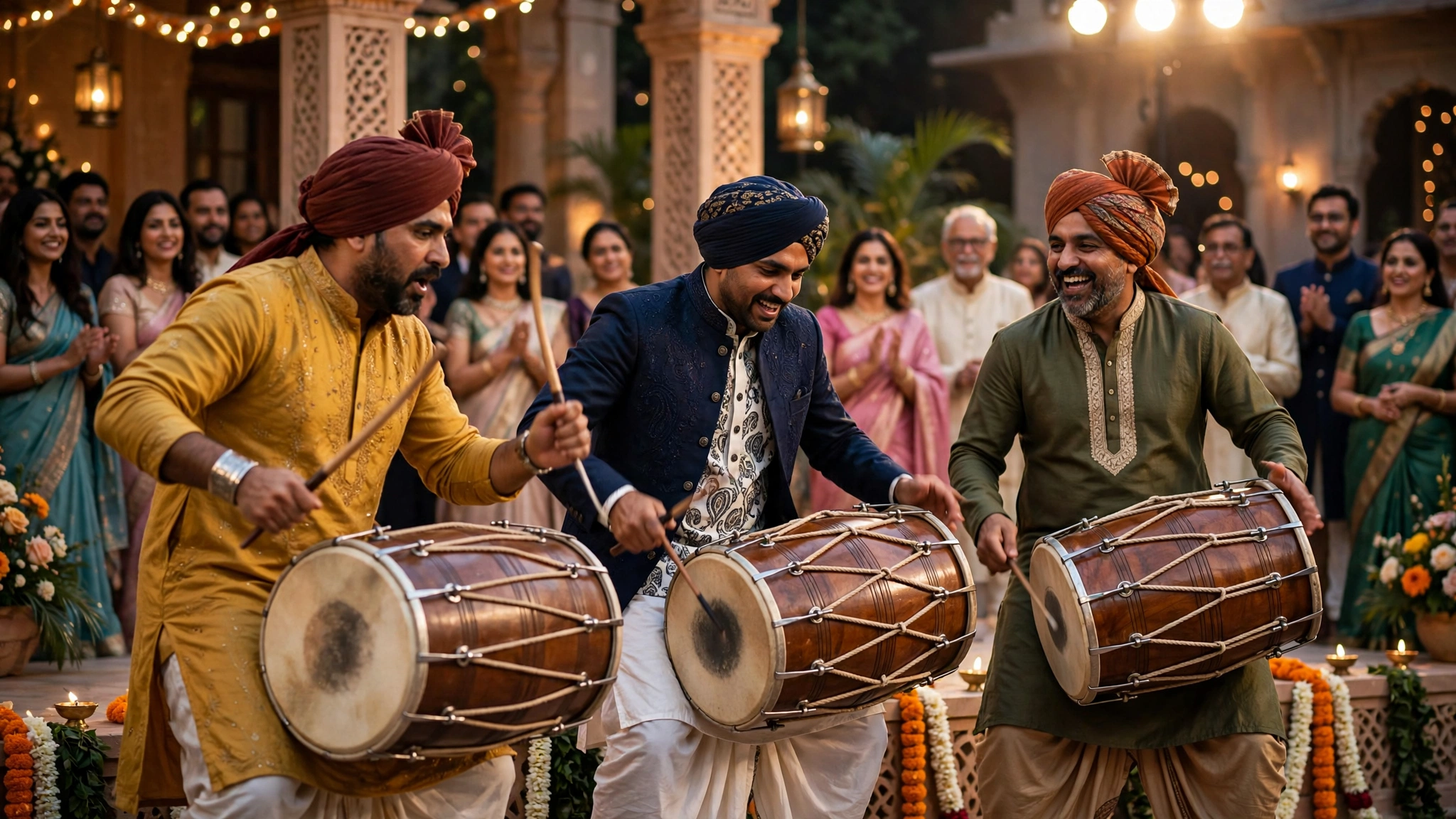
Dhol in Maharashtra and Indian Cultural Traditions
Dhol also has an important place in Maharashtra's cultural performance landscape. Public celebrations and organized percussion groups can use Dhol and related instruments to create powerful collective rhythms.
Maharashtra's Dhol-Tasha traditions are a distinct example of organized group percussion. It is useful to distinguish those specific regional performance traditions from the broader Dhol instrument itself.
The Dhol should be understood as an instrument with multiple regional traditions rather than a single uniform performance style.
Dhol vs Dholak: What's the Difference?
Dhol and Dholak are both double-headed percussion instruments, but they have important differences in size, playing technique, sound and common musical contexts.
| Feature | Dhol | Dholak |
|---|---|---|
| General size | Generally larger | Generally smaller |
| Playing style | Commonly played with sticks | Commonly played with the hands |
| Projection | Strong and designed for substantial projection | Often more suited to intimate accompaniment |
| Typical contexts | Festivals, processions, folk and live performance | Folk, devotional and popular music accompaniment |
How Is a Traditional Dhol Made?
Traditional Dhol making combines woodworking, drumhead preparation, tensioning and finishing. The craftsmanship of the shell and the relationship between the two drumheads can influence how the finished instrument responds.
Instrument makers must balance durability, weight, resonance, tension and playability. Regional approaches can differ, which is one reason Dhol instruments can vary noticeably in their physical appearance and sound.
Where Dhol Connects With the SoulFul Music Ecosystem
This article focuses on understanding the Dhol. When that interest turns into learning, recording, performing or instrument craftsmanship, these are the SoulFul services most directly connected to the topics covered here.
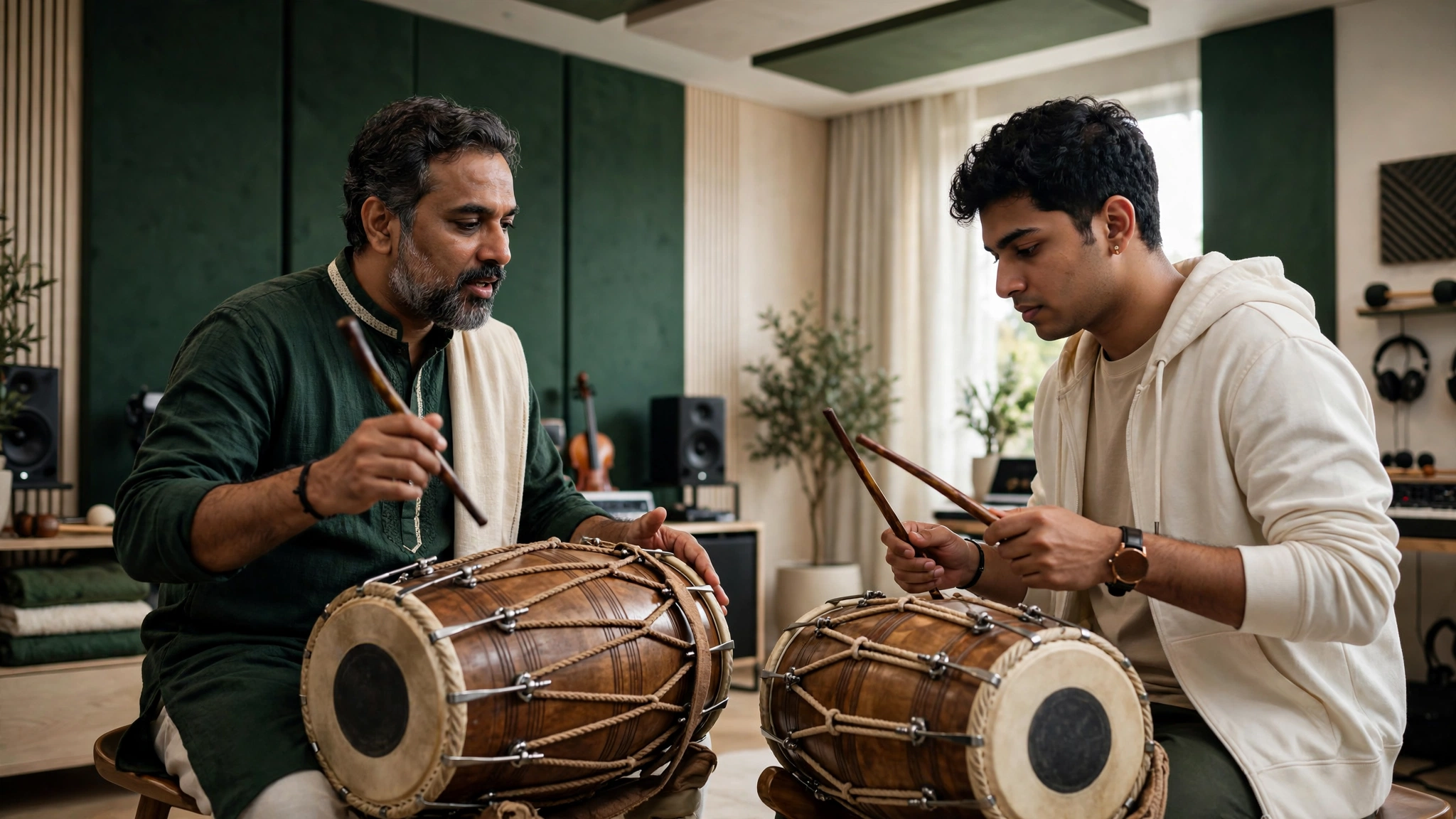
SoulFul Musik Academy
Explore structured music education for learners interested in developing their musical skills.
Explore Academy →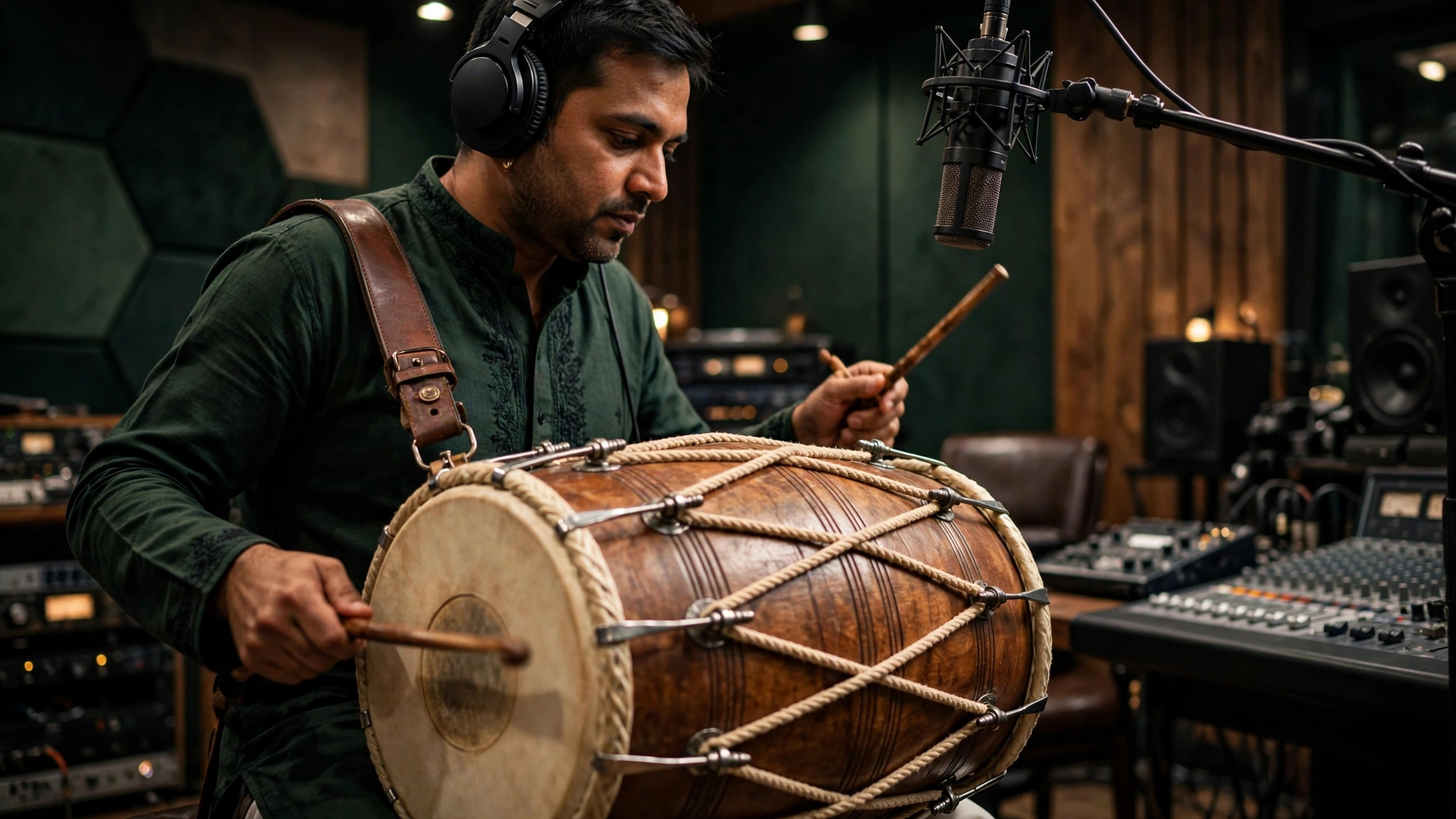
SoulFul Musik Studio
For Dhol recording, production and projects where live percussion forms part of the musical arrangement.
Explore Studio →
SoulFul Musik Event
Relevant for cultural programs, celebrations and professional musical event experiences.
Explore Events →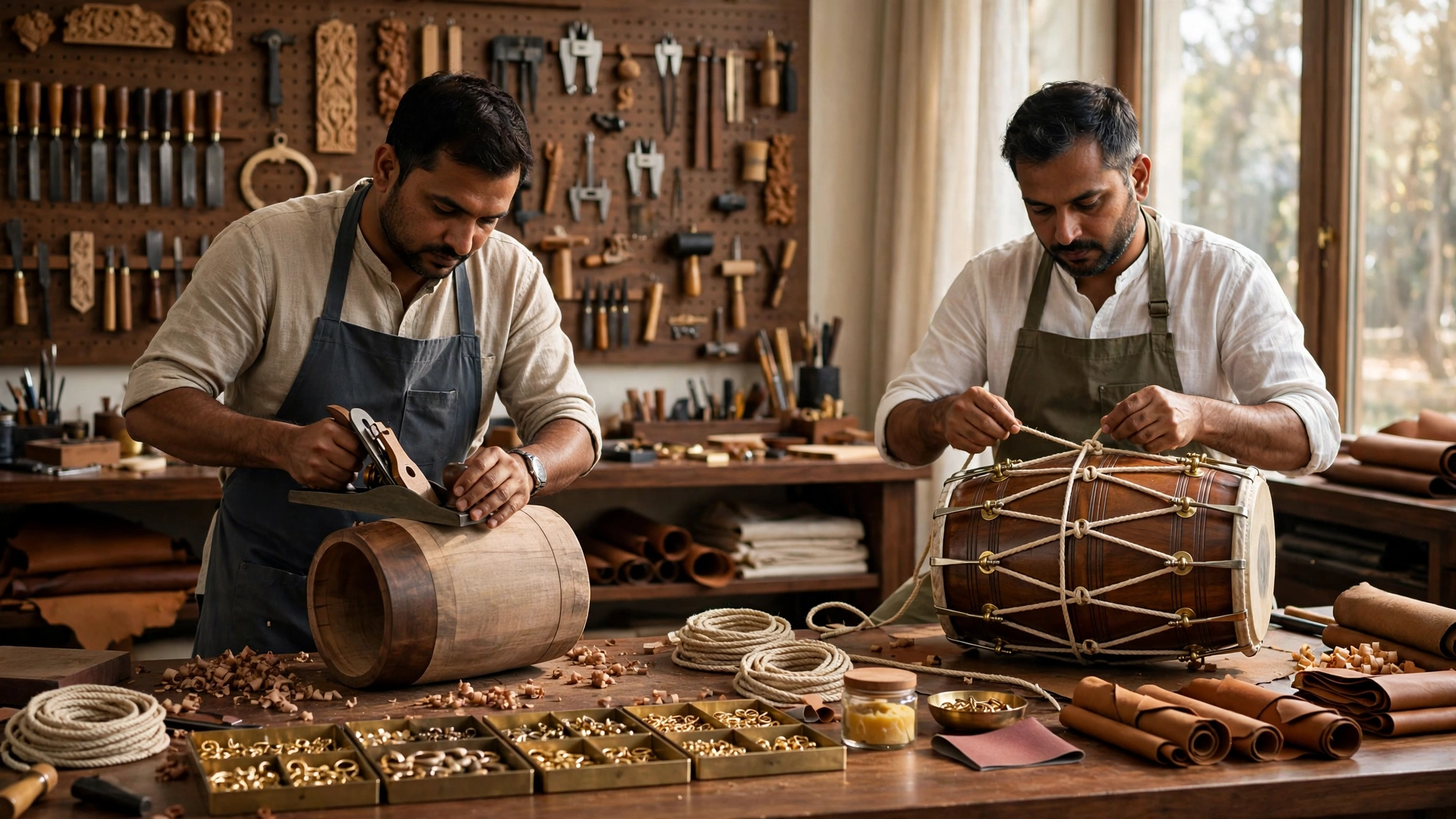
SoulFul Instrument Manufacturing
Connected to the construction, craftsmanship and making side of traditional musical instruments.
Explore Manufacturing →Understanding the Dhol is the first rhythm.
From learning technique to experiencing Dhol in live performance and professional music production, the instrument connects tradition with today's musical world.
Frequently Asked Questions About Dhol
A Dhol is a large double-headed percussion instrument, commonly constructed with a wooden shell and played with sticks. Different regional traditions can vary in construction and technique.
Dhol is used in festivals, weddings, processions, cultural performances, folk music, live performances, community celebrations and studio recording.
No. Both are double-headed percussion instruments, but Dhol is generally larger and commonly played with sticks, while Dholak is smaller and commonly played with the hands.
Yes. Beginners can develop Dhol skills progressively through posture, instrument handling, basic strokes, rhythm, timing and increasingly advanced patterns.
Yes. Dhol can be recorded for songs, films, fusion productions, live sessions and other contemporary music projects.
One Response