
Guitar: Complete Guide to the Instrument, Learning, Playing & Classes
Explore Guitar from the ground up—from its parts, types and sound to chords, strumming, fingerstyle, practice, beginner learning, instrument selection, Guitar classes, Mumbai learning and online study. This is the central Guitar resource from SoulFul Musik Academy.
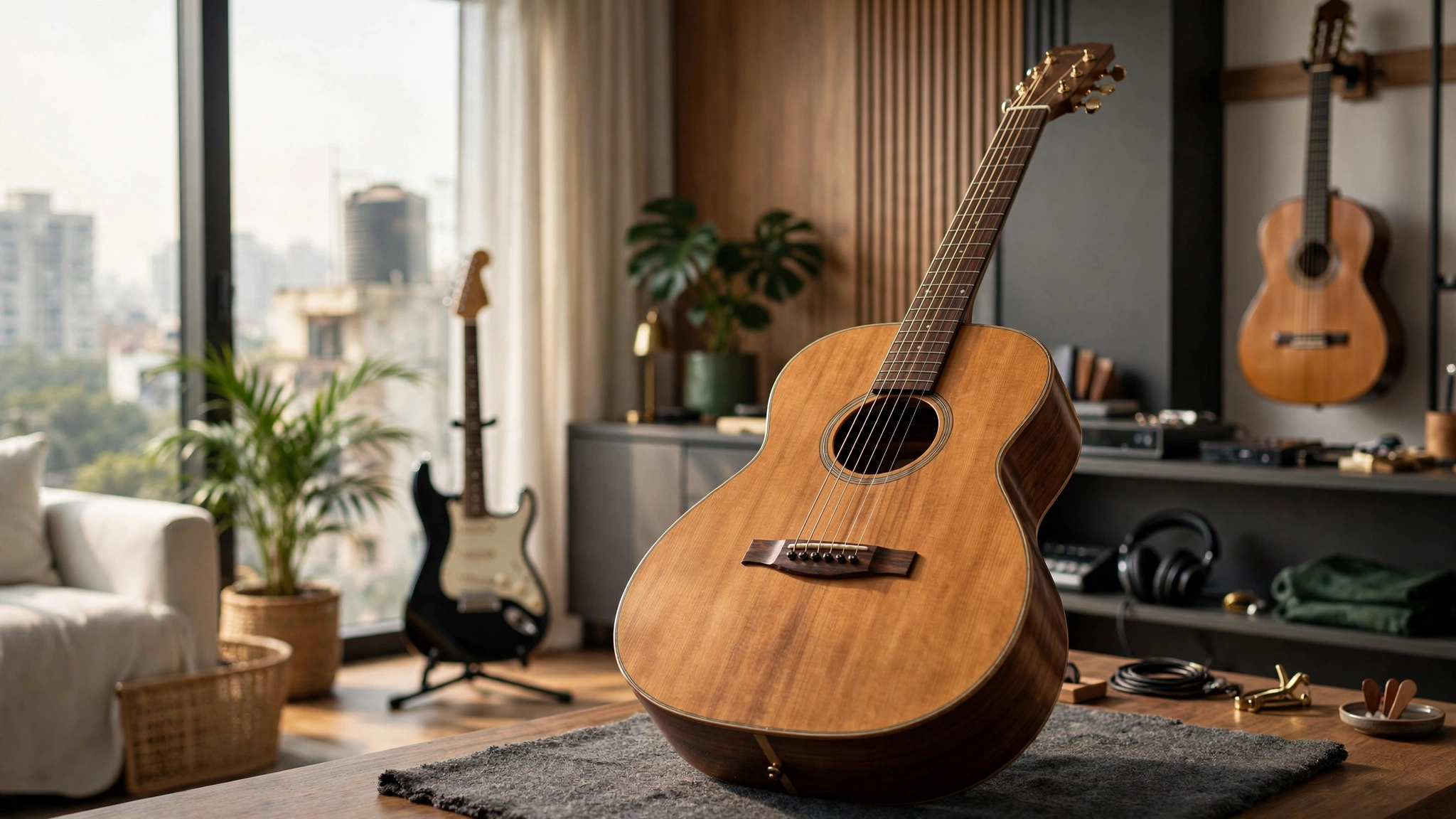
Guitar is an instrument, a skill and a musical journey
Guitar can be used for rhythm, harmony, melody, accompaniment, songwriting, solo playing and ensemble performance. A learner can begin with simple instrument handling and basic chords, then develop rhythm, picking, fingerstyle, scales, theory, repertoire and more advanced musical skills.
This hub brings the major Guitar topics together so that a visitor can move from basic instrument knowledge into practical learning, classes, local options, online learning and the wider musician journey.
Different types of Guitar serve different musical goals
Acoustic, electric and classical-style guitars have different construction, feel and typical uses. Choosing between them starts with understanding how you want to learn and what kind of music you want to play.
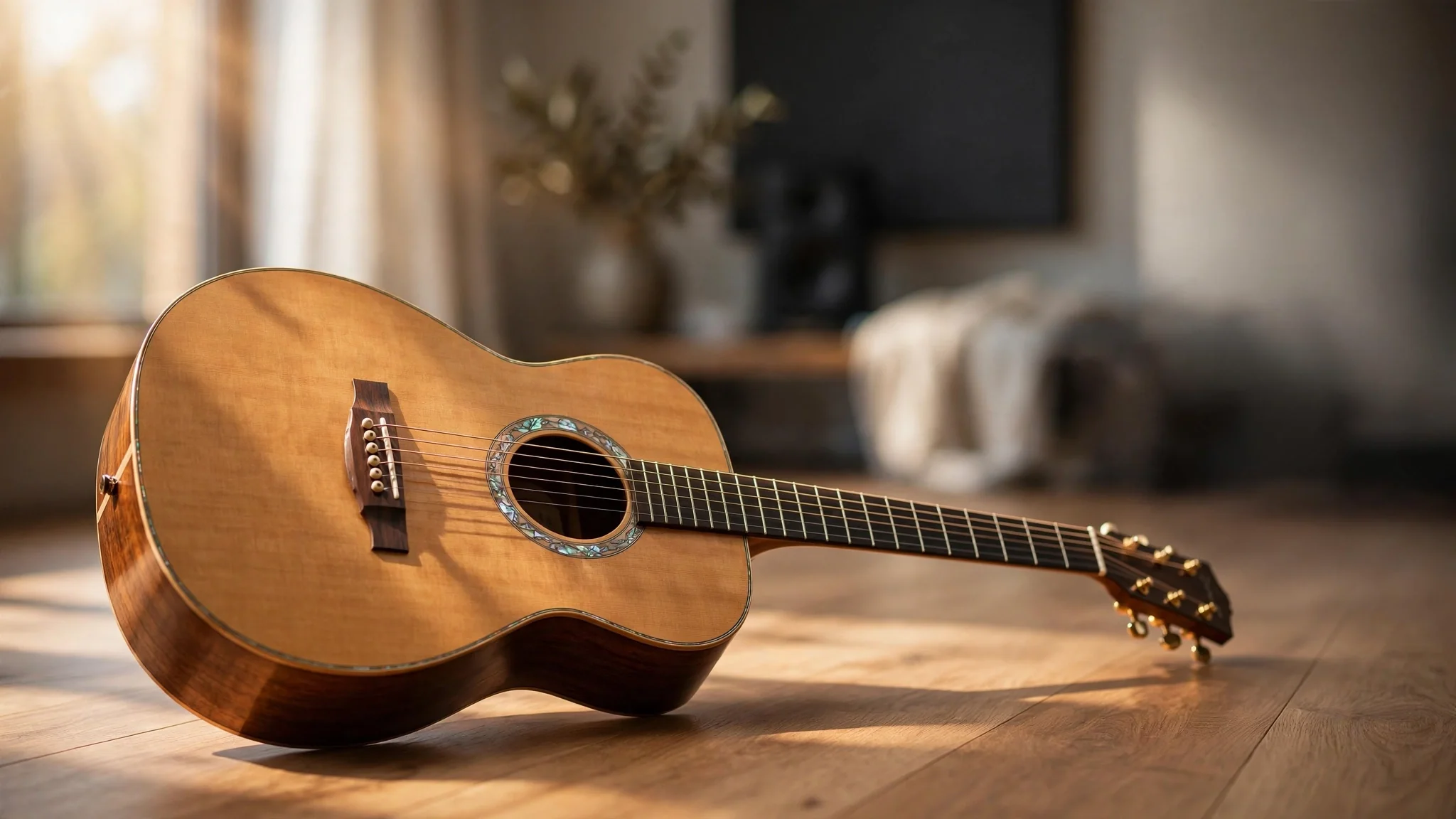
Acoustic Guitar
Acoustic guitars project string vibration through their body and are widely used for accompaniment, songwriting, contemporary music and learning fundamental Guitar skills.
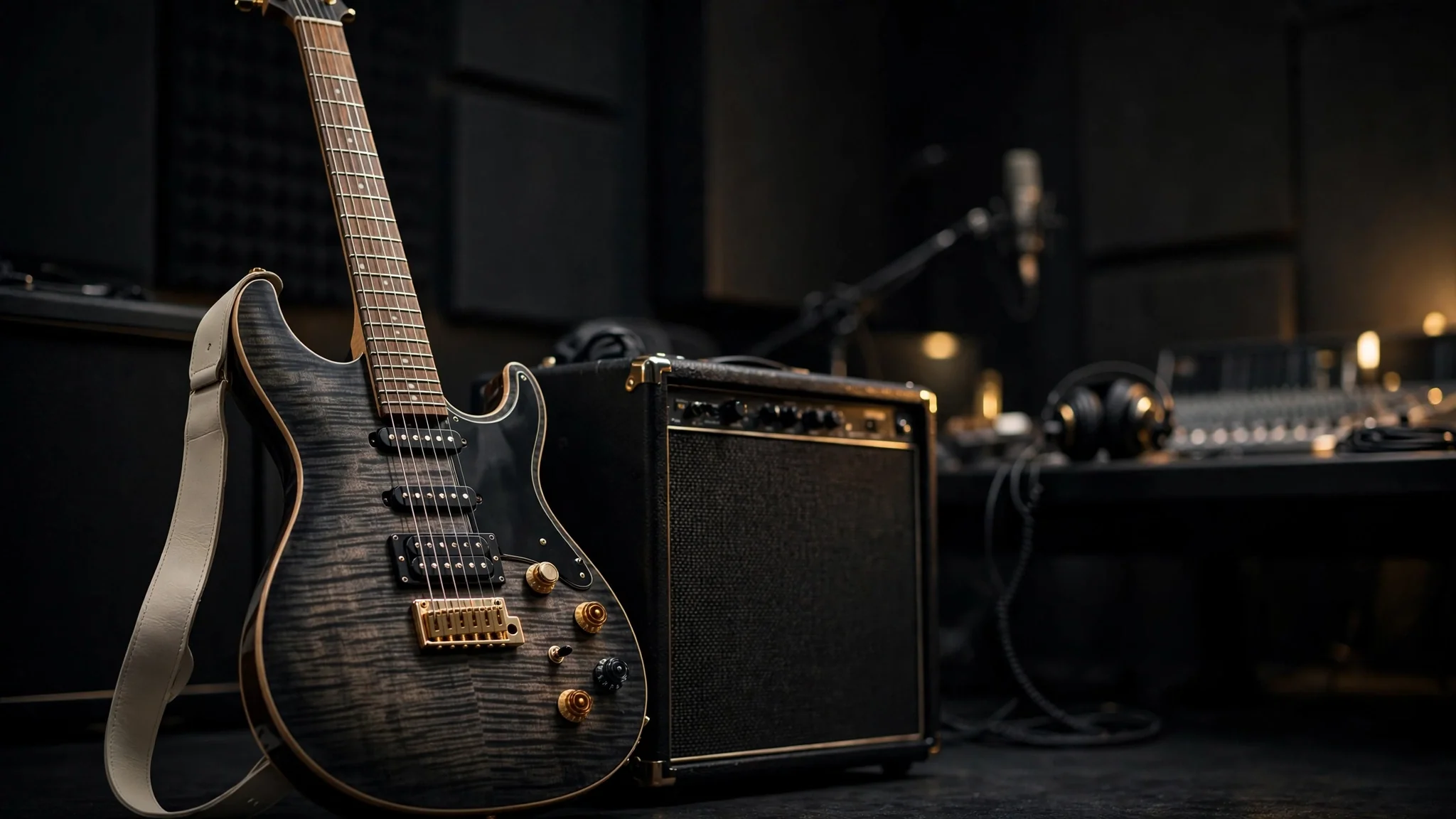
Electric Guitar
Electric guitars generally use pickups and amplification as part of their sound system, opening a wide range of tones and performance possibilities.
Classical & Other Guitar Variations
Classical and other Guitar variations have distinct string types, construction and playing traditions. The appropriate choice depends on the learner's preferred musical direction.
What is a Guitar?
A Guitar is a fretted string instrument in which vibrating strings are used to produce musical notes. Its body, neck, fingerboard, strings and hardware work together to create an instrument that can support chords, melodies, rhythm and accompaniment.
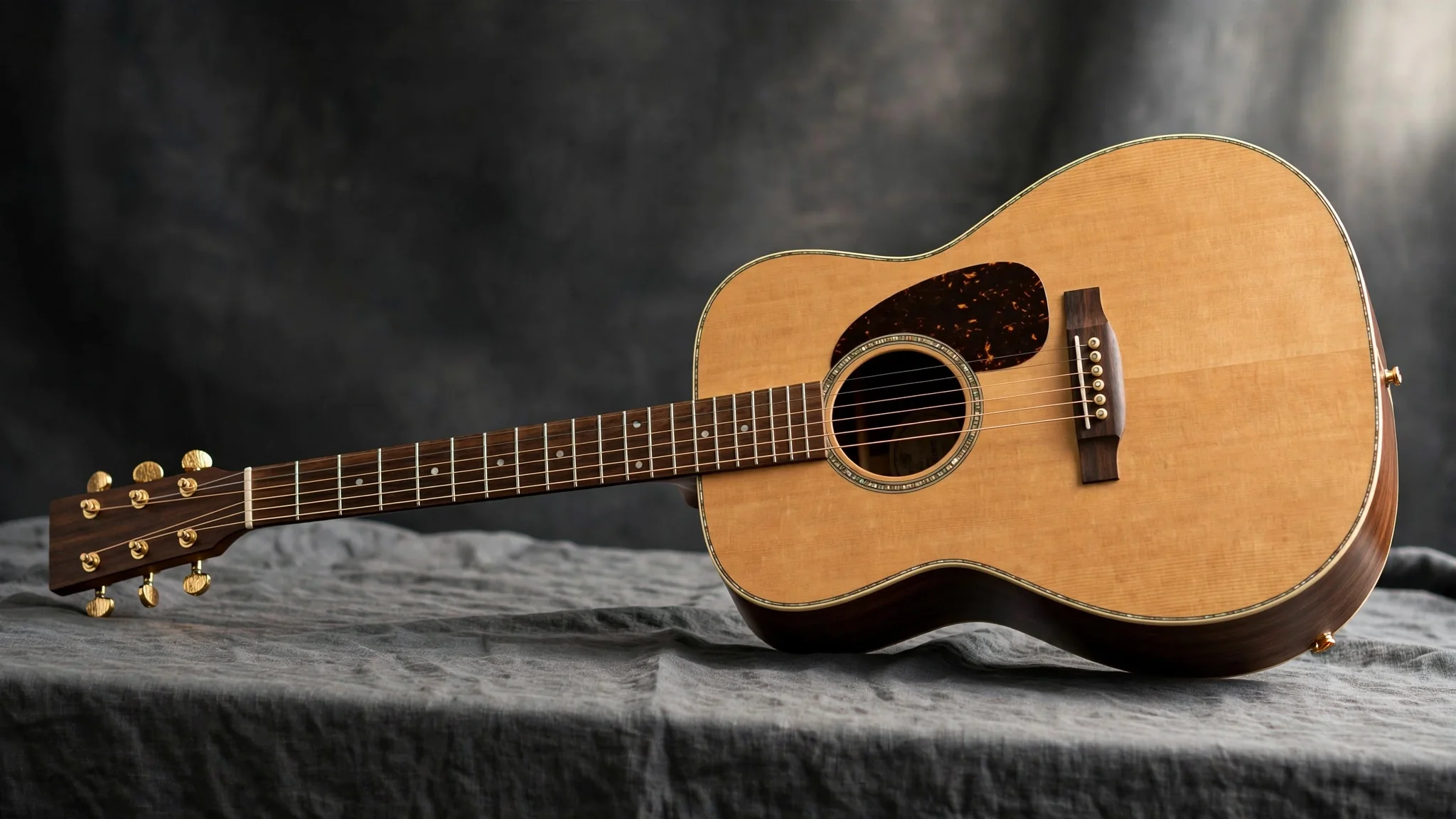
How does a Guitar produce sound?
The playing process begins when a player plucks or strikes a string. On an acoustic Guitar, vibration is transferred through the bridge into the body, while electric Guitar systems use pickups to convert string vibration into an electrical signal for amplification.
String vibrates
The player's hand activates a string through plucking, picking or strumming.
Vibration transfers
The bridge and Guitar structure transmit the energy created by the vibrating string.
Sound is shaped
Construction, strings, technique and instrument design influence the resulting tone.
Sound reaches us
Acoustic instruments project sound naturally, while electric systems rely on amplification.
A practical Guitar learning pathway
Guitar learning is easier to manage when skills are introduced progressively. The pace can vary according to experience, practice time, musical goals and the learner's chosen style.
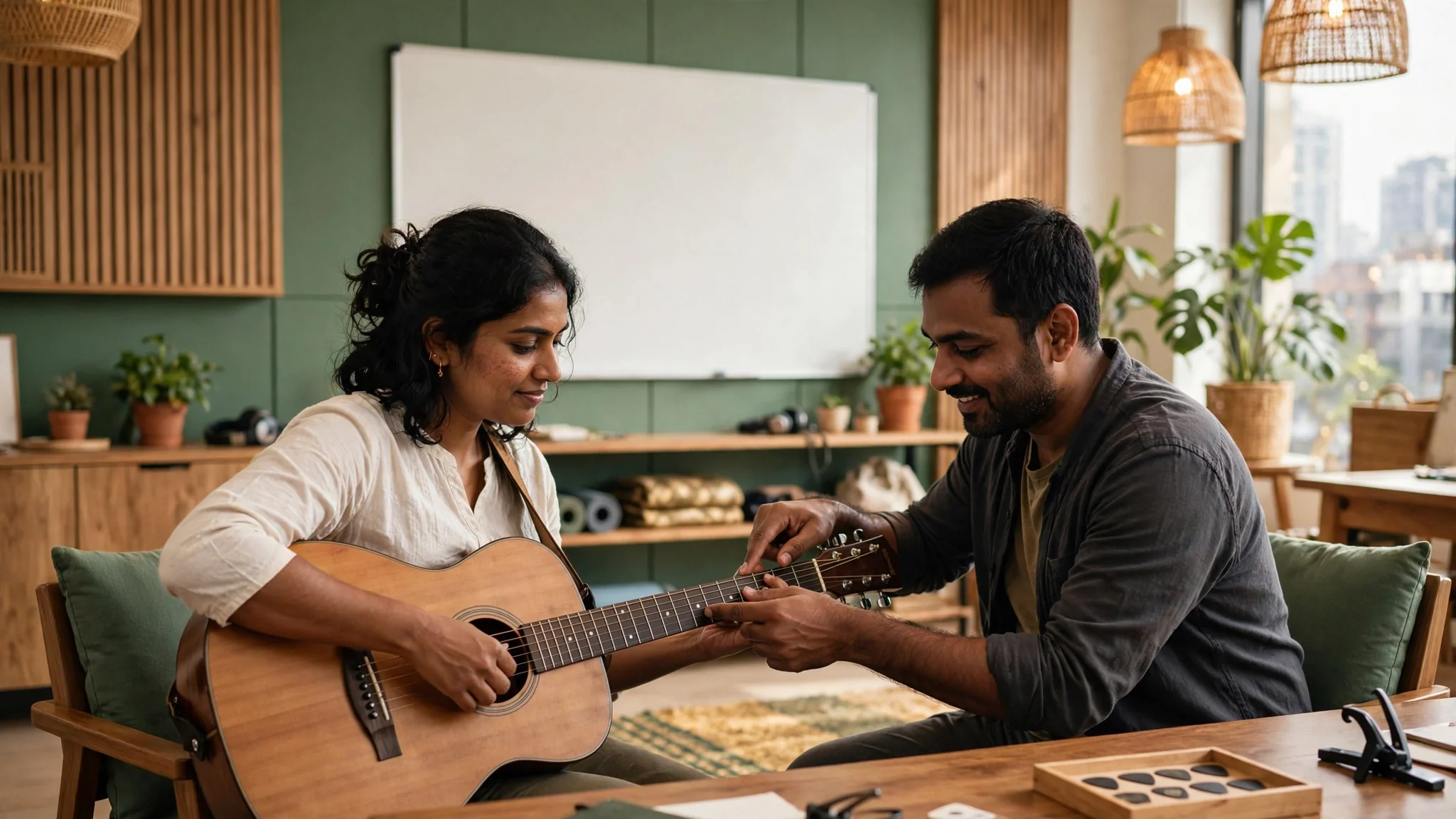
Foundation
Learn posture, instrument handling, tuning, string awareness and basic fretting technique.
Core Skills
Build basic chords, clean transitions, rhythm, strumming and simple songs.
Technique
Develop picking, scales, fingerstyle, timing and more controlled playing.
Musical Development
Expand repertoire, theory, expression, improvisation and performance skills according to your goals.
Core Guitar techniques every learner can explore
Different Guitar styles use different combinations of technique. A structured learning pathway lets students build these skills progressively rather than attempting everything at once.
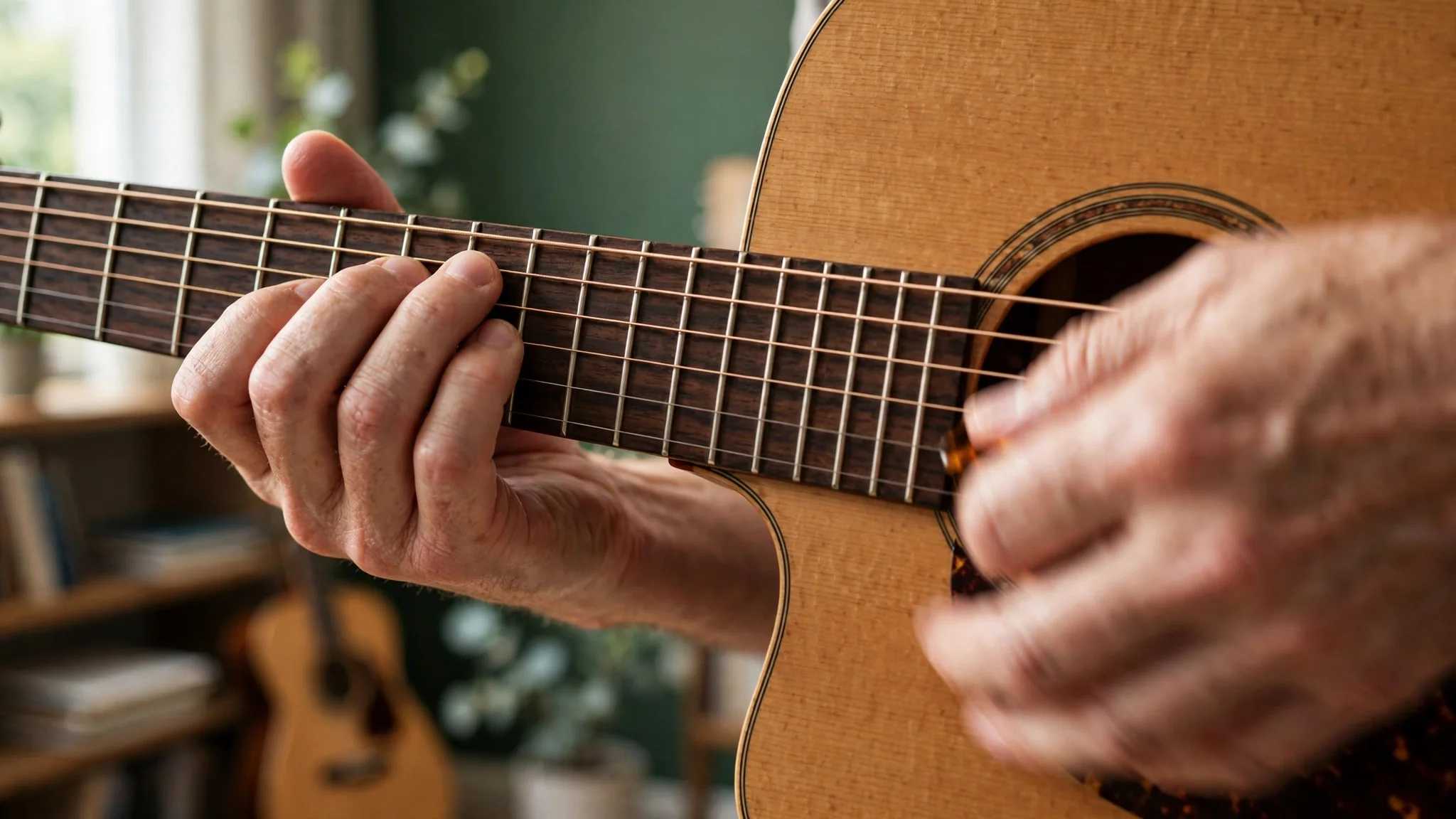
Chords
Learn how multiple notes can be combined into harmonic shapes for songs and accompaniment.
Strumming
Develop rhythmic patterns, timing and controlled right-hand movement.
Picking
Build precision for individual notes, riffs, melodies and arpeggiated patterns.
Fingerstyle
Explore independent finger movement for layered melody, harmony and rhythm.
Scales
Understand note patterns across the fretboard and build foundations for melody and improvisation.
Rhythm & Timing
Develop steady timing for solo playing, singing accompaniment and playing with other musicians.
Build progress through focused Guitar practice
Regular, purposeful practice can help learners develop technique and musical consistency. The exact routine should fit the learner's level and goals.
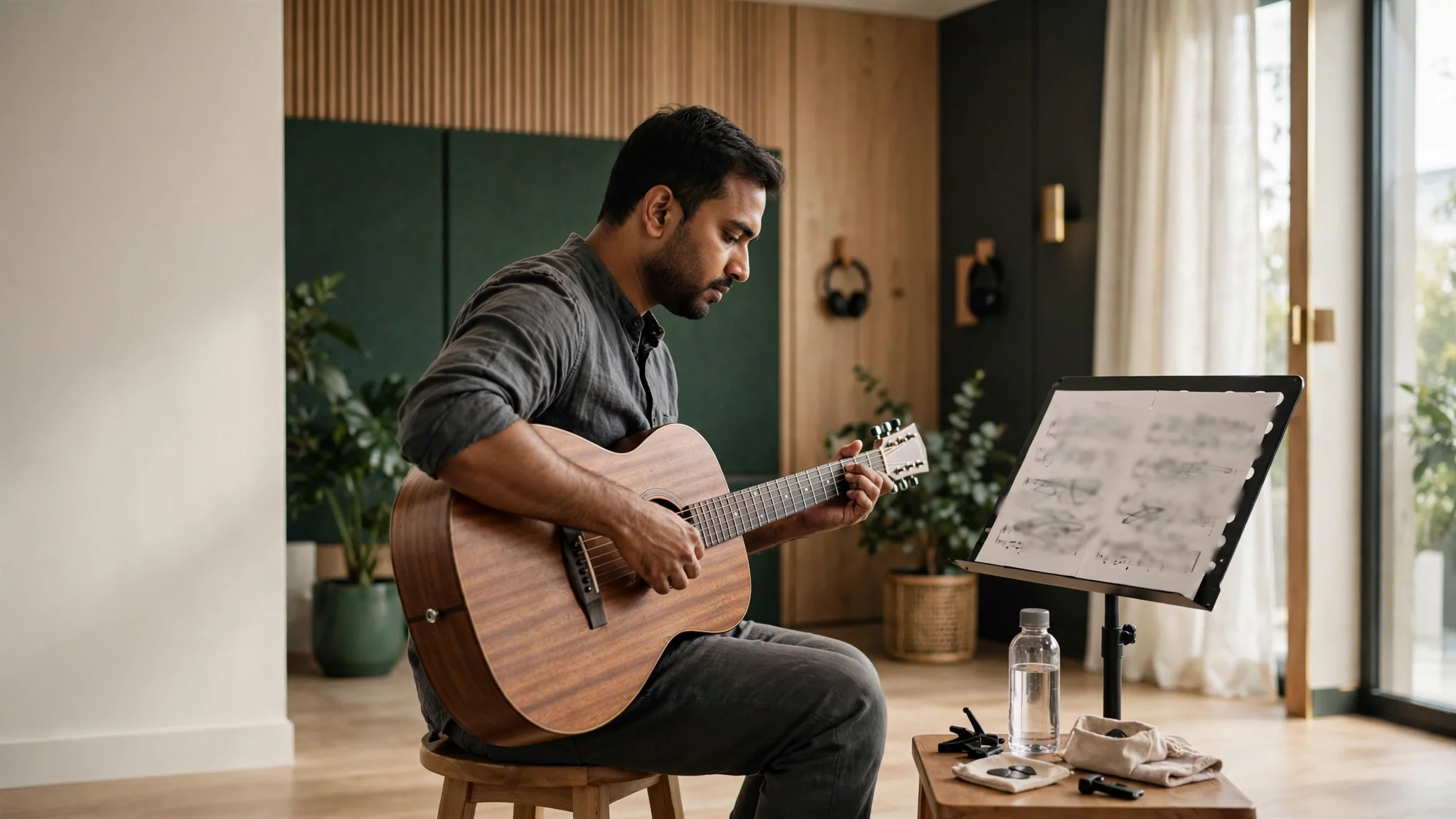
Guitar Classes for learners at different stages
Structured Guitar learning can combine technique, repertoire, rhythm, practical playing and musical understanding. The best learning pathway depends on the student's current level and goals.
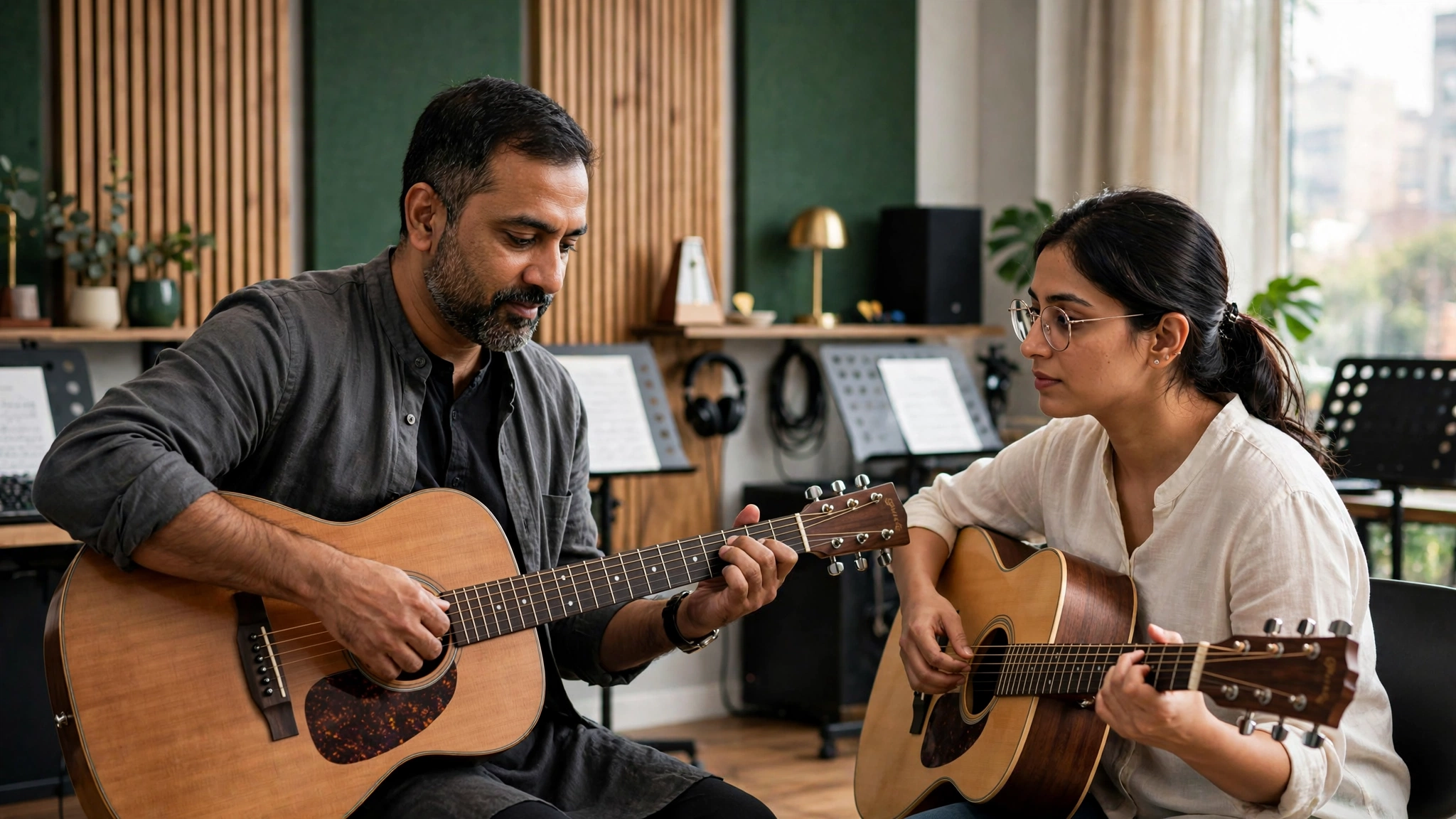
From first chords to confident playing
Beginners can establish a strong foundation, while progressing learners can work toward more advanced technique, repertoire, musical expression and performance.
Guitar learning in Mumbai, Goregaon and online
The Guitar learning journey can be local or remote. SoulFul Musik Academy's broader learning offering connects its Mumbai presence with online learning, giving students different ways to access music education.

Guitar Classes in Mumbai
For learners specifically looking for local Guitar learning options, explore the dedicated Mumbai page covering local class considerations and the Guitar learning journey.
Explore Guitar Classes in Mumbai →
Learn Guitar Online
Online learning can work for students who have a suitable instrument, a stable connection and a practical environment for guided lessons and regular practice.
Explore Guitar Learning →How to choose a Guitar for your goals
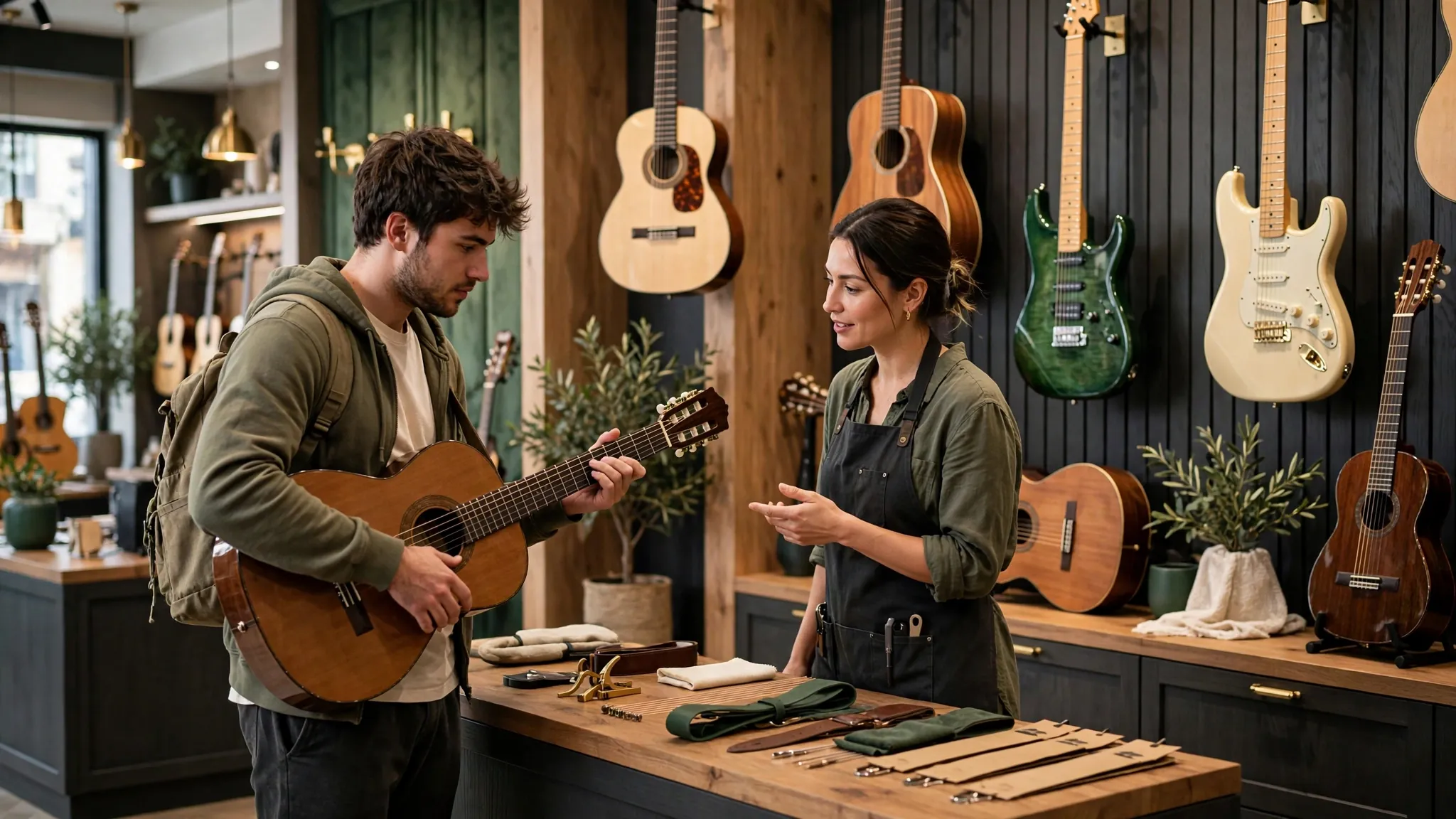
A Guitar should be chosen according to comfort, playability, musical direction, budget and the learner's requirements—not simply appearance.
Your Guitar journey can continue beyond the classroom
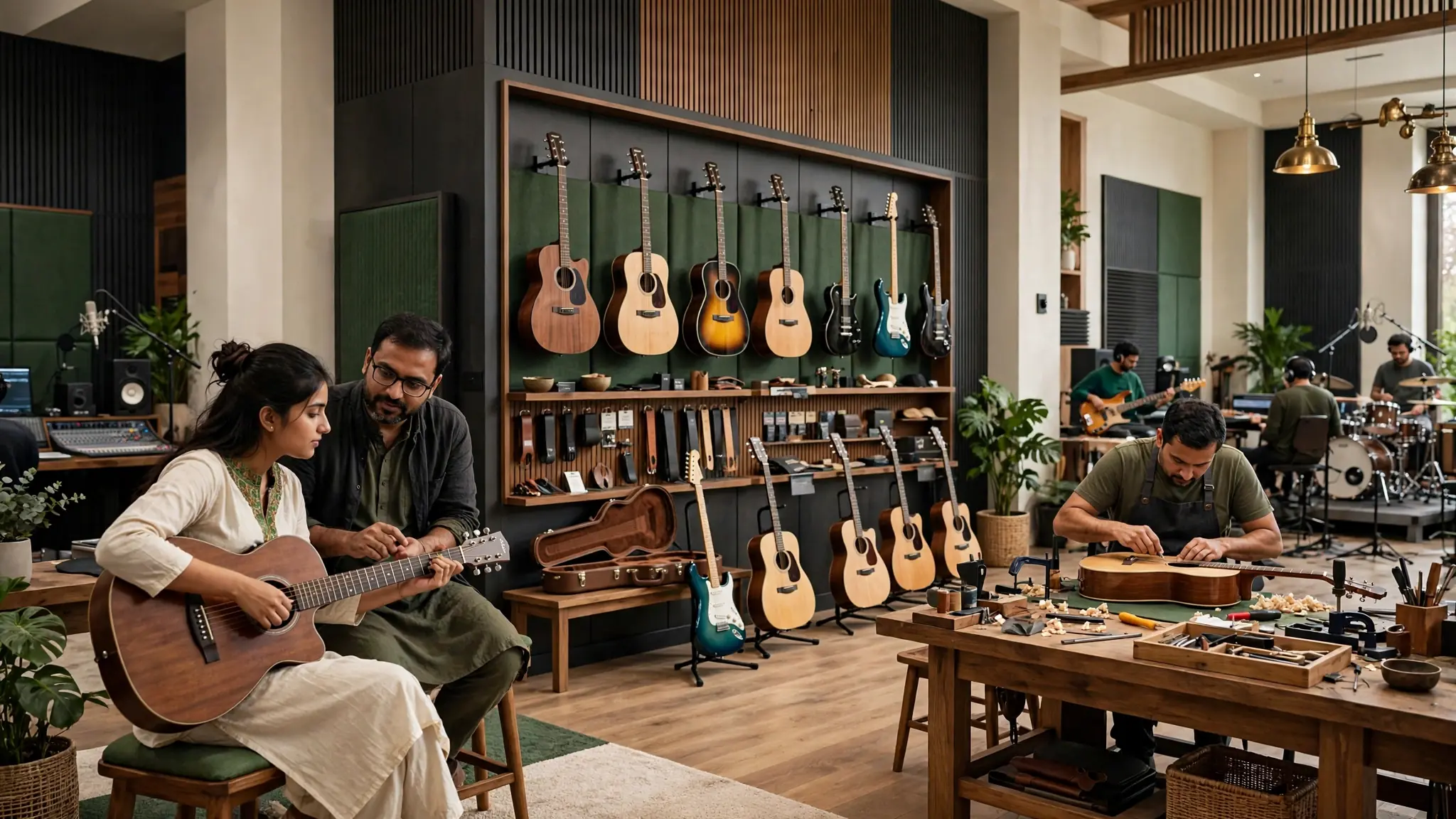
Learning an instrument is only one part of a musician's journey. Depending on the need, SoulFul's broader ecosystem connects education with instruments, rental, repairs, practice spaces, recording, professional gear, events, distribution and other music-related services.
Explore the venture tree below and move directly into the SoulFul business that matches your next step.
Explore the three dedicated Guitar resources
The Guitar hub gives you the broad picture. These dedicated pages go deeper into the specific search intent you may have.
Frequently asked Guitar questions
Practical answers for people beginning or continuing their Guitar learning journey.
Is Guitar easy to learn?
Which Guitar is best for a beginner?
Should a beginner learn acoustic or electric Guitar?
What should I learn first on Guitar?
How often should I practice Guitar?
Can I learn Guitar online?
Can adults learn Guitar?
How long does it take to learn Guitar?
Learn the instrument. Build the skill. Create the music.
From understanding your first Guitar to developing technique, building repertoire, practicing consistently and exploring the wider music ecosystem, SoulFul Musik Academy brings different parts of the musician journey together.