

Music Production: A Complete Guide to Creating Professional Music
Understand the full production journey — from the first musical idea and arrangement through recording, editing, sound design, mixing, mastering and final delivery.
It may include composition, arrangement, performance direction, recording, editing, sound design, mixing and mastering. A producer helps connect the creative idea to the technical workflow.

What Is Music Production?
Music production is broader than simply recording sound. It is the creative and technical process used to develop a song or musical work from an idea into a finished production.
Depending on the project, that process can involve songwriting, arrangement, selecting sounds and instruments, directing performances, recording, editing, programming, sound design, mixing and mastering.
Creative Direction
Shape the musical concept, mood, structure and intended listener experience.
Technical Production
Capture, edit and shape audio using microphones, instruments, software and studio systems.
Finished Record
Bring the mix and master to a technically prepared final version for its intended use.
What Does a Music Producer Do?
The producer's role varies by project. Some producers are heavily involved in composition and arrangement, while others focus more on recording, sound design, performance direction or the overall creative vision.


Song & Arrangement
Help decide structure, instrumentation, dynamics, transitions and the musical shape of the track.
Recording & Performance
Guide how vocals and instruments are captured, selected, edited and combined.
Sound & Texture
Choose or design sounds that support the style and emotional direction of the production.
Mix & Final Direction
Coordinate the final balance and collaborate with engineers or specialists where appropriate.
The Music Production Process
A practical production workflow can be viewed as a sequence of creative and technical decisions. Real projects often loop back between stages rather than following a perfectly straight line.
Music Composition vs Music Production
Composition focuses on creating the musical material — for example melody, harmony, rhythm, lyrics and form. Production is the larger process used to turn that material into a recorded or delivered musical work.
| Area | Main question | Typical output |
|---|---|---|
| Composition | What is the musical idea? | Melody, harmony, lyrics, rhythm or song form |
| Arrangement | How should the idea be presented? | Instrumentation, sections, layers and dynamics |
| Production | How should the complete record sound and feel? | Recorded, edited and shaped production |
| Mixing | How do all elements work together? | Balanced stereo or multichannel mix |
| Mastering | How should the final mix be prepared? | Final master for the intended release/playback format |
Recording in Music Production
Recording captures performances and sounds so they can become part of the production. Depending on the project, this can include vocals, acoustic instruments, electric instruments, live drums, percussion, ambience, field recordings and MIDI-based parts.

A recording captures material; production decides how that material is developed, arranged, edited, shaped and combined into the finished work.
Editing & Sound Design
Editing can include comping takes, timing adjustments, noise cleanup, tuning, arranging sections and organising the session. Sound design can then add textures, effects, transitions, samples, synthesis or creative processing.
Comping
Select the strongest parts from multiple recorded takes.
Timing
Make rhythmic or performance adjustments while preserving musical feel.
Sound Design
Build character with effects, textures, samples and electronic or acoustic sounds.
Music Mixing
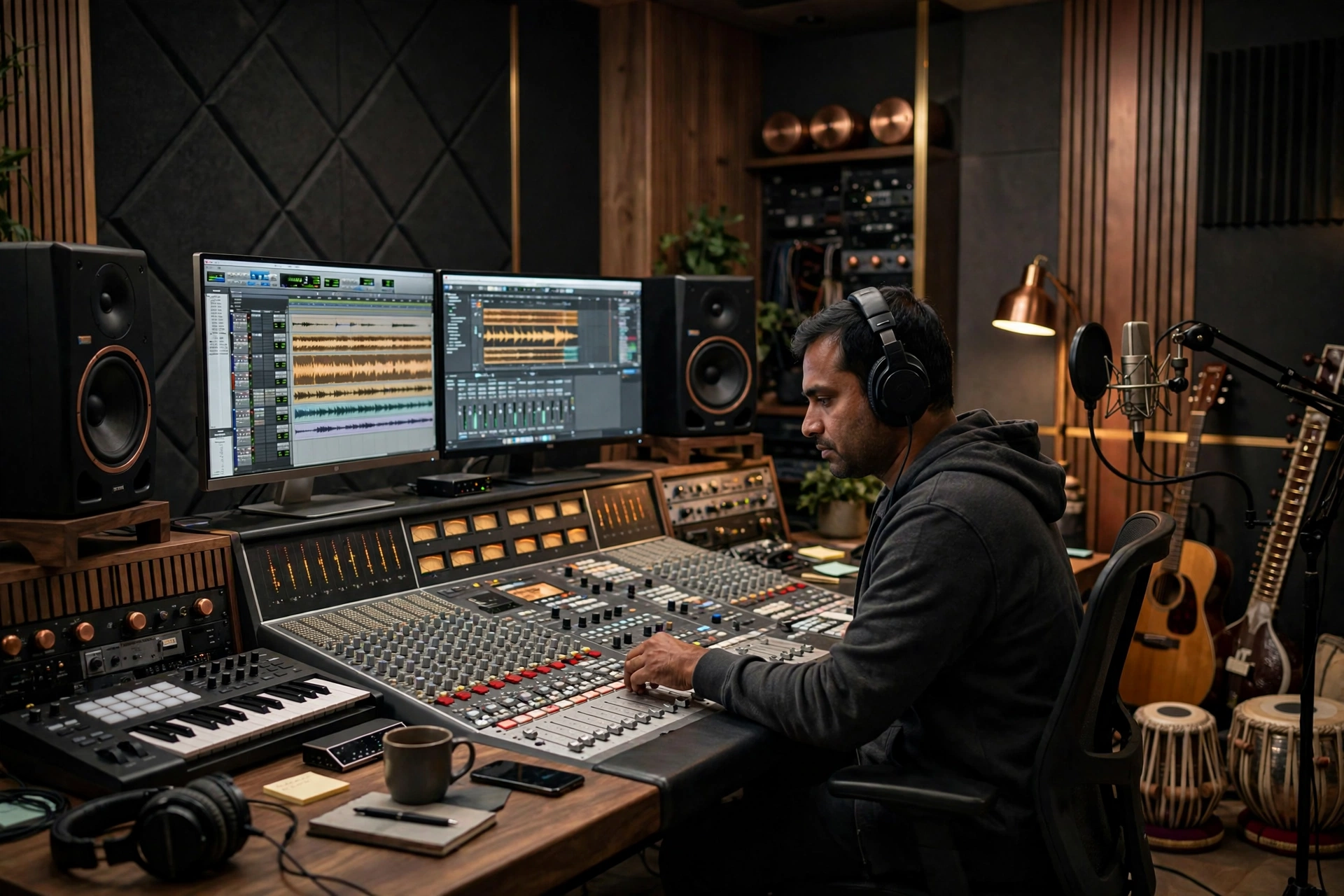
Mixing combines the recorded elements into a coherent sonic picture. Engineers or producers may work with volume, panning, EQ, dynamics, reverb, delay and automation to create balance, space and movement.
Balance
Set relative levels so the important musical elements remain clear.
Space
Use panning and time-based effects to create depth and separation.
Dynamics
Control movement and impact while preserving musical expression.
Music Mastering
Mastering is the final preparation stage for a completed mix. It can refine tonal balance, dynamics, level consistency and delivery requirements for the intended playback or distribution format.
Final Tonal Refinement
Review the overall frequency balance and translation across playback systems.
Delivery Preparation
Prepare the final audio according to the specifications required by the release or destination.
How to Start Learning Music Production
Beginners can learn production progressively instead of trying to master every plugin and studio technique at once. Start with listening, session organisation and a simple workflow.
Learn a DAW
Understand tracks, clips, routing, recording, editing and basic session management.
Learn Listening
Train your ears to notice timing, frequency balance, dynamics, stereo space and arrangement.
Finish Small Projects
Complete short songs or production exercises instead of endlessly starting new sessions.

Home Music Production vs Professional Studio Production
| Area | Home setup | Professional studio |
|---|---|---|
| Environment | Personal room or home workspace | Designed recording and monitoring environment |
| Acoustics | Varies by room and treatment | Purposeful acoustic control and monitoring |
| Equipment | Selected personal gear | Broader professional equipment options |
| Collaboration | Often personal or remote | Convenient in-room collaboration |
| Project scale | Well suited to focused projects | Can support larger recording and production workflows |
Both approaches can produce excellent music. The right choice depends on the project, budget, acoustics, equipment requirements and people involved.
Music Production in Mumbai
Music production in Mumbai can cover songwriting, arrangement, studio recording, vocal production, editing, mixing, mastering, artist projects, band sessions, content production and event-related music work.
Recording & Studio
Connect production work with dedicated studio environments and recording support.
Artists & Musicians
Collaborate with singers, instrumentalists, producers and performers when the project requires it.
Events & Performance
Extend production into live shows, cultural events, launches and music-focused programmes.
Buy, Pre-Owned, Rent & Pro Audio Support
A production setup can grow over time. The right equipment depends on your workflow, room, project requirements and experience level.
Buy Music Equipment →
Explore musical instruments and production-related gear through the SoulFul ecosystem.
Pre-Owned →
Consider pre-owned options where budget, condition and actual production requirements make sense.
Rent & Repair →
Useful for temporary recording, event or project requirements and maintenance needs.
Pro Audio Gears →
Connect the production workflow to professional audio equipment and related requirements.
Music Production Ecosystem
Production can connect learning, recording, studio work, artist development and live performance. Here is the SoulFul venture path that can support those stages.
Learn →
Music education and professional training.
Rehearse →
Practice and collaborative jamming environment.
Record & Produce →
Studio-focused production and recording support.
Artists →
Artist-focused support and management ecosystem.
Perform →
Event and live music opportunities.
Digital →
Digital creative and music-related services.
Frequently Asked Questions About Music Production
Quick answers for beginners, artists and creators exploring the production process.
What is music production?
Music production is the process of developing a musical idea into a finished recording. It can include composition, arrangement, recording, editing, sound design, mixing and mastering.
What does a music producer do?
A producer helps shape the creative and technical direction of a track, including arrangement, performance decisions, sound selection and production workflow.
What is the difference between production and recording?
Recording captures sound; production is the broader process that develops musical material into a finished work.
What is mixing?
Mixing balances recorded elements using level, panning, EQ, dynamics, effects and automation so they work together as a coherent production.
What is mastering?
Mastering is the final preparation stage for a finished mix and its intended playback or distribution format.
Can beginners learn music production?
Yes. Beginners can start with a DAW, simple recording, arrangement, editing and mixing exercises before progressing to advanced workflows.
Turn Musical Ideas Into Finished Productions
Explore music education, studio work, rehearsal, artists, instruments and production support across the SoulFul Musik ecosystem.
One Response