What Is Tabla? History, Parts, Sound and How It Works
Tabla is one of the most recognizable percussion instruments in Indian music. Learn what Tabla is, how its two drums work together, what its main parts do, how its sound is shaped and why it holds an important place in Indian classical music.
So, what exactly is Tabla?
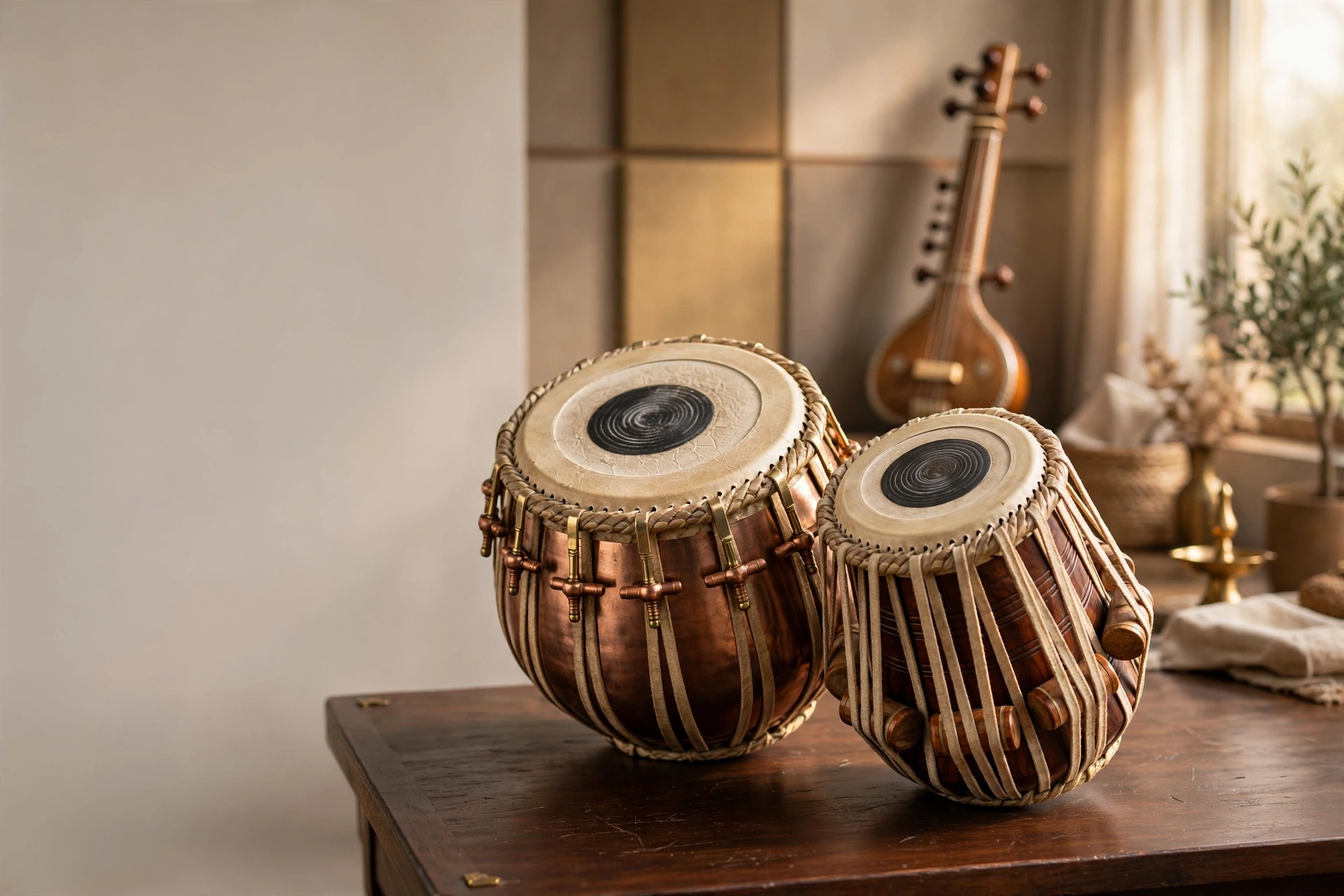
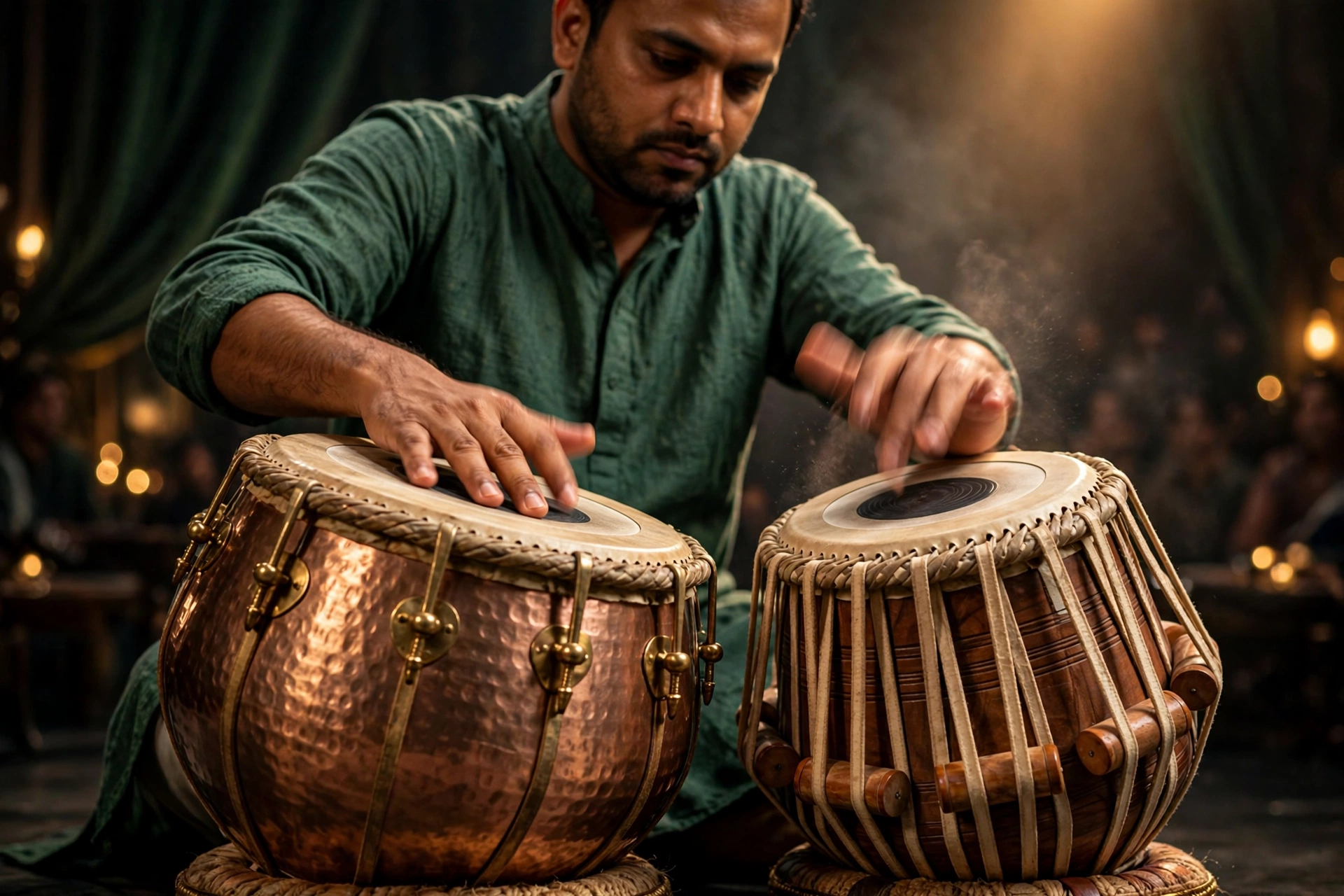
Tabla is a paired percussion instrument used extensively in Hindustani music and in many other Indian musical settings. A standard set consists of two drums: the dayan, generally the smaller and higher-pitched drum, and the bayan, generally the larger and deeper-sounding drum. Together, they allow a player to produce a wide range of rhythmic patterns, tonal colors and expressive strokes.
For a beginner, Tabla can look like a simple pair of drums. In practice, it is a highly expressive rhythmic instrument with its own playing vocabulary, tuning practices and musical traditions.
To understand Tabla properly, it helps to look at the instrument from several angles: its physical construction, the role of the two drums, the way the playing surface creates different sounds, and the rhythmic language used by Tabla players.
This guide brings those foundations together so that someone encountering Tabla for the first time can understand the instrument before moving into more advanced subjects such as bols, taal, laya, compositions and Tabla practice.
Tabla history and its place in Indian music
Tabla developed within the wider history of Indian percussion and rhythmic music. Today, it is strongly associated with Hindustani classical music, where Tabla can serve as an accompanying instrument as well as a solo performance instrument.
Over time, Tabla traditions developed through different musical schools and performance practices. Players learned not only individual strokes but also larger rhythmic structures, compositions, improvisational approaches and methods of accompaniment.
Tabla is not defined only by its physical design. Its identity also comes from the rhythmic vocabulary, teaching traditions, performance practices and musical contexts in which the instrument is played.
Dayan and Bayan: the two main Tabla drums
A Tabla set uses two different drums working together. Their different construction and pitch ranges make it possible for the player to create contrast between sharper, more articulate sounds and deeper bass tones.
Dayan
The dayan is generally the smaller drum and is responsible for many of the more clearly articulated and higher-pitched Tabla sounds.
Bayan
The bayan is the larger drum and provides deeper tones. Hand pressure and movement can influence its tonal response during playing.
Parts of Tabla and what they do
The sound of Tabla comes from the interaction between several carefully constructed components. Understanding the main parts helps beginners understand why the instrument produces different tones and why tuning and maintenance matter.
Playing head
The stretched drum surface is the area where the player's fingers and hands create the instrument's strokes.
Syahi
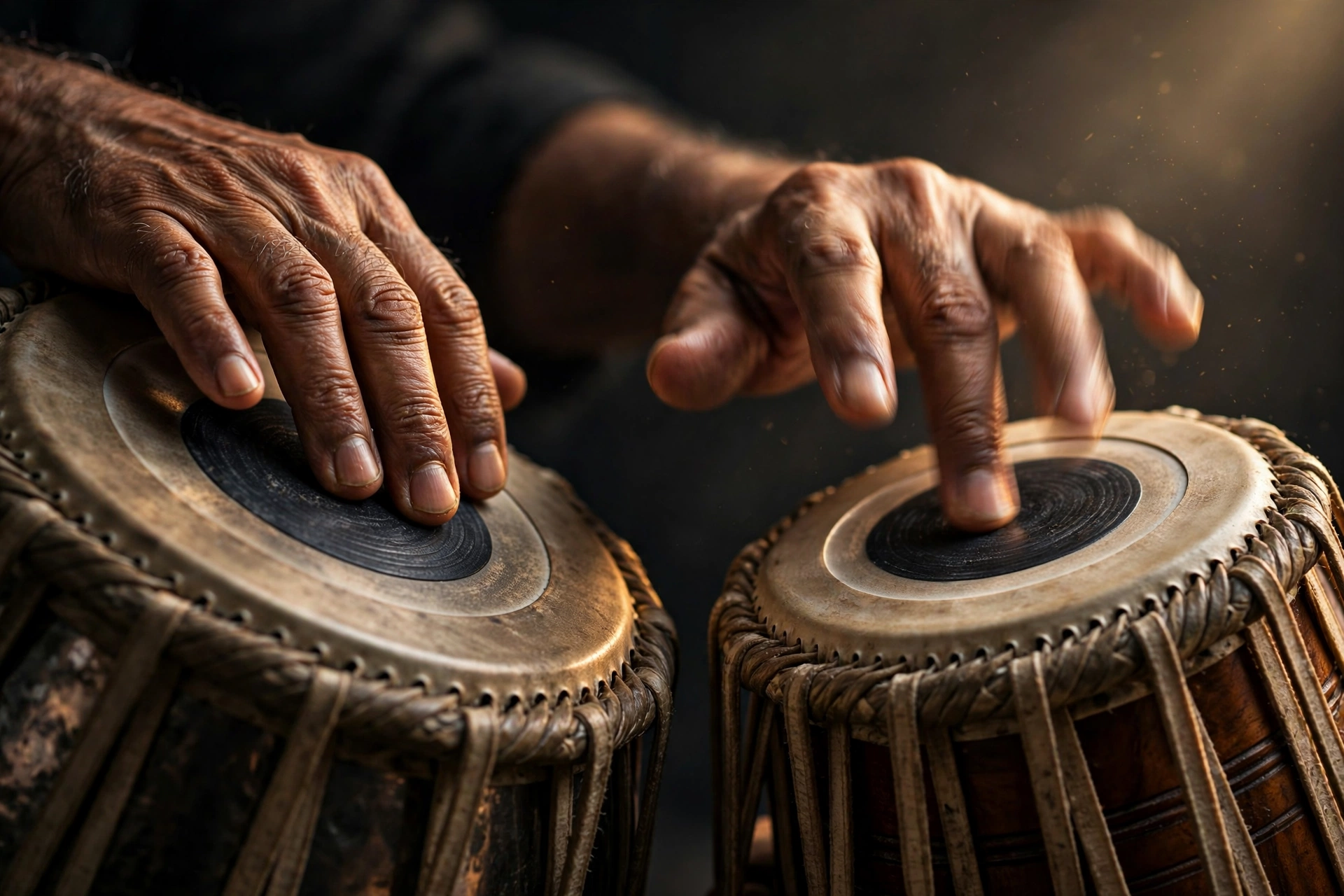
The dark central area on the drum head is a defining feature of Tabla construction and contributes strongly to its tonal character.
Shell
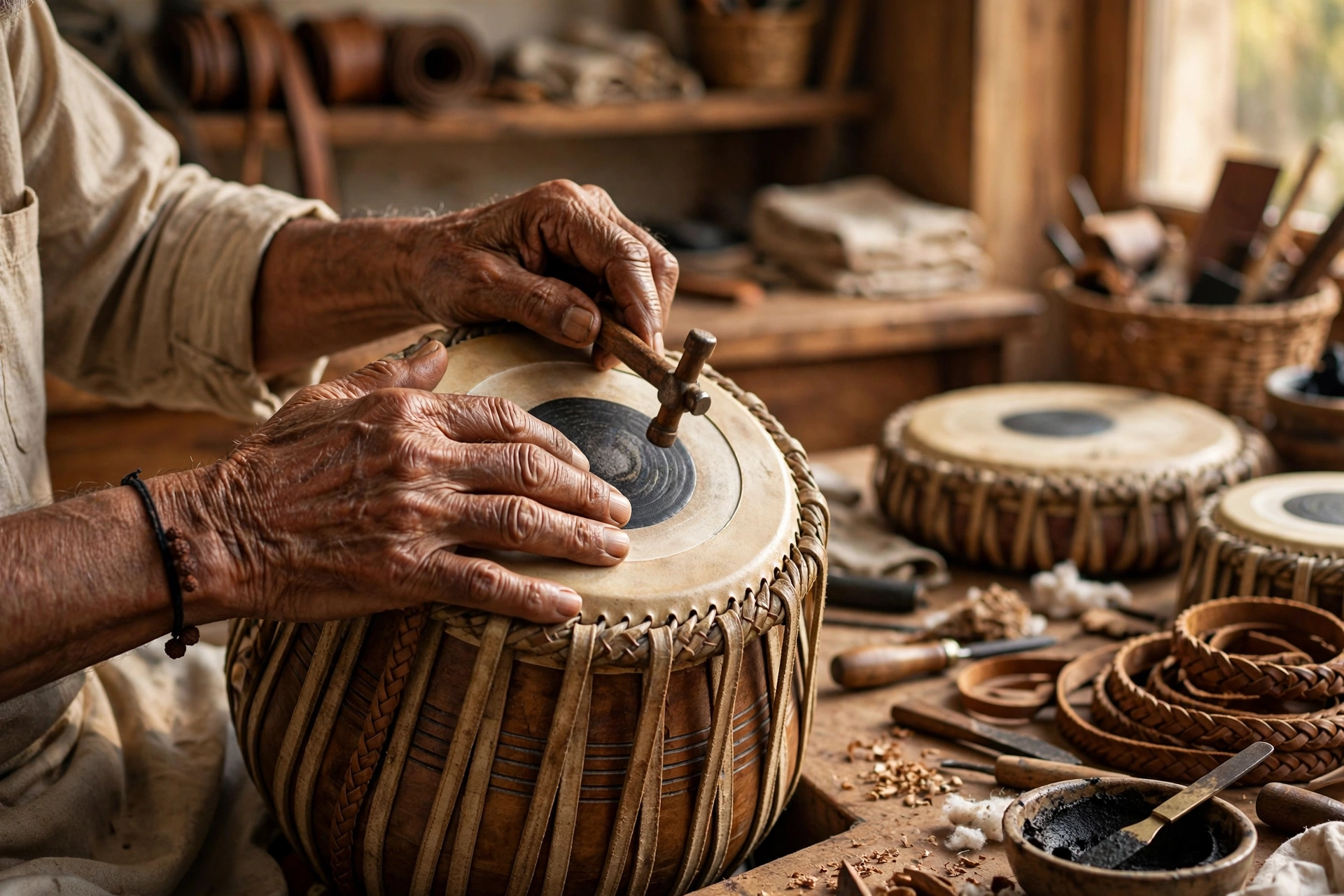
The body of each drum supports the membrane and influences the resonance and physical behavior of the instrument.
Straps & tuning system
The tensioning system helps control the drum head and allows the instrument to be tuned for musical use.
How does Tabla produce its sound?
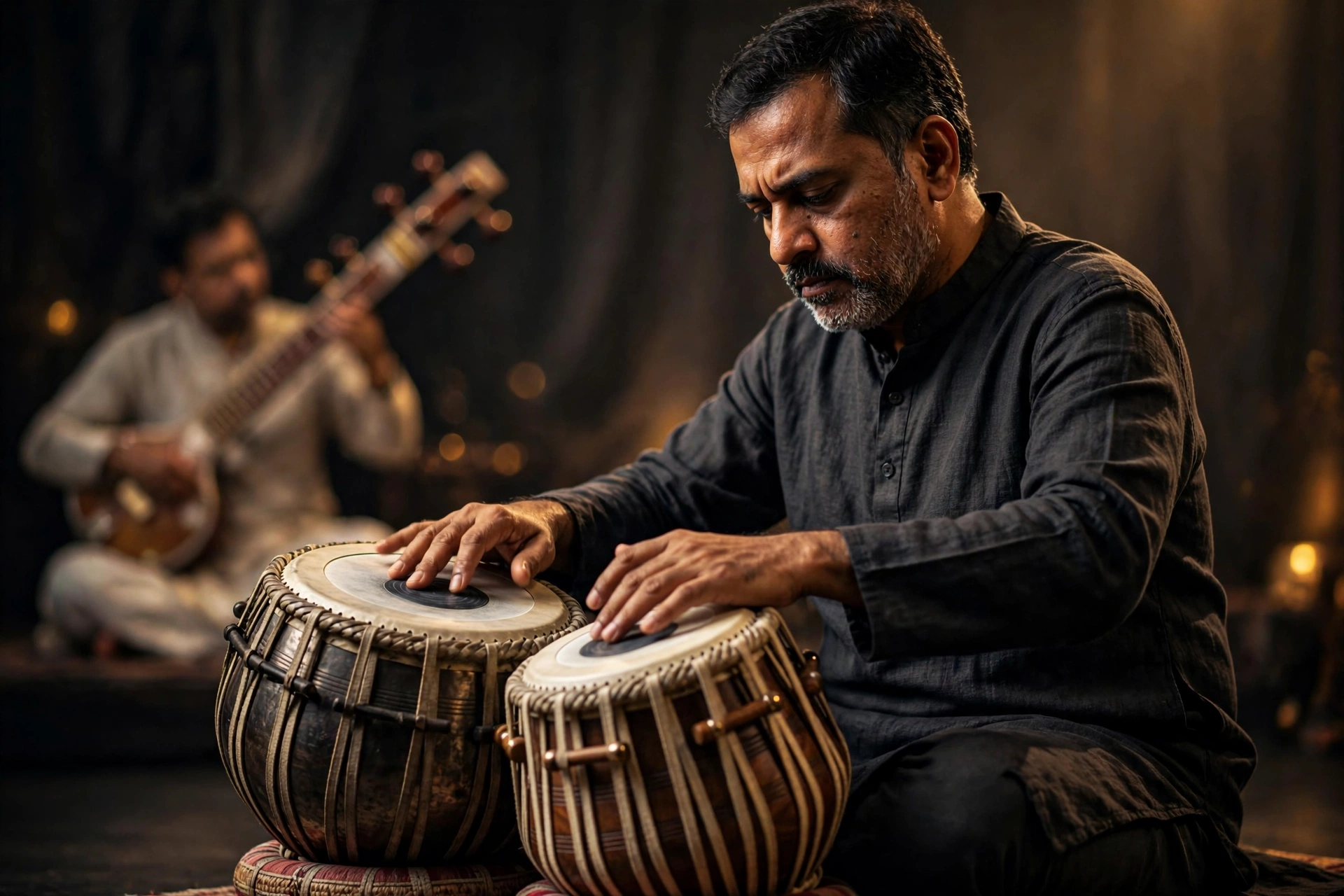
Tabla produces sound through controlled interaction between the player's fingers or hands and the stretched drum heads. Different areas of the playing surface and different hand movements create distinct sounds.
The sound is also influenced by the instrument's construction, tension and tuning. This combination gives Tabla a degree of tonal definition that allows players to articulate detailed rhythmic patterns rather than relying on a single undifferentiated drum sound.
What are Tabla bols?
Tabla bols are spoken rhythmic syllables used to represent and communicate Tabla strokes and patterns. They are important in traditional learning because a student can hear, speak, remember and then play a rhythmic idea.
For beginners, bols create a bridge between listening and physical technique. Instead of viewing rhythm as something purely mechanical, students can learn to associate a sound pattern with its corresponding playing movement.
These syllables are examples of common Tabla vocabulary. Exact technique, pronunciation, usage and combinations depend on the musical context and teaching tradition.
Tabla, taal and laya
Tabla playing is closely connected with the concepts of taal and laya. Taal refers to a rhythmic cycle or framework, while laya concerns the flow and relationship of rhythmic speed.
As students progress, they learn how individual strokes and bols fit into larger rhythmic structures. This is one reason Tabla education is not simply a matter of memorizing isolated sounds.
Rhythmic cycle
Provides an organized rhythmic framework within which patterns and compositions can be performed.
Rhythmic flow
Helps describe the relationship between musical movement, timing and speed.
Sound vocabulary
Gives players and teachers a spoken language for rhythmic strokes and combinations.
Can a beginner learn Tabla?
Yes. Beginners can approach Tabla progressively by starting with posture, instrument familiarity, hand positioning, fundamental strokes and steady rhythmic practice.
A structured learning process can then introduce bols, simple patterns, taal, laya, compositions and musical application. Progress depends on factors such as practice consistency, instruction, listening, coordination and the level of musical understanding being developed.
Posture, positioning and basic strokes
Bols, sound recognition and coordination
Taal, timing, laya and structured patterns
Compositions, accompaniment and performance
Explore the complete Tabla resource hub
Learn more about Tabla, learning pathways, practice, instruments and the wider music ecosystem.
Where can Tabla be used?
Tabla is strongly associated with Indian classical music, but its musical role can extend into collaborative performances, fusion projects, recording, rehearsals, live events and contemporary music-making.
That wider context matters because learning an instrument is not always about one final destination. Some musicians focus on classical repertoire, some on accompaniment, some on performance, and others explore recording or collaboration.
Rhythmic accompaniment, solo work and traditional practice.
Work alongside other Indian and contemporary instruments.
Capture Tabla performances as part of recorded music projects.
Bring Tabla into rehearsals, concerts and live musical events.
Where Tabla connects with the wider music journey
Beyond learning, musicians may need instruments, practice spaces, recording, repair, performances and other professional music services. These existing SoulFul ventures serve different parts of that journey.
Structured music education and learning pathways.
↗ 02 INSTRUMENTS SoulFul Musik StoreExplore musical instruments and music-related products.
↗ 03 PRE-OWNED SoulFul Musik Store Pre-OwnedExplore a dedicated destination for pre-owned instruments.
↗ 04 RENT & REPAIR Instrument Rentals & RepairsRental, maintenance and repair pathways for musical instruments.
↗ 05 PRACTICE SoulFul Musik JampadA dedicated environment for rehearsal and musical collaboration.
↗ 06 RECORDING SoulFul Musik StudioProfessional studio and recording environment.
↗ 07 EVENTS SoulFul Musik EventMusic events and live performance services.
↗ 08 ARTISTS SoulFul Artist ManagementProfessional services connected with artists and performance.
↗ 09 CRAFT SoulFul Instrument ManufacturingInstrument manufacturing and craftsmanship within the ecosystem.
↗ 10 PRO AUDIO SoulFul Pro Audio GearsProfessional audio equipment and related music solutions.
↗ 11 ACOUSTICS SoulFul Studio AcousticAcoustic-focused solutions for music spaces and studios.
↗ 12 CERTIFICATION SoulFul CertificationsCertification-oriented music pathways and services.
↗
Choosing a Tabla as a beginner
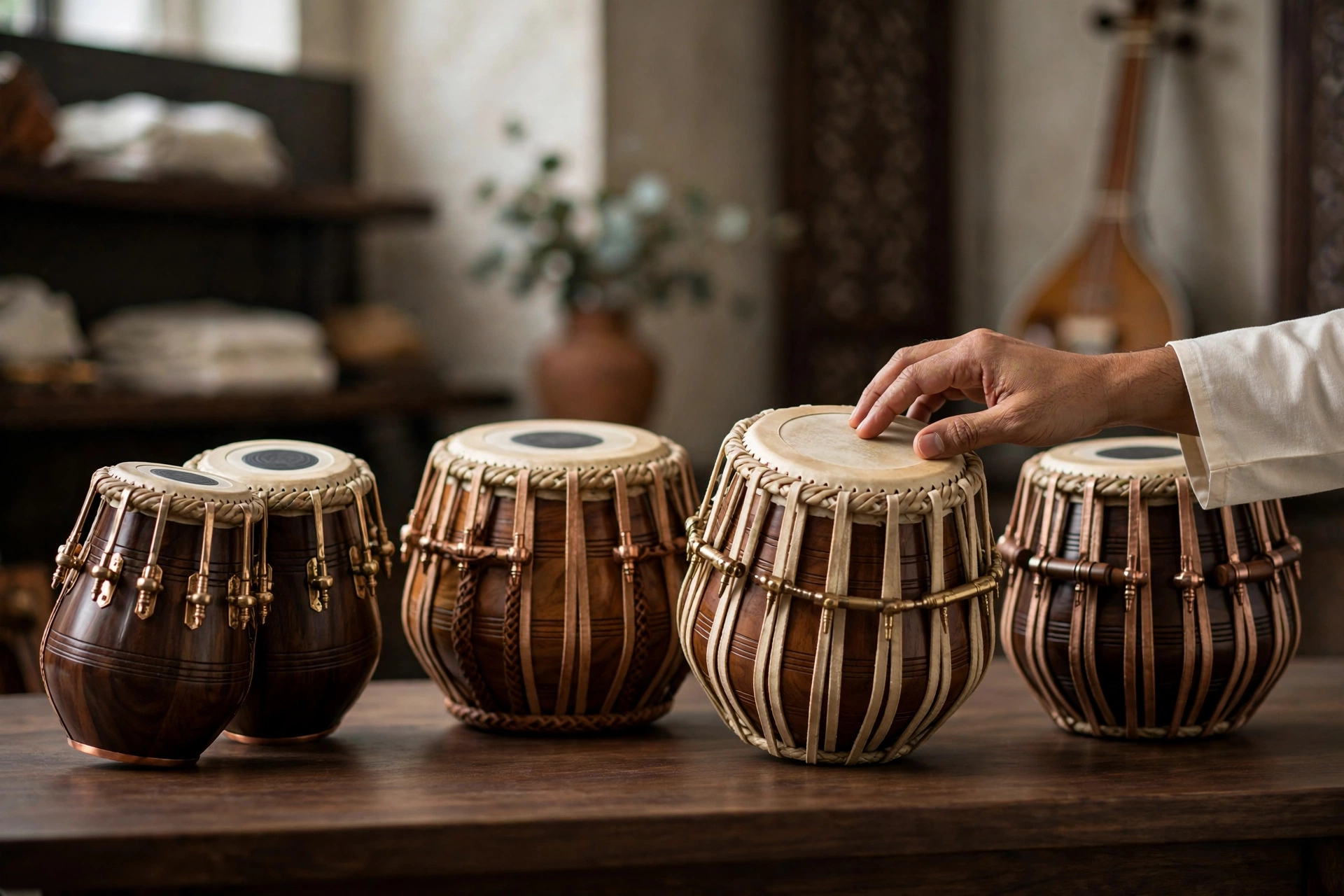
Beginners often focus on price first, but the more useful starting point is whether the instrument is suitable for the player's intended use, comfortable to handle and in suitable condition.
Frequently asked questions about Tabla
What is Tabla?
Tabla is a paired Indian percussion instrument consisting primarily of the dayan and bayan. It is widely associated with Hindustani music and is used in many other musical contexts.
What are the two drums in a Tabla set called?
The two principal drums are commonly called the dayan and bayan. They differ in size, construction and tonal role.
What is the black circle on Tabla?
The dark central area on the playing head is commonly called the syahi. It is an important part of Tabla construction and contributes to the instrument's characteristic sound.
What are Tabla bols?
Tabla bols are spoken syllables used to represent and communicate strokes and rhythmic patterns.
Can beginners learn Tabla?
Yes. Beginners can start with posture, hand positioning, basic strokes, listening and steady practice, then progress into bols, taal, laya and broader musical applications.
Is Tabla only used in Indian classical music?
Tabla is strongly associated with Indian classical music, but it can also appear in collaborative, fusion, recording, rehearsal and live-performance settings.
The Tabla journey starts with understanding the rhythm.
Continue exploring Tabla knowledge, learning pathways and the wider SoulFul Musik ecosystem.
Explore the Tabla Hub ↗