
What Is Veena? History, Parts, Sound and How It Works
Discover what a Veena is, how its strings and resonators create sound, how its main parts work, and why this family of Indian instruments remains important in classical music.
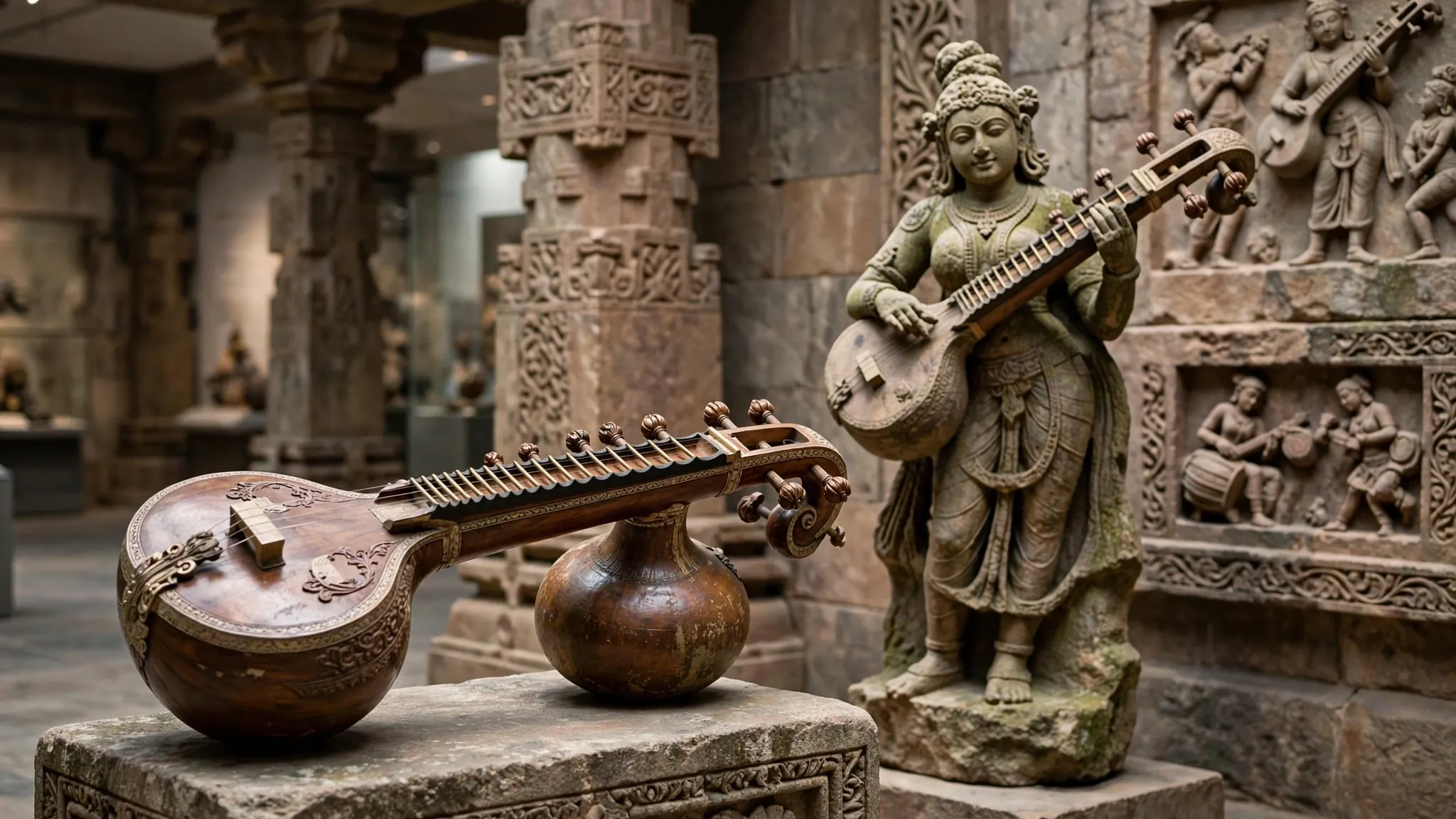
What is a Veena?
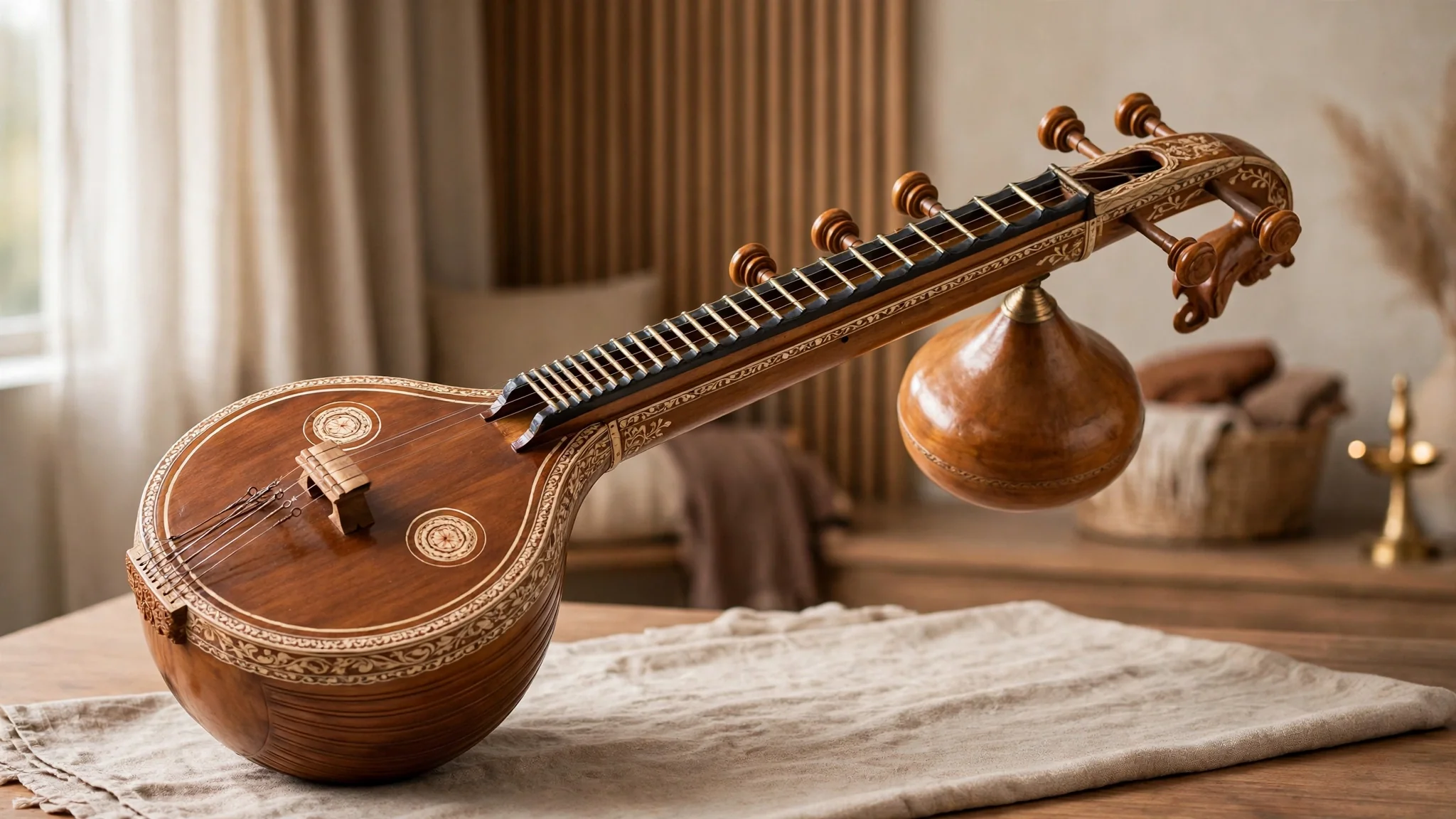
A Veena is a name used for several traditional Indian string instruments. One of the best-known forms is the Saraswati Veena, a fretted and plucked instrument strongly associated with South Indian Carnatic classical music. Its long neck, fixed frets, strings, bridge and resonating body allow the performer to produce melodic notes, sustained tones and expressive pitch movements.
Veena Guide Contents
What Is a Veena?
The word Veena refers to a broad family of traditional Indian string instruments rather than one single historical design. Over time, instruments known by this name developed into different forms across South and North India.
In modern classical music discussions, the term often brings to mind the Saraswati Veena, a South Indian plucked and fretted instrument closely connected with the Carnatic tradition. Its construction combines a resonating wooden body, a long fretted neck, strings, bridges and tuning hardware.
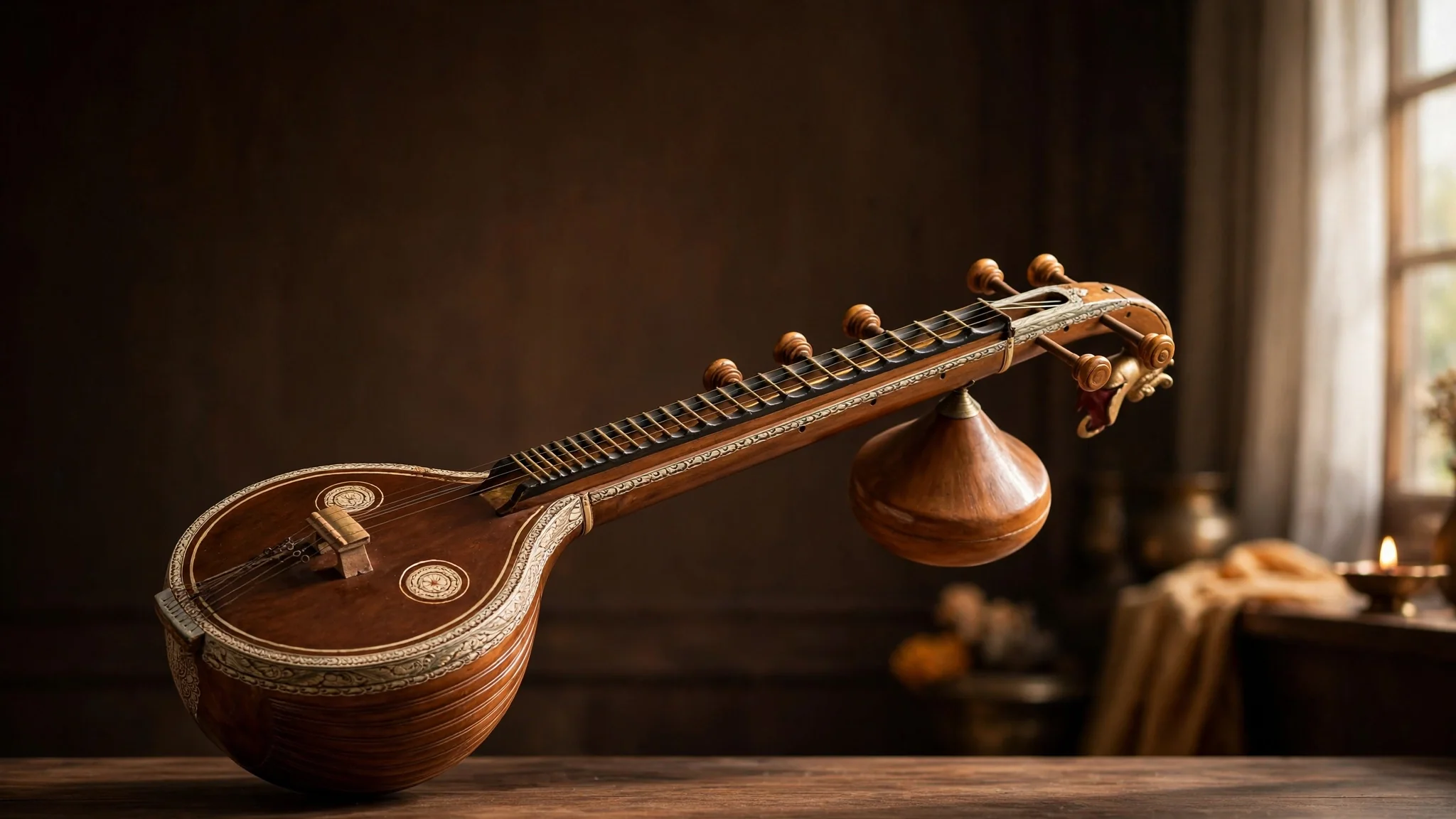
Important distinction: not every historical Veena looks like a modern Saraswati Veena. The term has been used for several different Indian chordophone designs over centuries.
A Brief History of the Veena
The history of the Veena is much older than the modern instrument seen in a Carnatic concert today. The word has been associated with Indian string instruments across different periods, and historical Veena forms included different construction methods, playing positions and resonating systems.
Ancient String Traditions
Early Indian musical traditions included several string instruments and forms that contributed to the long development of Veena-family instruments.
Regional Development
Over centuries, regional musical systems produced different Veena designs, including instruments associated with both northern and southern traditions.
Modern Saraswati Veena
The Saraswati Veena developed into a refined fretted lute design strongly associated with South Indian classical music.
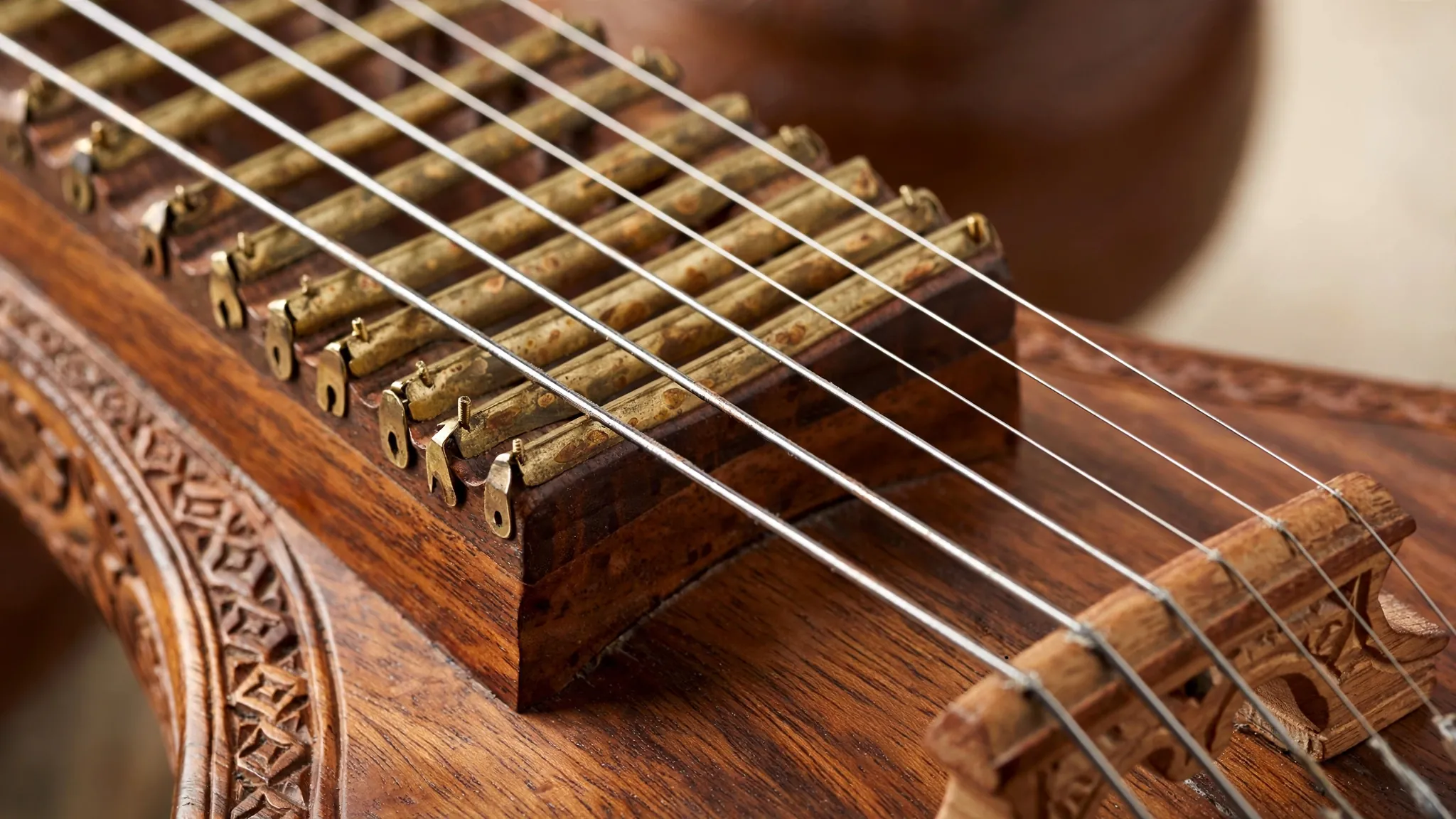
The name “Veena” covers a long musical lineage
Historical depictions show that Indian string instruments associated with the Veena tradition have appeared in art, sculpture and musical culture for many centuries.
This is why a good introduction to the Veena should distinguish between the broader Veena family and the specific Saraswati Veena used today.
Parts of a Veena
Understanding the main parts of the Saraswati Veena makes it much easier to understand how the instrument produces and controls musical sound.
Kudam
The large main resonating body that helps amplify the vibration produced by the strings.
Dandi
The long neck or fingerboard area carrying the frets and supporting the playable string length.
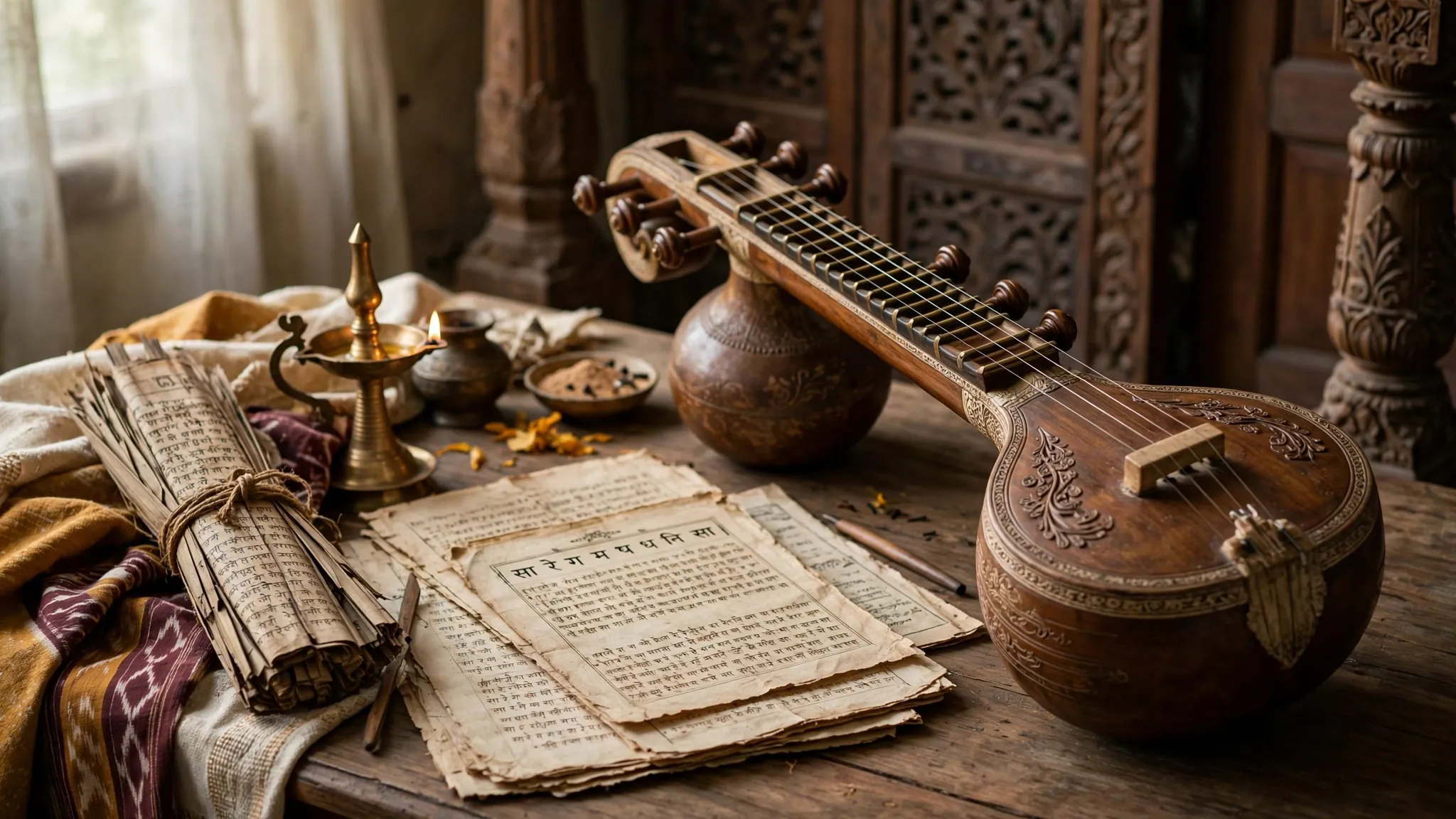
Frets
Metal frets provide fixed note positions and help the player locate pitches across the fingerboard.
Bridge
The bridge supports the strings and transfers their vibration into the resonating structure.
Tuning Pegs
Tuning mechanisms allow the performer to adjust string tension and bring the instrument to the required pitch.
Yali
The ornamental carved finial at the upper end is a distinctive visual feature of many Saraswati Veena designs.
Strings
The instrument combines primary melodic strings with additional strings used for rhythmic or drone functions.
Additional Resonator
Traditional designs can include an upper resonating element positioned near the neck and peg area.
A Veena works as a connected acoustic system.
The strings, frets, bridge, body and resonating surfaces work together to turn finger movement and string vibration into musical sound.
How Does a Veena Produce Sound?
A Veena produces sound when a string is plucked and begins vibrating. That vibration is transferred through the bridge and into the instrument's body, where the resonating structure helps make the sound audible.
The player's right hand sets the string into vibration.
The left hand selects and changes notes using the frets and expressive pressure techniques.
The string vibration travels through the bridge and into the resonating body.
The instrument's acoustic design influences resonance, sustain, brightness and tonal character.
Veena Strings, Frets and Tuning
A standard Saraswati Veena is commonly described with four main melody strings and three tala or drone strings. The precise arrangement and tuning practice can vary according to the instrument and musical context.
Four melodic strings
These provide the principal melodic material and interact with the frets to create the playable note system.
Three tala / drone strings
These additional strings support rhythmic articulation, drone functions and the overall musical texture.
Why tuning matters
String tension determines pitch. The performer therefore tunes carefully before playing and uses the instrument's tuning mechanisms to make precise adjustments.
How Is the Veena Played?
The Saraswati Veena is played while seated. One hand works the strings over the fingerboard while the other hand plucks the selected strings. The player can also use pressure and movement techniques to create expressive pitch effects characteristic of Indian classical music.
Position
The instrument is positioned across the performer so the main resonator rests securely while the playing hand can reach the strings comfortably.
Plucking
The right hand activates the strings and controls articulation, rhythm and attack.
Fingering
The left hand selects notes using the fretted fingerboard and applies pressure for expressive control.
Gamakas
Indian classical expression relies on nuanced pitch movement, and Veena technique provides detailed control over these musical ornaments.
The beauty of the Veena is not only in the notes it produces, but in how naturally the instrument allows melodic expression, pitch movement and rhythmic detail.
Types of Veena
Veena is an umbrella term connected with several Indian string instruments. Their construction, playing method, historical context and musical roles can differ significantly.
Saraswati Veena
A prominent South Indian fretted lute associated with Carnatic classical music.
Rudra Veena
A large fretted instrument associated with older Hindustani traditions and particularly with dhrupad.
Vichitra Veena
A fretless Veena-family instrument played using a slide rather than fixed frets.
Other Historical Forms
Historical Indian sources and collections document several other instruments carrying the Veena or Vina name.
The Veena in Indian Classical Music
More than an instrument, the Veena is part of India's musical heritage.
The Veena appears frequently in Indian artistic and cultural traditions and is strongly associated with the symbolism of music, learning and knowledge.
In Carnatic music, the Saraswati Veena remains an important melodic instrument capable of detailed raga expression.
Is Veena Easy to Learn for Beginners?
The Veena can be learned by beginners, but developing control over posture, fretting, plucking, tuning and rhythm requires regular practice. A structured learning path is usually easier than trying to learn the instrument without guidance.
Learn the Instrument
Understand the parts, string layout, frets, tuning system and basic posture.
Develop Basic Technique
Practice simple plucking, fingering and controlled note transitions.
Build Rhythm
Work with basic rhythmic structures while keeping technique consistent.
Study Musical Expression
Gradually introduce ornamentation, phrases, ragas and performance-oriented playing.
Explore the SoulFul Musik Ecosystem
Music education connects naturally with instruments, practice, recording, events, artists, production, retail and other parts of the wider SoulFul Musik ecosystem.
Frequently Asked Questions About the Veena
What is a Veena? +
Veena is a broad term used for several traditional Indian string instruments. The Saraswati Veena is one of the best known modern forms and is strongly associated with Carnatic classical music.
Is the Saraswati Veena the same as every Veena? +
No. Veena refers to a family of instruments. Different Veena forms can have different bodies, string layouts, frets, playing methods and musical traditions.
How many strings does a Saraswati Veena have? +
A standard Saraswati Veena is commonly described with four main melody strings and three additional tala or drone strings.
How many frets does a Saraswati Veena have? +
The modern Saraswati Veena is commonly built with 24 fixed frets.
How is a Veena played? +
A performer generally plucks the strings with one hand while using the other hand to control notes across the fretted fingerboard and produce expressive pitch movement.
Is Veena suitable for beginners? +
Yes. Beginners can learn the instrument through structured lessons covering posture, tuning, plucking, fingering, rhythm and gradually more advanced musical expression.
What music is the Saraswati Veena associated with? +
The Saraswati Veena is especially associated with South Indian Carnatic classical music.
Learn, explore and experience Indian music with SoulFul.
From structured music education and instruments to recording, performance and the wider creative ecosystem, discover the different ways music can become part of your journey.
Visit SoulFul Musik Academy ↗
One Response