
What Is Guitar? History, Parts, Types, Uses & How It Works
Learn what a Guitar is, how the instrument developed, what its main parts do, how different Guitar types produce sound, where Guitars are used and how beginners can begin learning the instrument.
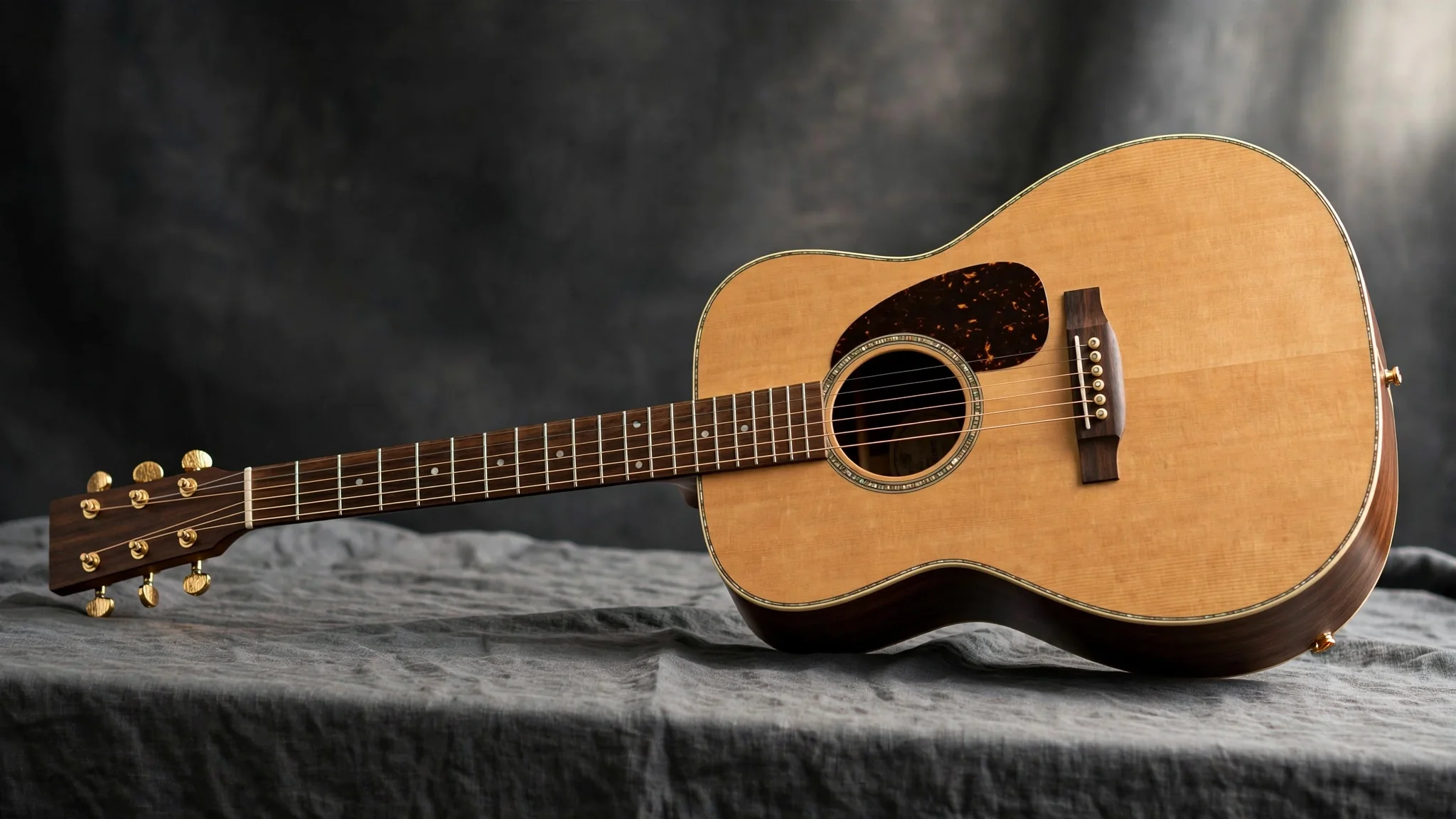
A Guitar is a fretted string instrument that can provide rhythm, harmony, melody and accompaniment. Because of its flexibility, Guitar is used in classical music, popular music, rock, blues, jazz, country, songwriting, recording and live performance.
A Guitar is a fretted string instrument played by plucking, picking or strumming its strings. Its strings vibrate when activated, while the instrument's construction helps shape the resulting sound. Acoustic Guitars primarily use their bodies for sound projection, while electric Guitars use pickups and amplification as part of their sound system.
What Is a Guitar?
A Guitar is a musical instrument built around vibrating strings stretched along a neck and body. A player changes the effective length of a string by pressing it against the fretboard, while the other hand plucks, picks or strums the strings.
The instrument can perform multiple musical roles. It can provide chords underneath a singer, establish rhythmic patterns, play individual melodies, create riffs and carry more advanced solo performances.
Although the exact construction varies, common Guitars include components such as a body, neck, fretboard, frets, strings, bridge, nut and tuning machines. Electric designs may also include pickups and electronic controls.
History of the Guitar
The modern Guitar emerged through a long development of related plucked-string instruments. Changes in construction, body proportions, string arrangements and musical traditions gradually contributed to forms recognizable today.
European instruments such as the vihuela played an important role in the history of plucked-string traditions. Later instrument makers continued refining Guitar construction to suit changing repertoire and performance requirements.
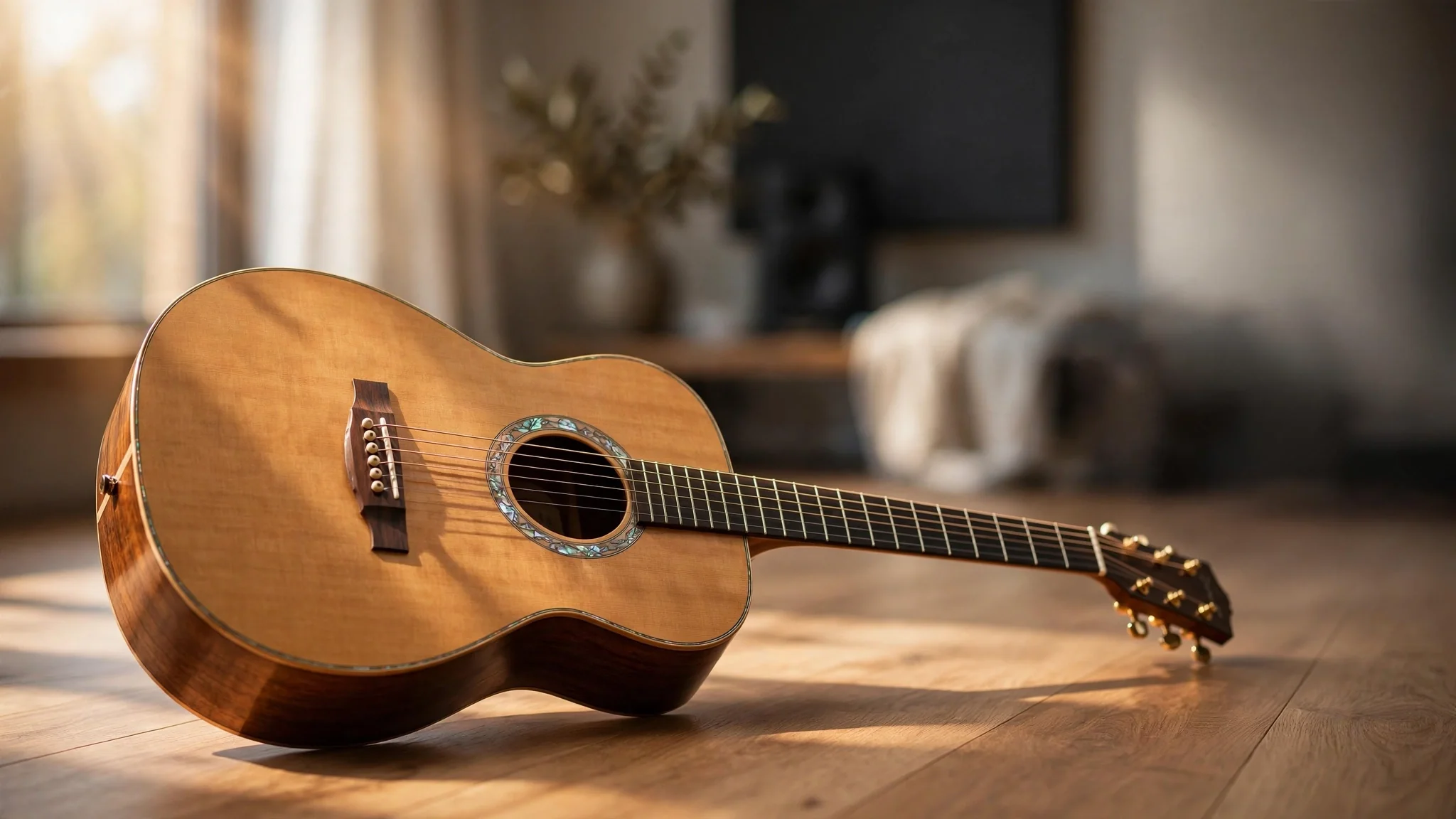
Today, Guitar appears across traditional, classical, popular and contemporary music, with instruments and techniques continuing to evolve.
Main Parts of a Guitar
Understanding Guitar parts makes it easier to understand how the instrument produces sound, how tuning works and why different construction choices affect playability and tone.
Most familiar Guitars include a body, neck, fretboard, frets, strings, bridge and tuning hardware. The headstock and nut help guide and support the strings.
Electric Guitars can additionally include pickups, switches, volume controls, tone controls and other electronic components.
Body
The main body of the Guitar. On acoustic instruments, its construction helps shape sound projection and tone.
Neck
The structural section connecting the body to the headstock and carrying the fretboard.
Fretboard
The playing surface where the fretting hand presses strings to change their effective length.
Frets
Metal strips positioned along the fretboard that provide reference points for different notes.
Strings
Vibrating elements that generate the initial source of sound when plucked, picked or strummed.
Bridge
Holds the strings at the body and helps transfer vibration into the instrument.
Nut
Supports and positions the strings where the neck meets the headstock.
Tuning Machines
Allow the player to adjust string tension and tune the Guitar.
Pickups
Electric Guitar components that detect string vibration and produce an electrical signal.
Controls
Electric Guitars may use controls for volume, tone and pickup selection.
Types of Guitar
Guitar types differ in body construction, strings, electronics, sound, playing technique and musical use. Three broad categories beginners commonly encounter are acoustic, electric and classical-style Guitars.
Acoustic Guitar
Uses vibrating strings and the acoustic body to produce and project sound without requiring electronic amplification.
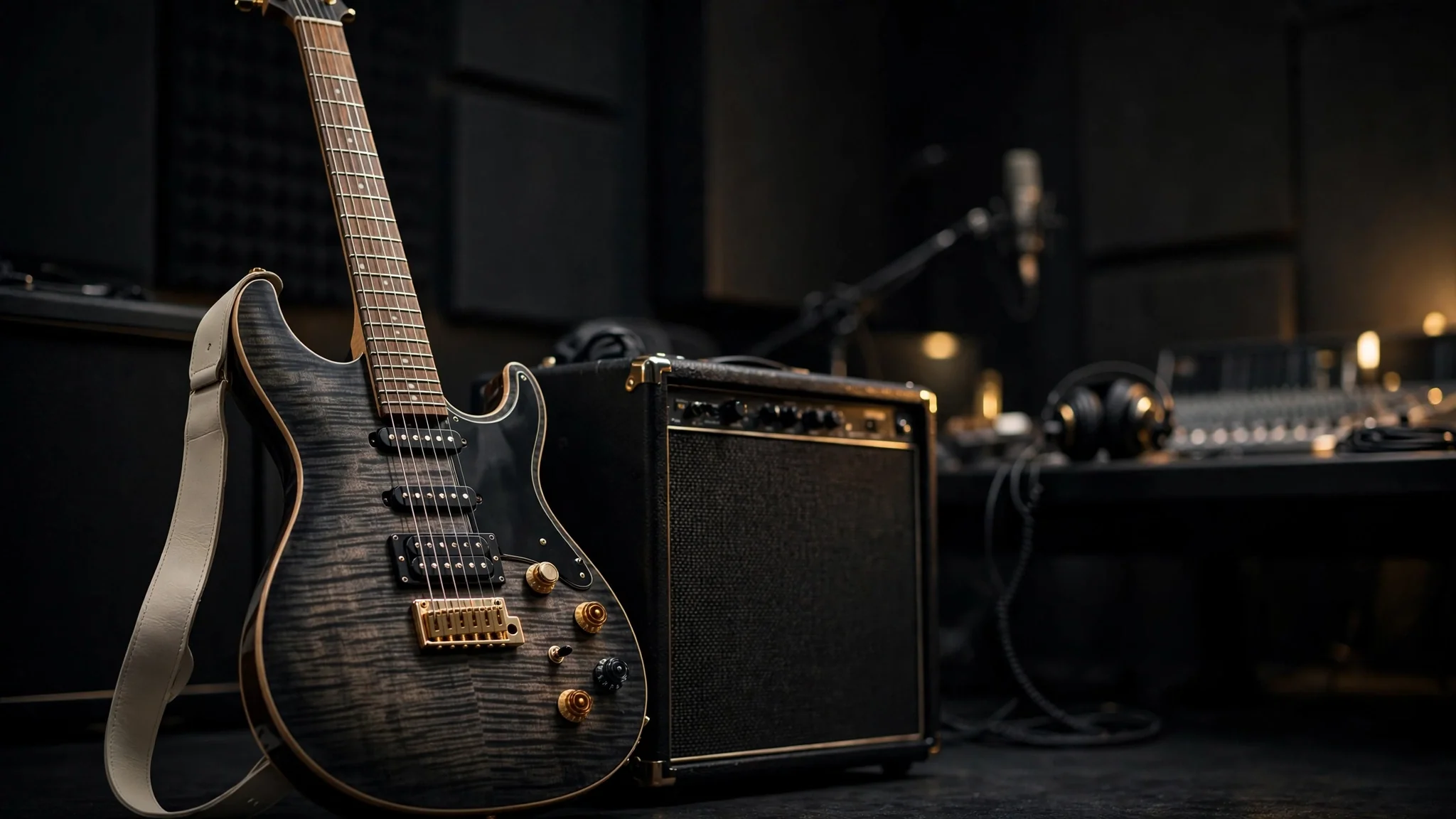
Electric Guitar
Uses pickups to convert string vibration into an electrical signal that can be amplified and shaped through equipment.
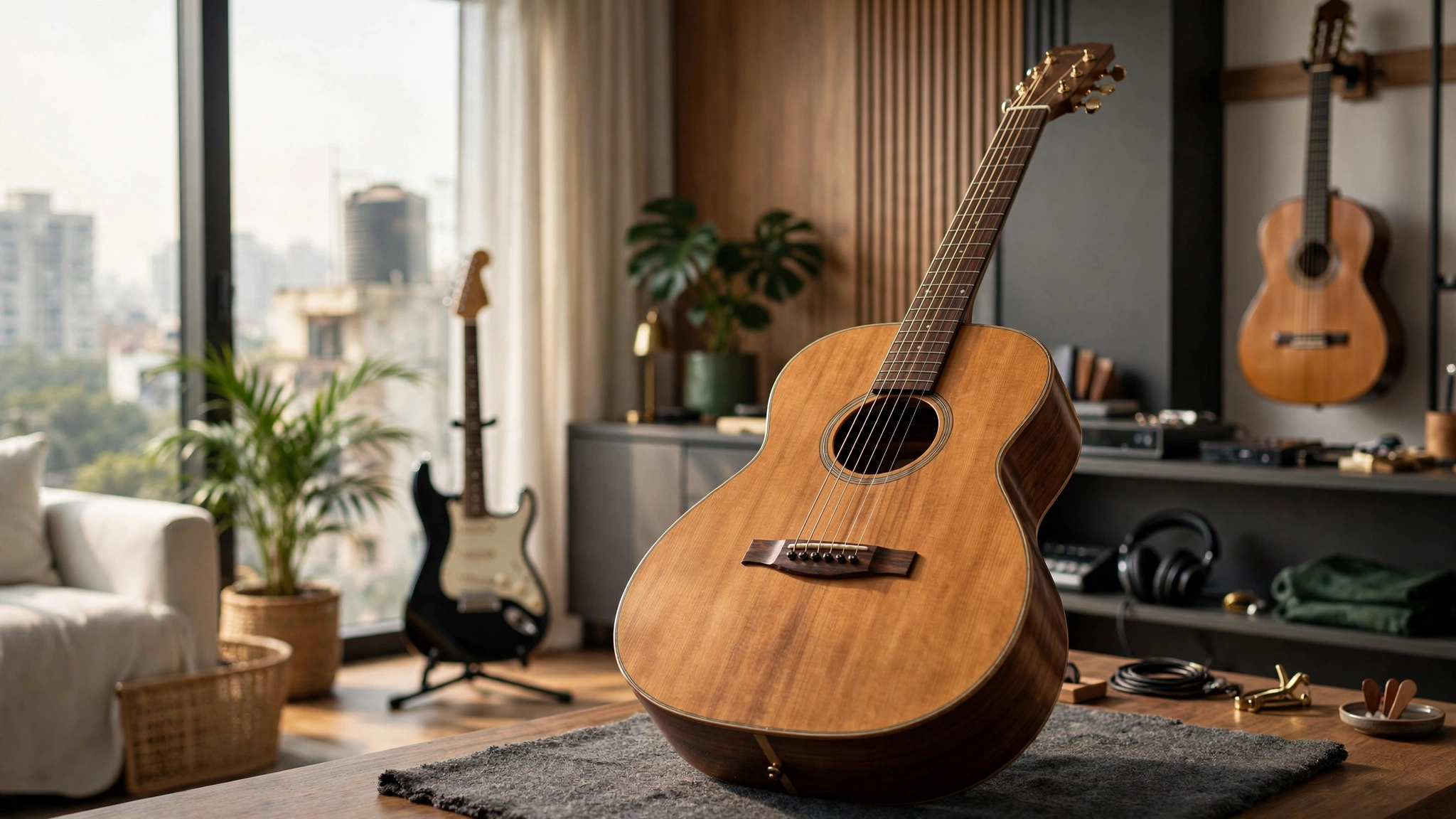
Classical Guitar
Traditionally associated with nylon strings, fingerstyle technique and classical repertoire.
Other Guitar Variations
Guitar families also include electro-acoustic instruments, semi-acoustic designs, hollow-body electric Guitars and specialized instruments intended for specific musical contexts.
How Does a Guitar Work?
A Guitar starts with string vibration. The way that vibration becomes audible depends on whether the instrument is acoustic or electric.
String Vibrates
Plucking, picking or strumming activates the string.
Vibration Transfers
On acoustic instruments, vibration travels through the bridge into the Guitar body.
Tone Develops
Construction, strings, setup and playing technique influence the sound.
Sound Is Projected
Acoustic instruments project naturally while electric Guitars use pickups and amplification.
What Is a Guitar Used For?
Guitar is versatile because the same instrument can fulfill different roles depending on the player, arrangement and musical style.
Song Accompaniment
Chords can support vocals or another melodic instrument.
Rhythm Playing
Strumming and rhythmic patterns can create a consistent musical foundation.
Melody
Players can use individual notes, riffs and melodic lines across the fretboard.
Solo Performance
Advanced playing can combine melody, harmony, rhythm and bass movement.
Songwriting
Chords and rhythmic patterns can provide a foundation for composing songs.
Recording
Acoustic and electric Guitar can become important parts of a studio arrangement.
Guitar in Different Music Styles
Guitar appears in many musical traditions, but its technique and role can change significantly depending on the genre.
- Classical: finger technique, formal repertoire and detailed control of articulation.
- Rock: amplified electric Guitar, riffs, power chords and lead playing.
- Blues: expressive phrasing, bends, rhythmic playing and improvisation.
- Jazz: chord voicings, harmonic movement, comping and improvisation.
- Pop: accompaniment, rhythmic textures and studio arrangement.
- Country: picking, accompaniment and melodic fills.
- Fusion: combinations of techniques from multiple musical traditions.
Basic Guitar Techniques
Guitar technique develops through connected skills. Beginners can build them progressively instead of trying to master everything at once.
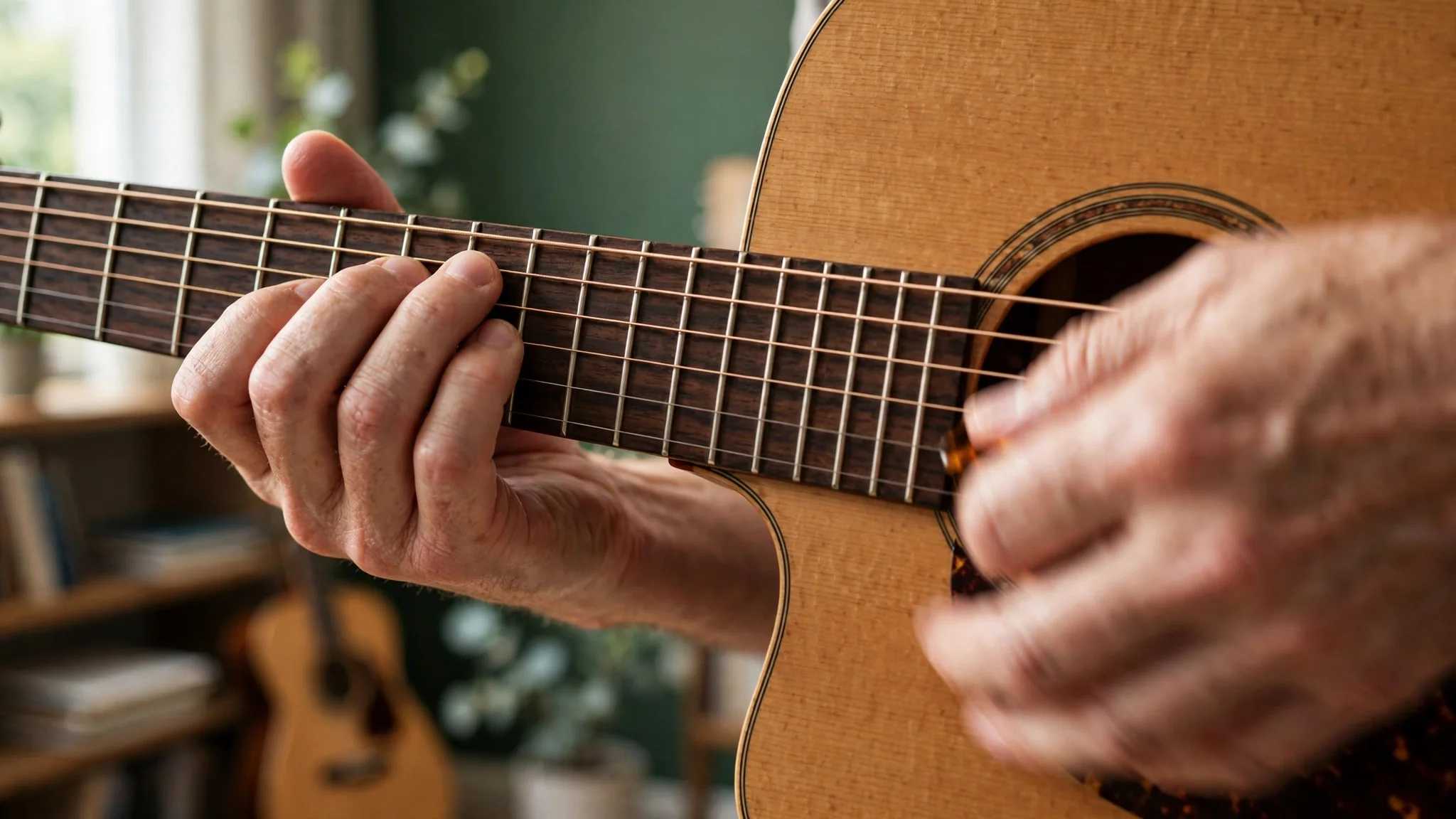
Can Beginners Learn Guitar?
Guitar can be learned progressively. A beginner does not need to understand every technique immediately. A practical starting point is to become comfortable holding the instrument, tune it correctly and develop simple coordinated movements.

Learn posture, handling, tuning and basic hand positioning.
Learn useful shapes and practice moving between them.
Develop steady timing with manageable strumming patterns.
Apply exercises to songs and practical musical situations.
Gradually add picking, scales, fingerstyle and other techniques.
Explore the dedicated Guitar Classes resource for structured learning.
How Long Does It Take to Learn Guitar?
There is no single timeline that applies to every Guitar learner. Progress can vary according to goals, previous musical experience, practice consistency, instrument familiarity and the complexity of the skills being developed.
Someone learning basic accompaniment may follow a different path from a learner working toward improvisation, fingerstyle, theory, performance or advanced technique.
Useful signs of progress include cleaner chord changes, steadier rhythm, improved timing, stronger technique, a wider repertoire and greater control over the instrument.
What Should a Beginner Practice on Guitar?
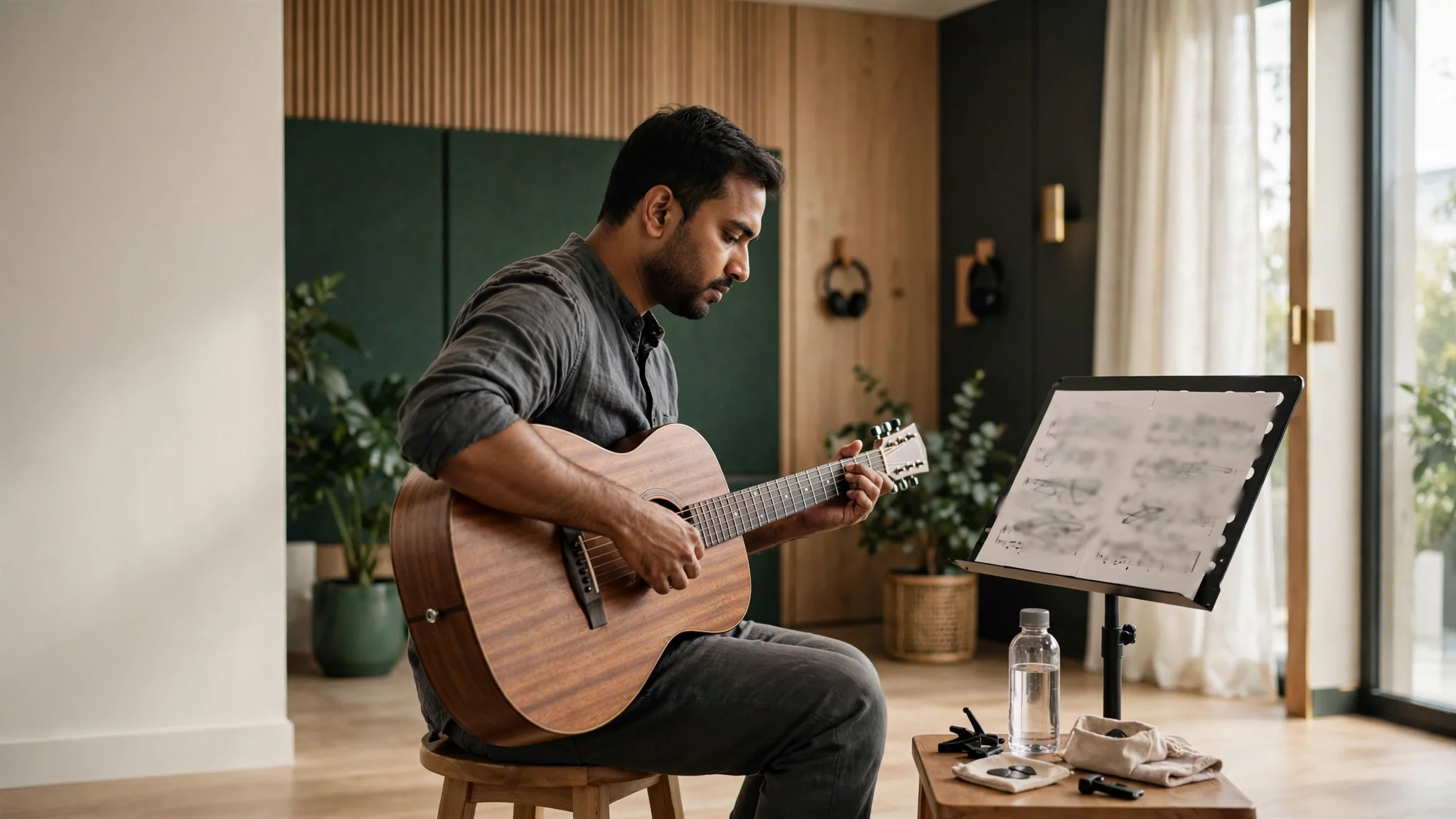
A productive beginner practice routine can combine technical exercises with actual musical playing.
- Warm up with relaxed finger movements.
- Practice basic chord shapes.
- Work on chord transitions.
- Develop steady rhythm and strumming.
- Apply the skill to a song or musical exercise.
- Review the area that needs the most attention.
A consistent and focused practice routine can make learning more manageable than relying only on occasional long practice sessions.
How to Choose a Guitar for a Beginner
Choosing a first Guitar involves more than appearance. Comfort, playability, musical goals, budget and the intended style of music all matter.

Browse instruments at the SoulFul Musik Store or explore SoulFul Pre-Owned Store .
Guitar Maintenance and Basic Care
Regular care can help maintain an instrument's condition, playability and tuning stability.
- Keep the Guitar and strings clean.
- Store the instrument safely.
- Replace worn strings when needed.
- Pay attention to tuning stability and changes in playability.
- Seek qualified repair or setup assistance when a problem goes beyond basic maintenance.
For instrument rental and repair requirements, visit SoulFul Instrument Rentals & Repairs .
Learning Guitar in Mumbai and Online
Guitar learning can happen in a physical classroom or through online instruction. The right format can depend on location, schedule, equipment, learning preferences and the amount of direct guidance needed.

Guitar Classes in Goregaon & Mumbai
Explore the Mumbai-focused Guitar resource for local learning information.
Explore Mumbai Guitar Classes →
Learn Guitar Online
Online learning provides an option for students who are not learning from the physical academy.
Explore Guitar Classes →Guitar Beyond the Classroom
Learning Guitar is one part of a musician's journey. Relevant SoulFul ventures can support instrument purchase, pre-owned equipment, rental, repair, practice, recording, professional audio and music events.
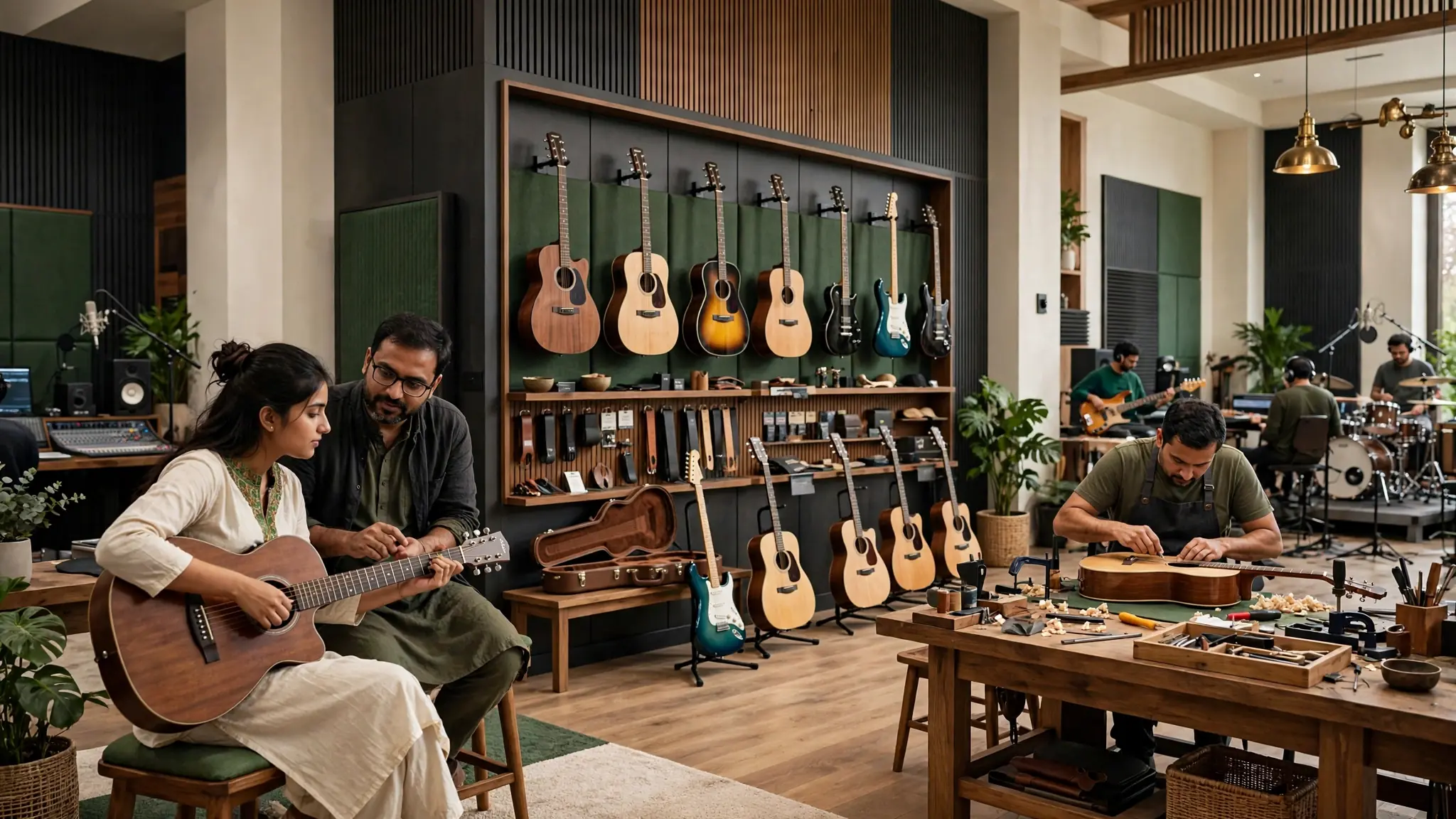
Explore the SoulFul service that matches your next step:
Guitar FAQs
What is a Guitar?
How many strings does a Guitar have?
What are the main types of Guitar?
How does an acoustic Guitar make sound?
How does an electric Guitar work?
Is Guitar suitable for beginners?
What should I learn first on Guitar?
Can I learn Guitar online?
How long does it take to learn Guitar?
Ready to take the next Guitar step?
Continue from this introductory guide into the main Guitar resource, explore structured Guitar classes, or see the Mumbai-focused learning page.