
A COMPLETE INSTRUMENT GUIDE
Darbuka Instrument: History, Playing Techniques, Buying, Rental & Repair
Discover the expressive goblet drum heard across Middle Eastern, North African and world-music traditions. Learn how the Darbuka is built, how its signature tones are created, and what to consider when learning, choosing, caring for or enquiring about one.

The Darbuka is a single-headed, goblet-shaped hand drum known for its sharp high tones, resonant bass strokes and expressive rhythmic vocabulary. It appears in musical traditions across the Middle East, North Africa, the eastern Mediterranean and beyond. Whether you are discovering it for the first time, comparing instruments or looking for a musician, this guide brings the essential details together.
- How the Darbuka is shaped, named and constructed.
- How players create low Doum, high Tek and slap-like accents.
- What to consider before buying or choosing a pre-owned drum.
- How to approach learning, practice, maintenance and service enquiries.
What is a Darbuka instrument?
A Darbuka is a hand-played percussion instrument with a wide drumhead over a hollow, usually goblet-shaped body. The wider head is struck with the hands and fingers, while the narrower base forms the resonating chamber and open end. Its compact form makes it suitable for seated playing, standing performance and ensemble settings.
The sound changes according to where and how the player contacts the head. A controlled strike near the centre can create a full, low tone; precise edge strokes create brighter, higher sounds. Skilled players combine these tones into repeating rhythmic cycles, fills and improvised phrases.
History and cultural reach of the Darbuka
Goblet-shaped drums have a long history across regions of West Asia, North Africa and the Mediterranean. Related instruments appear in different communities and musical settings, and their forms, materials and names have changed over time. The modern Darbuka is especially associated with Arabic, Turkish and wider regional music traditions, while related goblet drums are found in Balkan and other neighbouring musical cultures.
There is no single origin story that explains every instrument now called a Darbuka or Doumbek. Museum collections and music scholarship describe a family of related goblet drums whose construction and musical roles developed across different places. It is more accurate to understand the instrument through its regional variations than to treat every goblet drum as identical.
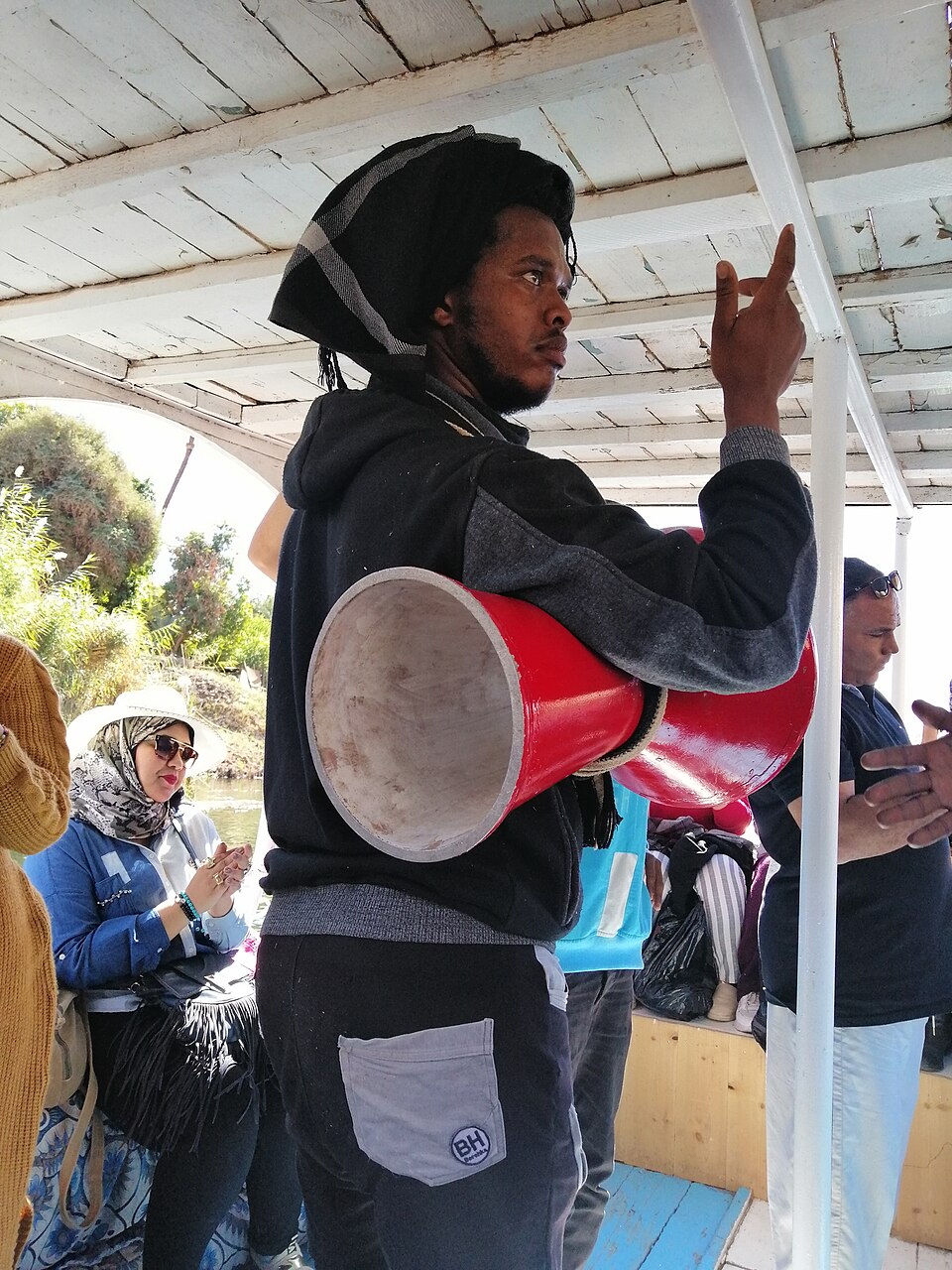
Darbuka, Darabuka, Darbukka and Doumbek: what is the difference?
Spelling and naming vary by language, region and transliteration. You may see Darbuka, Darabuka, Darbouka, Darbukkah or Doumbek used for related goblet-shaped drums. The Turkish word darbuka and Arabic forms such as darbūkah are widely encountered, while doumbek is a familiar English-language name for some related instruments.
These words overlap in everyday use, but they are not guaranteed to describe the exact same regional construction or playing tradition. Check the instrument's body, head, tuning system and maker description rather than relying on the product name alone.
Different types of Darbuka
Darbukas are made in a range of shapes and materials. The names used by makers and sellers are not always standardised, so use the following as a practical comparison guide rather than a strict global classification.
Egyptian-style forms
Many Egyptian-style instruments have a rounded or rolled head edge. The profile and rim can influence how the hands approach the head and how the instrument responds.
Turkish-style forms
Some Turkish-style drums feature a more exposed, sharper head edge. This construction is often associated with detailed finger articulation and bright edge tones.
Metal-body Darbuka
Aluminium, copper and other metal alloys are common body materials. Metal drums may use a synthetic head and mechanical tuning hardware, depending on the model.
Ceramic and traditional forms
Clay and ceramic bodies are found in several regional traditions. Some use a fixed or traditionally attached head, so handling and maintenance differ from screw-tuned drums.

Main parts of a Darbuka
Understanding the basic construction helps you compare instruments and identify common maintenance needs.
- Drumhead: The membrane stretched over the wide opening. It may be synthetic or a traditional natural material.
- Rim or head edge: The perimeter where the head meets the shell. Its profile affects playing comfort and articulation.
- Body or shell: The hollow resonating chamber, often made from metal, ceramic, clay, wood or composite materials.
- Tuning hardware: On many modern drums, screws and a counter-hoop adjust head tension. Other traditional designs use different attachment systems.
- Base opening: The open narrow end allows the shell to resonate and project the sound.
Do not tighten every drum in the same way. Follow the maker's instructions for the exact head and tuning system.
How does a Darbuka produce its signature sounds?
Players use different contact points, finger combinations and degrees of force to create contrasting tones. Three useful beginner sound labels are:
Low bass tone
A rounded, resonant sound commonly created by striking the central area of the head with a relaxed hand technique.
High edge tone
A sharper, brighter sound produced near the rim with controlled finger contact. Exact technique varies between players and traditions.
Slap or accent
A more pronounced attack used as an accent. It is commonly taught alongside bass and high strokes in contemporary technique descriptions.
The syllables are teaching aids that represent sound qualities; pronunciations and stroke names can vary between schools and musical traditions.
How to play the Darbuka: a beginner-friendly starting point
There is more than one accepted playing position. A seated player may rest the drum across the thigh and secure it under one arm, or position it between the legs. Some performers play standing or use a different support arrangement. Choose a stable position that lets your hands move freely without straining your wrists or shoulders.

Set a comfortable position
Keep the drum secure and balanced. Avoid gripping the shell so tightly that it restricts movement or resonance.
Begin with relaxed strokes
Practise slow, even centre and edge contacts. Keep the movement small and controlled before increasing speed.
Separate the sounds
Work on a clear low tone, a clean high tone and a controlled accent individually before combining them.
Use a metronome
Start slowly, count evenly and increase tempo only when the sound and timing remain consistent.
Build coordination gradually
Practise short patterns with both hands. Take breaks and stop if you experience pain or unusual tension.
Popular Darbuka rhythms and patterns
Darbuka players perform repeating rhythmic cycles, often called iqa’at or awzan in Arabic musical contexts. The same rhythm may be interpreted with different ornamentation, accents and tempos by different players.
Learn a rhythm from a qualified teacher or a reliable notation/demonstration, listen to recordings from the relevant tradition and practise with a steady pulse. A short written syllable pattern is only a starting reference; listening and musical context are essential.
Learning Darbuka as a beginner
Beginners benefit from a simple sequence: posture, sound production, timing, basic patterns, coordination and musical application. A teacher can help correct hand position early, identify unnecessary tension and explain how a particular style uses accents and ornamentation.
This is an illustrative 20-minute practice structure, not a prescribed training programme. Adjust it to your level and take breaks as needed.
For structured learning, ask about the appropriate lesson format, teacher availability and instrument requirements before enrolling. SoulFul Musik Academy provides a route to enquire about music learning; confirm whether a dedicated Darbuka class or teacher is currently available.
Explore SoulFul Musik AcademyHow to choose a Darbuka instrument
The right drum depends on your playing goals, comfort, budget, preferred sound and the music you want to perform. Compare the instrument in person where possible and ask for clear product specifications.
Before buying, check these points
- ✓Body material and buildInspect the shell for cracks, dents, sharp edges, uneven finish or loose components.
- ✓Head type and tuning systemConfirm whether the head is synthetic or natural and how its tension is adjusted.
- ✓Sound and responseTry the low, high and accent tones; listen for unwanted rattles or uneven response.
- ✓Size, weight and comfortChoose a size you can support comfortably during practice and performance.
- ✓Accessories and after-sales supportAsk about a case, tuning key, replacement head availability, warranty and service terms.
- ✓Use case and budgetMatch the instrument to practice, stage use, travel or recording requirements.
When comparing products online, review the seller's return conditions, actual photographs, dimensions and model-specific details. Do not assume that every instrument listed as a Darbuka has the same rim profile, head material or tuning arrangement.
Explore SoulFul Musik StoreBuying a pre-owned Darbuka: inspection checklist
A used Darbuka can be worth considering when its condition, history and asking price are clear. Inspect it carefully before purchase and request a short sound demonstration from the seller.
Inspect physically
- Check the head for tears, deep dents, warping or lifting edges.
- Look for cracks, corrosion, loose fittings and damage to the shell.
- Test every tuning screw gently for movement and signs of damage.
- Check the rim for sharp spots that could affect hand comfort.
Ask the seller
- Confirm the maker, model, age and original purchase details.
- Ask whether the head or tuning hardware has been replaced.
- Request an unedited recording of bass, edge and accent tones.
- Agree on inspection, payment and return terms before purchase.
Darbuka rental, repair and maintenance
Considering a Darbuka rental?
Renting may be useful for a short project, trial period, rehearsal, event or temporary requirement. Before confirming, share the exact instrument type, intended dates, location and whether you need accessories. Darbuka-specific stock and dates must be confirmed directly; a general percussion category listing does not guarantee that a particular model is available.
Need a Darbuka repair?
Possible issues include a damaged head, loose tuning hardware, shell damage, unwanted rattling or an instrument that no longer responds evenly. The correct repair depends on the model and construction. A physical inspection may be needed before a repair scope, parts requirement or quotation can be confirmed.
Basic care between sessions
- Store the drum in a dry place and avoid sudden temperature or humidity changes.
- Use a suitable padded case when transporting the instrument.
- Keep the head clean and avoid sharp objects or unnecessary pressure.
- Do not over-tighten tuning screws or apply oils and cleaners without maker guidance.
- Have cracks, loose hardware or head damage assessed before continued heavy use.
Tell us which Darbuka you need help with.
Share the model, photographs, your location and the requirement. The team can confirm service scope and availability after review.
Darbuka players for live shows, events and collaborations
The Darbuka can provide a rhythmic foundation, support a percussion ensemble or add distinctive accents to fusion and cross-cultural performances. The setting may include stage shows, cultural programmes, private celebrations, studio sessions, workshops and collaborative projects.
When enquiring about a performer, share the event date, venue, location, set duration, musical style, rehearsal expectations, stage or microphone requirements and approximate budget. Artist availability and booking terms should be confirmed for each event.
Darbuka learning, buying, rental and repair enquiries in Mumbai
Visitors searching for Darbuka classes, instrument buying options, pre-owned drums, rentals or repair support may use the relevant SoulFul Musik World venture links below. Location-specific availability, delivery, appointments, teacher schedules and instrument stock must be checked directly before making plans.
These locations are included as relevant search and enquiry areas. They are not a promise of a physical branch, guaranteed service coverage, stock or appointment availability in every locality.
Explore all 21 SoulFul Musik World ventures
Explore the wider SoulFul ecosystem through its learning, instrument, production, promotion and business platforms. Choose the venture that best matches your requirement and confirm its current services directly with the relevant team.
Learning & artist development
Instruments & production infrastructure
Frequently asked questions about the Darbuka
What is a Darbuka instrument?
A Darbuka is a single-headed, goblet-shaped hand drum played with the hands and fingers. Its sound ranges from low resonant tones to crisp high notes and accents.
Is Darbuka the same as Darabuka or Darbouka?
These are common spelling variants used across languages and transliteration systems. Product names and local usage can vary, so inspect the instrument's actual construction.
Is a Darbuka the same as a Doumbek?
The terms are often used for related goblet drums, but they do not always identify an identical regional form. Compare the head edge, shell, materials and tuning system.
What are the main Darbuka sounds?
Beginner descriptions commonly include Doum (low tone), Tek (high edge tone) and Pa (slap-like accent). Technique and terminology vary by player and tradition.
Can a beginner learn the Darbuka?
Yes. A beginner can start with comfortable posture, relaxed strokes, steady timing and short patterns. Feedback from a knowledgeable teacher can help develop clean technique.
How do I choose a Darbuka for beginners?
Compare comfort, body material, head type, tuning system, sound response, build quality, size and after-sales support. Try the instrument before buying when possible.
Can I rent a Darbuka in Mumbai?
Send the required model, dates and locality to the rental team to confirm current stock and service availability. A specific Darbuka model is not guaranteed by a general percussion listing.
Can a damaged Darbuka be repaired?
It depends on the damage and construction. Share photographs and model details, and arrange an inspection where needed before accepting a repair quotation.
Can I learn Darbuka online?
Ask the academy about current teacher availability and whether an online lesson format is offered for this instrument. Confirm the learning plan before enrolment.
Can I book a Darbuka player for a live event?
Share your event date, venue, location, performance duration and musical requirements with the relevant event or artist-management team to check availability and terms.
Ready to explore the Darbuka?
Whether you are learning about the instrument, comparing a model or planning a service enquiry, start with the right SoulFul platform and confirm the details that matter to your requirement.