
What Is a Saxophone?
History, Types, Uses, Parts & How It Works
Discover the saxophone from the ground up: what it is, how it produces sound, how its main parts work together, how the family of saxophones differs, where the instrument is used, and what beginners should know before learning.
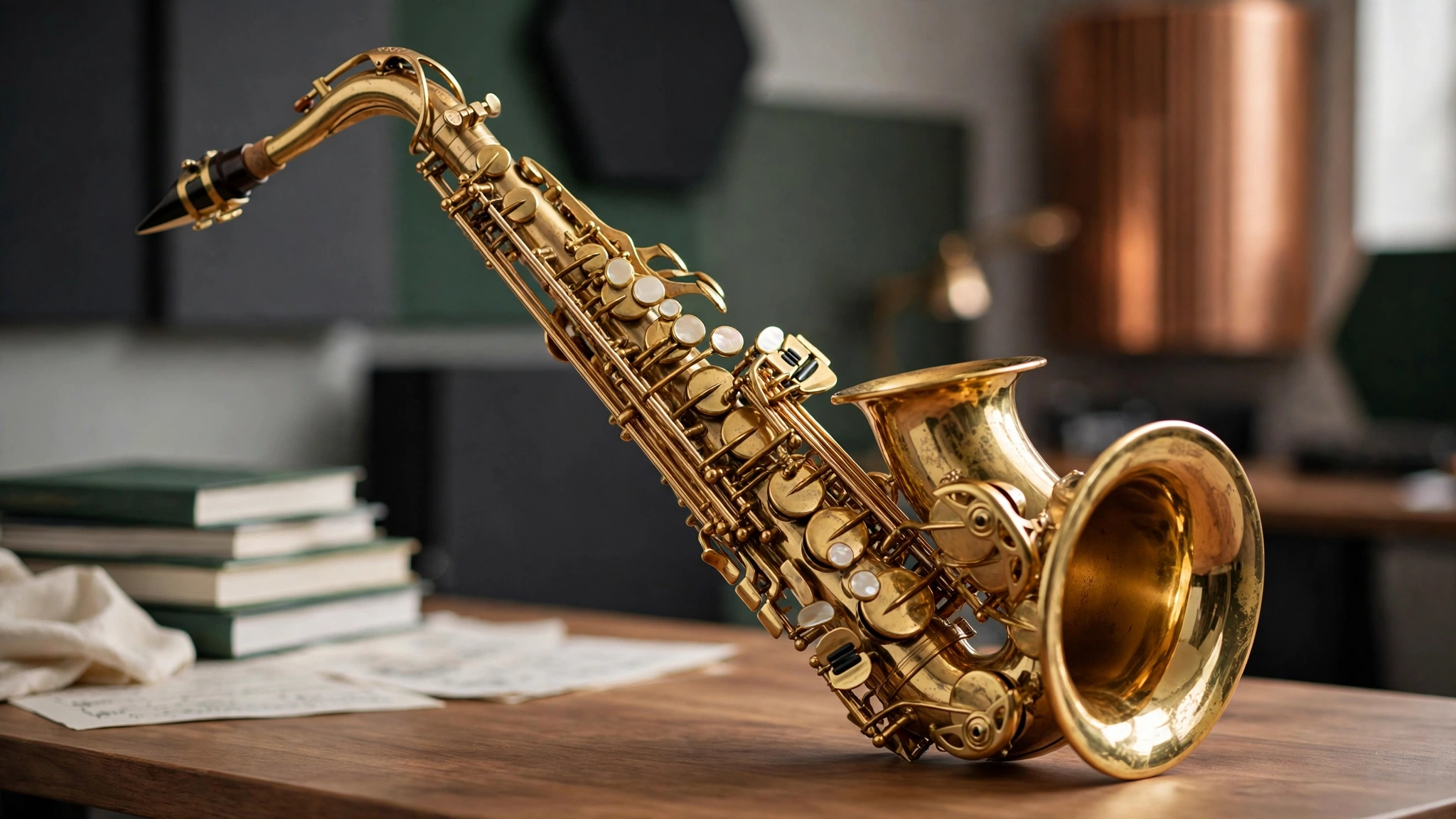
What Is a Saxophone?
A saxophone is a single-reed woodwind instrument with a conical body and a system of keys that open and close tone holes to change pitch.
Answer
A distinctive woodwind with a powerful, flexible voice
Although most saxophones are made from brass, the instrument is classified as a woodwind because the sound begins with the vibration of a reed. The player's breath causes the reed to vibrate against the mouthpiece, sending air vibration through the conical body while the key mechanism controls the effective length of the air column.
This combination is a major reason the saxophone feels different from both brass instruments and many other woodwinds. Its metal body gives it a visually recognisable form, while the mouthpiece, reed, tone holes and keywork determine the basic sound-producing system. Yamaha's instrument guide describes the saxophone as having four major structural sections: the neck, body, U-shaped bow and bell, alongside its tone holes and keywork.
For a beginner, understanding this structure first makes later learning easier. Once the instrument feels familiar, it becomes simpler to understand embouchure, breath support, fingering, articulation and practice routines.
History of the Saxophone
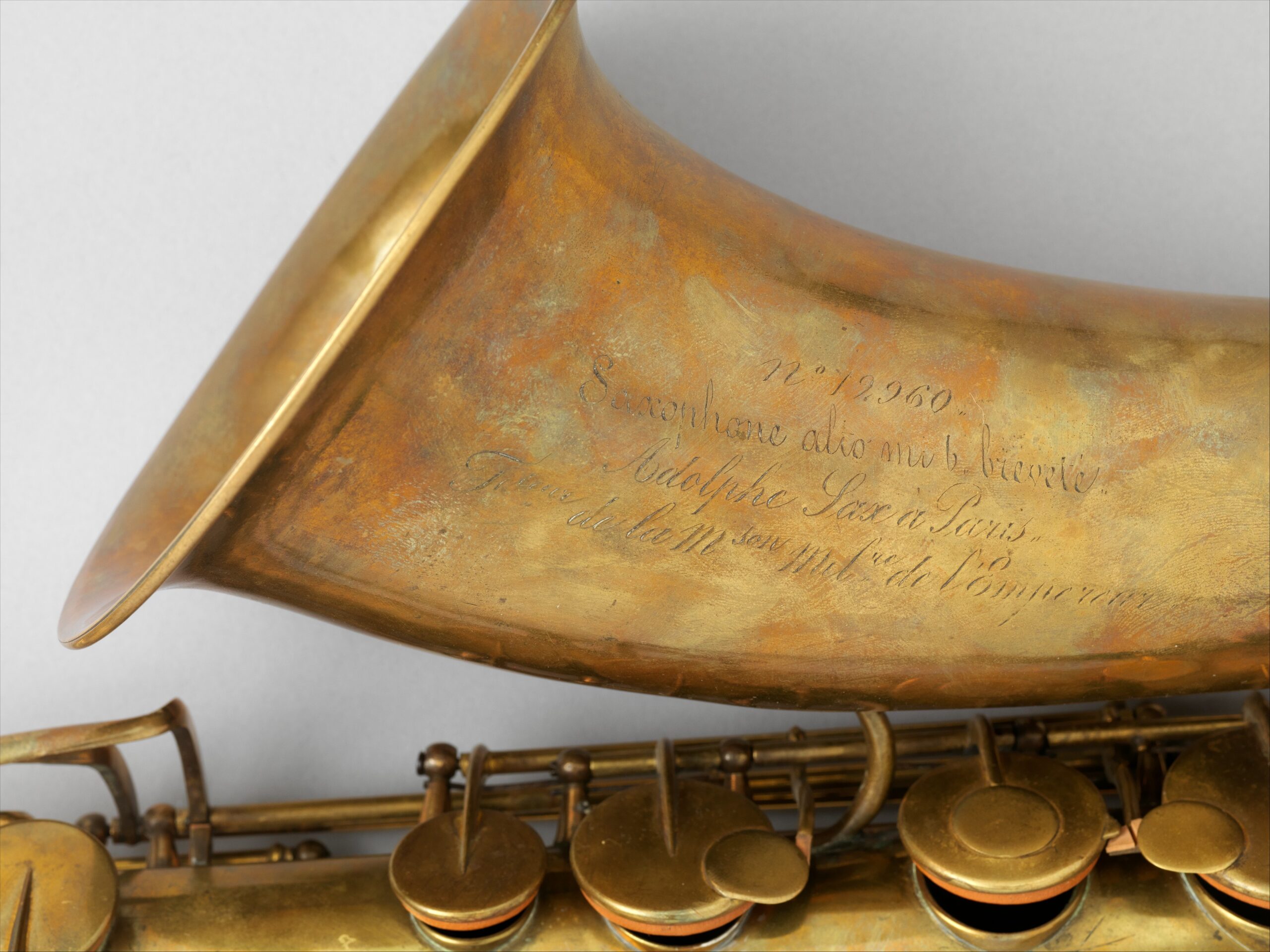
The saxophone emerged in the nineteenth century through the work of Adolphe Sax, who sought a new wind instrument that could combine characteristics of existing families.
Development of the Instrument
Adolphe Sax developed the saxophone family in the 1840s while experimenting with wind-instrument design and acoustical ideas.
Formal Recognition
Sax patented his saxophone family in the mid-1840s, after which the instrument began to find a place in bands and musical institutions.
From Bands to Popular Music
Military bands, popular entertainment, concert music and later jazz helped expand the saxophone's reach across different countries and musical cultures.
A Global Instrument
Modern saxophones appear in jazz, concert bands, chamber music, contemporary music, popular music and many educational settings.
Historical sources differ in how they describe the exact sequence of Sax's early experiments, patents and manufacturing changes. For a reliable introduction, it is useful to compare museum and specialist references rather than reducing the story to a single simplified date.
How Does a Saxophone Work?
The basic sound chain is straightforward: breath moves through the mouthpiece, the reed vibrates, and the air column inside the body resonates while the key system changes pitch.
Air becomes vibration, vibration becomes musical tone.
The mouthpiece and reed start the sound. Once the reed is vibrating, the saxophone's conical air column supports resonance. Pressing and releasing keys changes which holes are open and therefore changes the effective length of the tube.
- Player shapes the airflow and embouchure.
- Reed vibrates against the mouthpiece.
- Air column inside the instrument resonates.
- Keys control tone-hole openings.
- Pitch and timbre change as the system changes.
| Component | Main role |
|---|---|
| Reed | Vibrates to initiate the sound. |
| Mouthpiece | Provides the interface between player, reed and air. |
| Body | Shapes and supports the vibrating air column. |
| Keys & pads | Open and close tone holes for pitch changes. |
| Bell | Forms the flared end of the instrument and contributes to projection. |
Main Parts of a Saxophone
Learning the names of the main components helps beginners understand care, setup, finger technique and instrument conversations more confidently.
Neck
Connects the mouthpiece area to the main body and contributes to the airflow path.
Mouthpiece
Holds the reed and forms the first part of the sound-producing interface.
Reed
A thin piece of cane or synthetic material that vibrates when the player blows.
Body
The main tube carries the air column and contains most of the tone holes and keys.
Keys & Pads
Keys operate pads that close and open tone holes to control pitch and fingering.
Bow
The U-shaped lower section redirects the air path toward the bell.
Bell
The flared lower opening projects the instrument's sound outward.
Octave Key
Helps the player move between registers by changing the effective resonating behaviour.
Neck Strap Ring
Provides the attachment point used with a neck strap to support the instrument.
Types of Saxophones
Saxophones come in different sizes and registers. The choice affects pitch range, physical size and the role the instrument commonly plays in an ensemble.
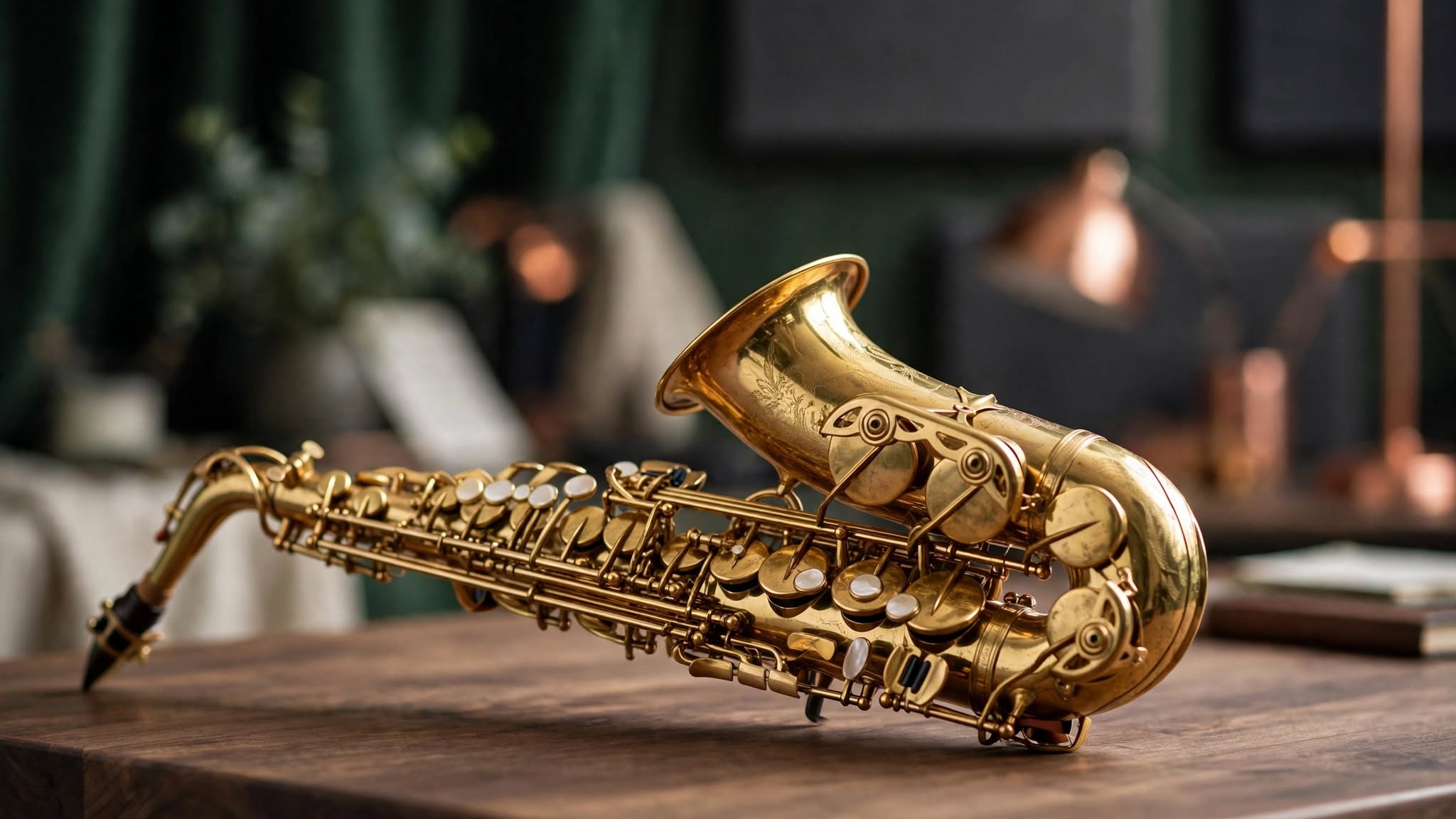
Alto Saxophone
A compact, widely encountered member of the family and a common instrument in school, concert and jazz settings.
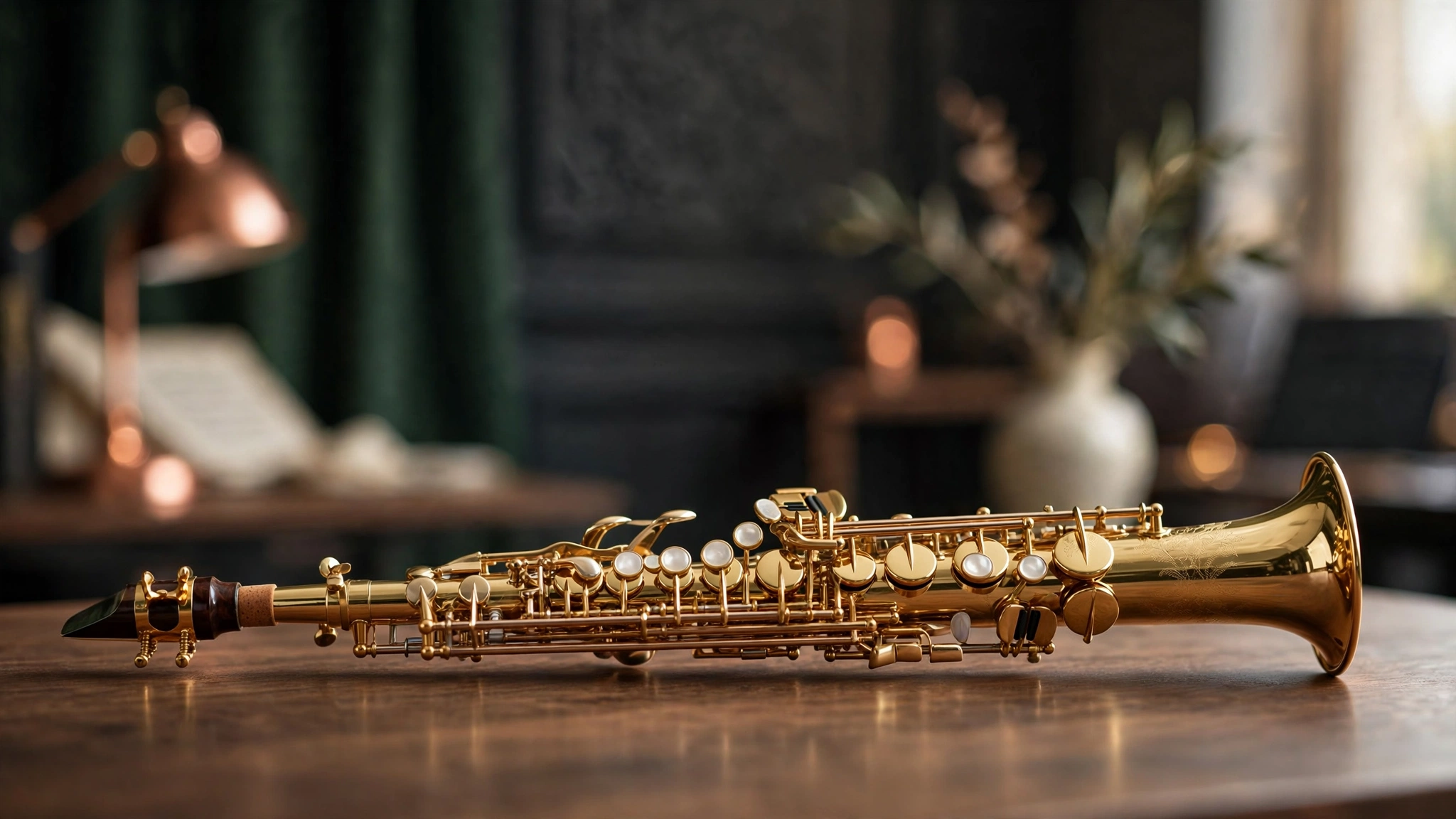
Soprano Saxophone
Straighter or gently curved designs are common, with a higher-pitched voice.
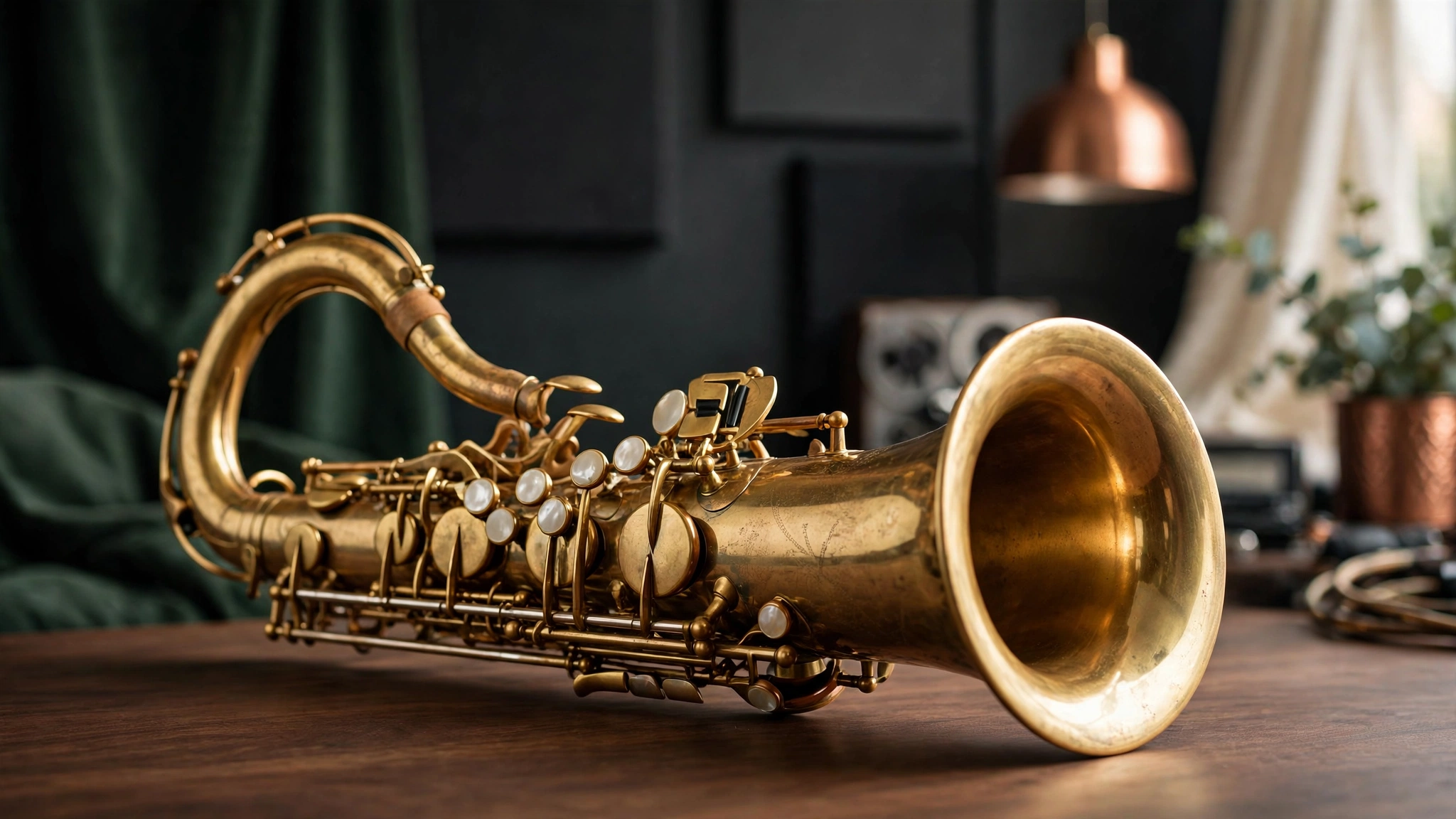
Tenor Saxophone
A larger, deeper-voiced instrument strongly associated with jazz and ensemble playing.
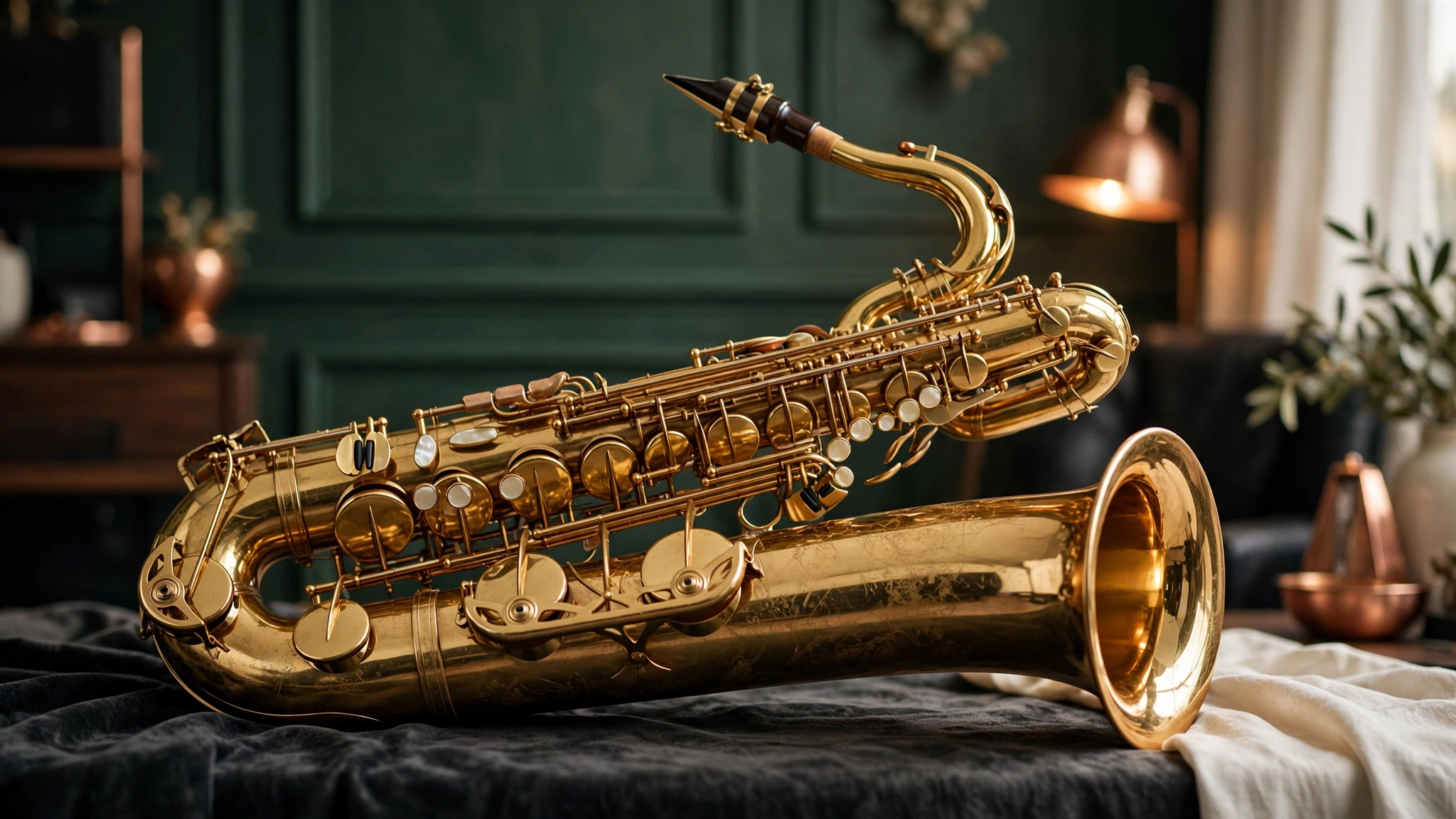
Baritone Saxophone
A larger instrument with a lower voice, often used to anchor an ensemble.
The saxophone family contains more members than the four most familiar types. Historical and specialist collections also show less common sizes and experimental instruments. Beginners should therefore choose a model based on their musical goal, body comfort, teacher guidance and practical support rather than assuming that one size is universally best.
What Is a Saxophone Used For?
One of the saxophone's defining strengths is its adaptability. It can function as a lead voice, melodic instrument, ensemble section member or colour inside a larger arrangement.
Jazz
Central to many jazz traditions, from small combos to big bands, improvisation and contemporary jazz.
Classical Music
Used in concert bands, chamber music, solo repertoire and some orchestral contexts.
Military & Marching Bands
The saxophone became important in band traditions where a strong, flexible wind voice was useful.
Popular & Contemporary Music
Often appears in arrangements, horn sections, solos, studio recordings and live performances.
Is Saxophone Good for Beginners?
Yes—many beginners can start saxophone successfully with a suitable instrument, basic instruction and a regular practice routine. The first stage is about building sound, posture, embouchure, breath control and simple finger coordination.
How to Start Learning Saxophone
A useful learning path moves from instrument familiarity to sound production, simple fingering, rhythm, repertoire and gradually more independent musical playing.
Understand
Know the saxophone, mouthpiece, reed, keys, care routine and basic terminology.
Produce a Sound
Work on embouchure, airflow and a stable first tone before rushing into songs.
Learn Fingerings
Build a dependable fingering map and coordinate fingers with breath and articulation.
Build Rhythm
Practise scales, exercises and musical phrases with a steady pulse.
Play Repertoire
Apply technique to suitable pieces that are challenging but achievable.
Refine
Improve tone, dynamics, articulation, phrasing and musical confidence over time.
This article is intentionally informational. When SoulFul Musik Academy's dedicated Saxophone service pages are live, this supporting article should link to the most relevant page for Saxophone Classes, Learn Saxophone, local classes and online learning. Do not create or publish placeholder links before those URLs exist.
Saxophone Learning in Mumbai, Goregaon & Online
Search behaviour often includes location modifiers such as Goregaon East, Goregaon and Mumbai, as well as national and online searches. These should be addressed naturally, based on the actual learning services available.
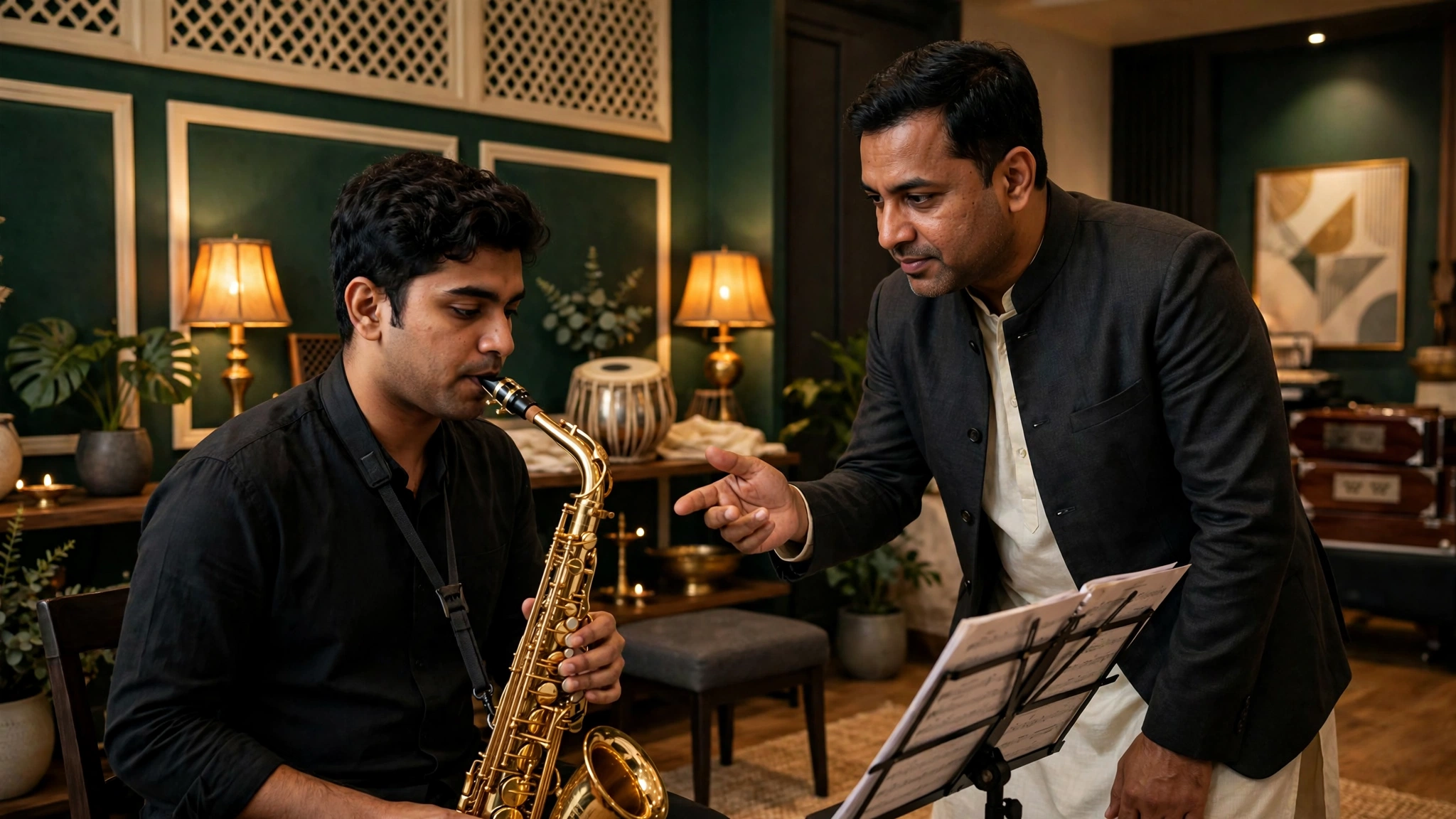
Learners in Goregaon East, Goregaon and Mumbai may prefer in-person guidance because it makes it easier to receive direct feedback on posture, embouchure and sound. Students elsewhere in India or outside India may prefer online lessons when the teacher and format support remote learning effectively.
From an SEO perspective, location terms should support the real service rather than be repeated mechanically. The same rule applies to phrases such as Online Saxophone Classes and Learn Saxophone Online: include them where they genuinely describe the learning path.
Why Reference Sources Matter
A strong educational page should separate established instrument facts from academy-specific claims.
Yamaha's instrument guide provides useful detail on saxophone structure and components, while museum and specialist references help place the instrument in historical context. Wikimedia Commons provides openly licensed examples of instruments and performers, but each image still has its own licence conditions. Where a claim or image requires verification, the source should be checked before publishing or updating the final page.
Saxophone FAQ
Common questions people ask when they first search for information about the saxophone.
What is a saxophone?
A saxophone is a single-reed woodwind instrument with a conical body and a key mechanism used to control its tone holes and pitch.
Who invented the saxophone?
The saxophone was developed by Belgian-born instrument maker Adolphe Sax during the 1840s.
Why is a saxophone a woodwind if it is usually made of brass?
Woodwind classification is based on how the instrument produces sound. A saxophone uses a vibrating reed on its mouthpiece, so it belongs to the woodwind family.
What are the main types of saxophones?
The most familiar modern members are soprano, alto, tenor and baritone saxophones, although the wider family includes additional sizes.
Is saxophone easy to learn for beginners?
Many beginners can learn saxophone successfully with suitable instruction and regular practice. Early progress usually depends on building sound production, embouchure, breathing, posture and fingering fundamentals.
What is the saxophone used for?
Saxophones are used in jazz, classical and contemporary music, concert and military bands, popular music, studio recording and many other musical settings.
Can I learn saxophone online?
Online learning can be practical when a suitable teacher, stable lesson setup and regular practice routine are available. The exact experience depends on the learner and the teaching format.
Authoritative Saxophone References
These external sources were selected for instrument structure, museum context, history and image research.
Yamaha — The Structure of the Saxophone
Detailed reference covering the saxophone's major sections, keys, pads, mouthpiece and other components.
Open Yamaha reference →Smithsonian — The Saxophone
Specialist historical reference covering Adolphe Sax, the saxophone family and its development across musical contexts.
Open Smithsonian reference →Wikimedia Commons — Saxophone
Large collection of saxophone instruments, players, parts and historical examples with individual licence information.
Browse saxophone references →Understand the instrument first. Then choose your learning path.
This article is the informational foundation. As the SoulFul Musik Academy Saxophone cluster grows, connect this page to the live Saxophone hub, classes, learning, local and online service pages using natural contextual anchors.