
How to Choose the Right
Sitar
for Beginners
A practical Sitar buying guide for first-time buyers. Understand size, comfort, craftsmanship, setup, condition, price, new versus pre-owned instruments, and whether buying or renting makes more sense for your journey.
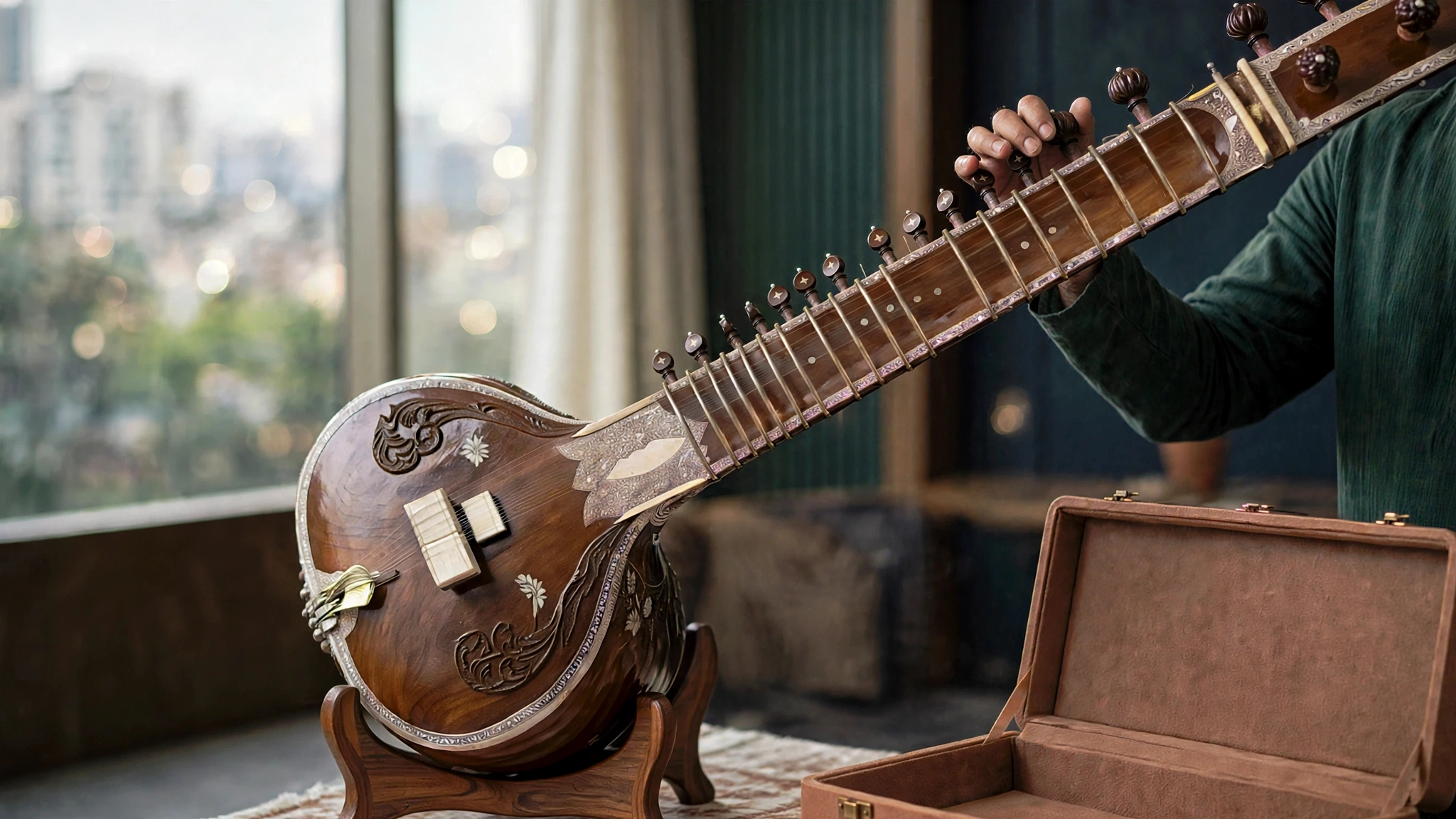
The best first instrument balances comfortable handling, reliable construction, a usable setup, suitable sound and a price that makes sense for your learning stage.
Buying your first Sitar can feel confusing because instruments may look similar while differing significantly in comfort, craftsmanship, setup and condition. A thoughtful Sitar buying guide helps you focus on the factors that actually affect practice and long-term learning rather than choosing only by appearance or price.
This guide is designed for beginners searching for the best Sitar for beginners, wondering which Sitar should I buy, or comparing new, used and rental options in Mumbai and across India.
Why Choosing the Right Sitar Matters
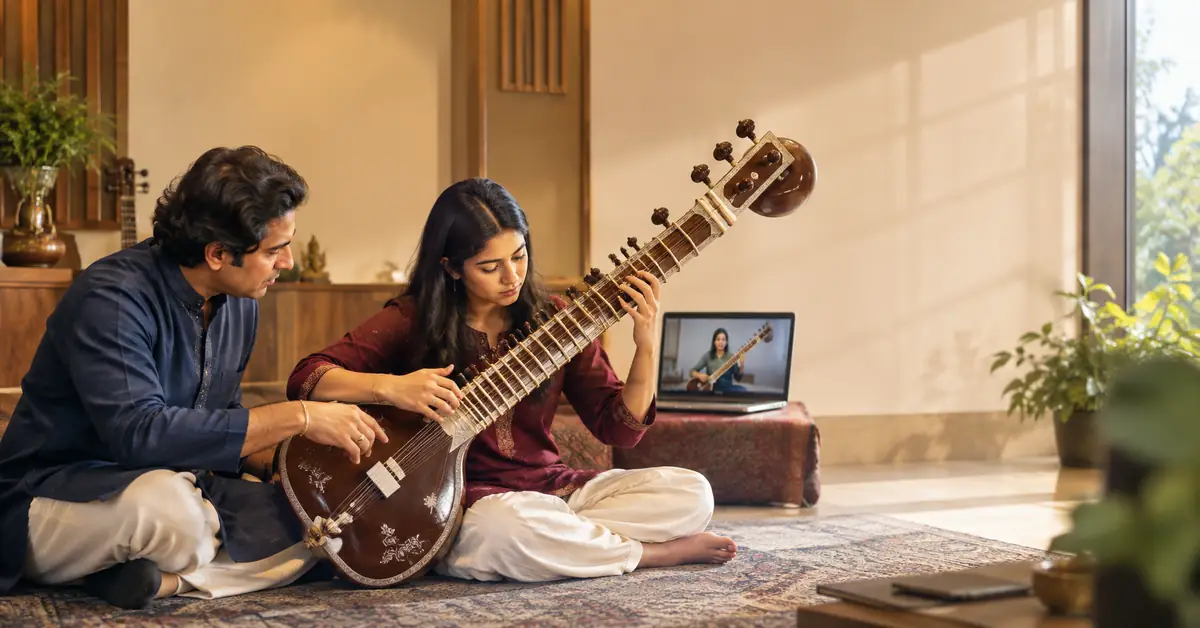
Your first instrument becomes part of your daily practice environment. An instrument that feels difficult to hold, has an uncomfortable action, poor setup or obvious structural problems can make learning harder than it needs to be.
A good beginner Sitar should support regular practice. That means it should be reasonably comfortable, mechanically sound, appropriate for your level and easy enough to maintain. It should also fit your budget without forcing you to compromise on fundamental quality.
What Should a Beginner Look for in a Sitar?
Instead of asking only “Which Sitar looks best?”, use a simple inspection framework: comfort, alignment, playing action, strings, jawari, resonator, body construction, condition and overall craftsmanship.
Size & Comfort
Make sure the instrument can be positioned comfortably for your body and practice posture.
Neck & Alignment
Inspect the neck for obvious issues and look for a clean, stable alignment.
Frets & Action
The playing surface should feel manageable and consistent rather than unnecessarily difficult.
Strings & Tuning
Check string condition and whether the instrument can be tuned reliably for practice.
Bridge & Jawari
Jawari condition and bridge quality can strongly influence the instrument’s response and sound.
Body & Craftsmanship
Look for sound construction, careful finishing and a resonator that appears structurally sound.
Sitar Size and Comfort
A beginner should not select a Sitar by measurements alone. Physical comfort matters because the instrument must work with your sitting position, arm reach and practice habits.
During an in-person trial, hold the instrument in your normal playing position. Check whether the neck feels manageable, whether your right-hand position feels natural and whether the body can be supported without excessive tension.
Neck, Frets and Playing Action
Beginners often overlook playability. A beautiful instrument can still be a poor choice if the playing setup makes basic exercises unnecessarily difficult.
Run your hand carefully along the neck and inspect the frets visually. Look for obvious damage, irregularity or a setup that seems uncomfortable. A teacher or experienced Sitar player can be particularly useful here because they may notice issues that a first-time buyer misses.
Strings, Tuning and Jawari
The strings, tuning hardware and jawari all influence the practical playing experience. Ask about the current setup and whether strings have been recently replaced or adjusted.
For beginners, the key point is not to become a technician overnight. The goal is to identify whether the instrument is in a reasonably usable state and whether a qualified teacher or maker should inspect or adjust it before regular learning begins.
Types of Sitar Beginners May Consider
Beginner buyers can encounter different Sitar designs, playing traditions and specifications. The “best” instrument depends on the style you intend to study, the teacher guiding you and the practical characteristics you need.
Student-oriented instrument
A straightforward, well-set-up instrument can be an excellent first choice when the priority is comfortable practice and reliable learning rather than decorative complexity.
Performance-oriented instrument
Players preparing for more advanced performance may eventually want an instrument with specific tonal, construction or setup characteristics. Beginners should avoid paying a premium for features they do not yet understand or need.
Traditional or specialized builds
Some instruments may reflect particular maker preferences or playing traditions. This is another reason a teacher’s guidance is useful before choosing a specific model or specification.
New vs Pre-Owned Sitar
A new Sitar gives you a clearer history, while a pre-owned instrument can offer value when it has been properly maintained. Neither category is automatically better for every beginner.
- Clearer purchase history
- Potentially easier to assess condition
- Good option when you want a fresh setup
- Still inspect construction and playability
- Can cost less than a comparable new instrument
- May already have a familiar setup
- Condition needs closer inspection
- Ask about repairs, storage and maintenance
How Much Does a Sitar Cost?
Sitar prices can vary significantly based on craftsmanship, materials, maker, condition, setup, decorative work and whether the instrument is new or pre-owned. There is no single “correct” price for every beginner.
Instead of choosing the lowest price, compare the total value: construction quality, comfort, current setup, condition, accessories and the support available after purchase. An apparently cheap Sitar can become expensive if it requires substantial correction or repair.
A useful buying conversation includes quality, condition, setup and suitability for your learning goals.
Should You Buy or Rent a Sitar?
Renting can make sense when you are testing your commitment, starting lessons or working within a short-term budget. Buying can be more suitable when you expect to practice consistently and want an instrument that stays with you as your learning develops.
Think about your expected practice period, budget, access to maintenance and the advice of your teacher. A sensible rental or pre-owned purchase can sometimes be more practical than rushing into a higher-cost new instrument.
Explore the dedicated Sitar buy and rent guide for a broader look at buying, rental and pre-owned options.
Where to Buy a Sitar in Mumbai and India
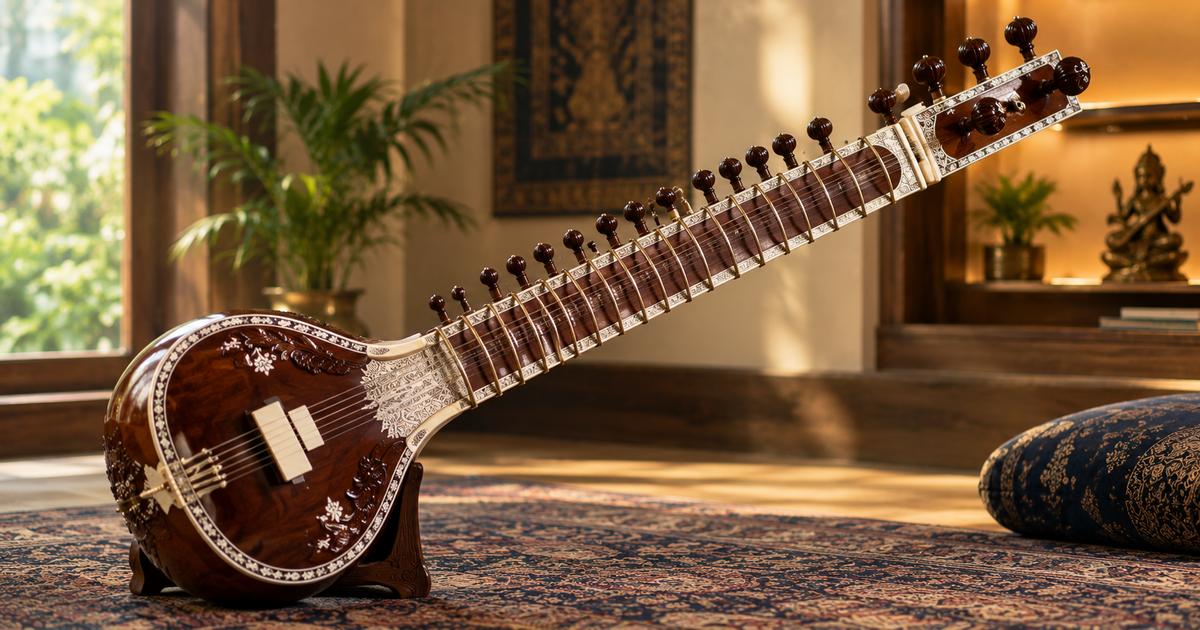
When buying locally, an advantage is the ability to inspect and play the instrument before making a decision. For Mumbai buyers, this can also make it easier to discuss setup, accessories and future maintenance with an experienced teacher or instrument specialist.
Buyers outside Mumbai can still compare instruments by requesting clear photographs, dimensions, condition notes, video demonstrations and detailed information about setup and returns before purchase.
Useful when you want to inspect, hold and compare an instrument in person.
Practical for learners already exploring Sitar classes in the local area.
Remote buyers should request detailed visuals and setup information before purchasing.
Common Sitar Buying Mistakes
- Choosing only by appearance: decorative detail is not a substitute for good playability.
- Choosing only by price: the lowest price may not represent the best long-term value.
- Ignoring setup: a usable setup matters for a beginner’s daily practice.
- Skipping inspection: ask about condition, repairs, alignment and maintenance history.
- Buying without teacher input: even a short expert opinion can prevent an expensive mistake.
- Buying too advanced too early: beginners often benefit more from suitability than prestige.
Beginner Sitar Buying Checklist
Save this checklist and use it while comparing instruments. The goal is not to become an expert maker; it is to ask better questions before you commit to a purchase.
Your Sitar Should Support Your Learning Path
Buying the right instrument is only one part of a successful learning journey. A suitable teacher, structured practice routine and realistic learning plan are equally important.
Explore Learn Sitar for the broader learning pathway, or visit Sitar Classes to explore structured lesson options in Mumbai, Goregaon, India and online.
Frequently Asked Questions
The best beginner Sitar is usually one that is comfortable, structurally sound, reasonably well set up, suitable for your learning style and within a realistic budget. Teacher guidance can make the choice more precise.
Check comfort, neck alignment, fret condition, strings, jawari, body construction, setup, overall condition and price. Compare more than one instrument rather than choosing the first one you see.
A pre-owned Sitar can be a practical option when its condition and setup are good. Inspect it carefully and ask about previous repairs, maintenance and any work needed before regular practice.
Renting can be useful when you are testing your interest or want flexibility. Buying may make more sense when you expect to practice consistently and want a long-term instrument.
Prices vary by maker, craftsmanship, condition, setup and materials. Compare the complete value of the instrument rather than looking only for the lowest price.
Yes. Local buying can be useful because you can potentially inspect, hold and compare an instrument before purchasing. Ask for setup and condition details and consider taking an experienced player with you.
Yes. A teacher or experienced Sitar player may identify playability, setup or condition issues that are easy for a first-time buyer to miss.
Sitar Resources

Choose the instrument that fits your learning journey.
Use this guide alongside teacher advice, instrument inspection and a realistic budget before making your decision.
One Response