
Tabla Classes & Lessons for Beginners to Advanced
Build a strong Tabla foundation through structured learning in technique, rhythm, bols, taal, practice and musical expression.
Designed for learners who want to understand Tabla deeply, develop consistent practice habits and progress from fundamentals toward confident musical performance.
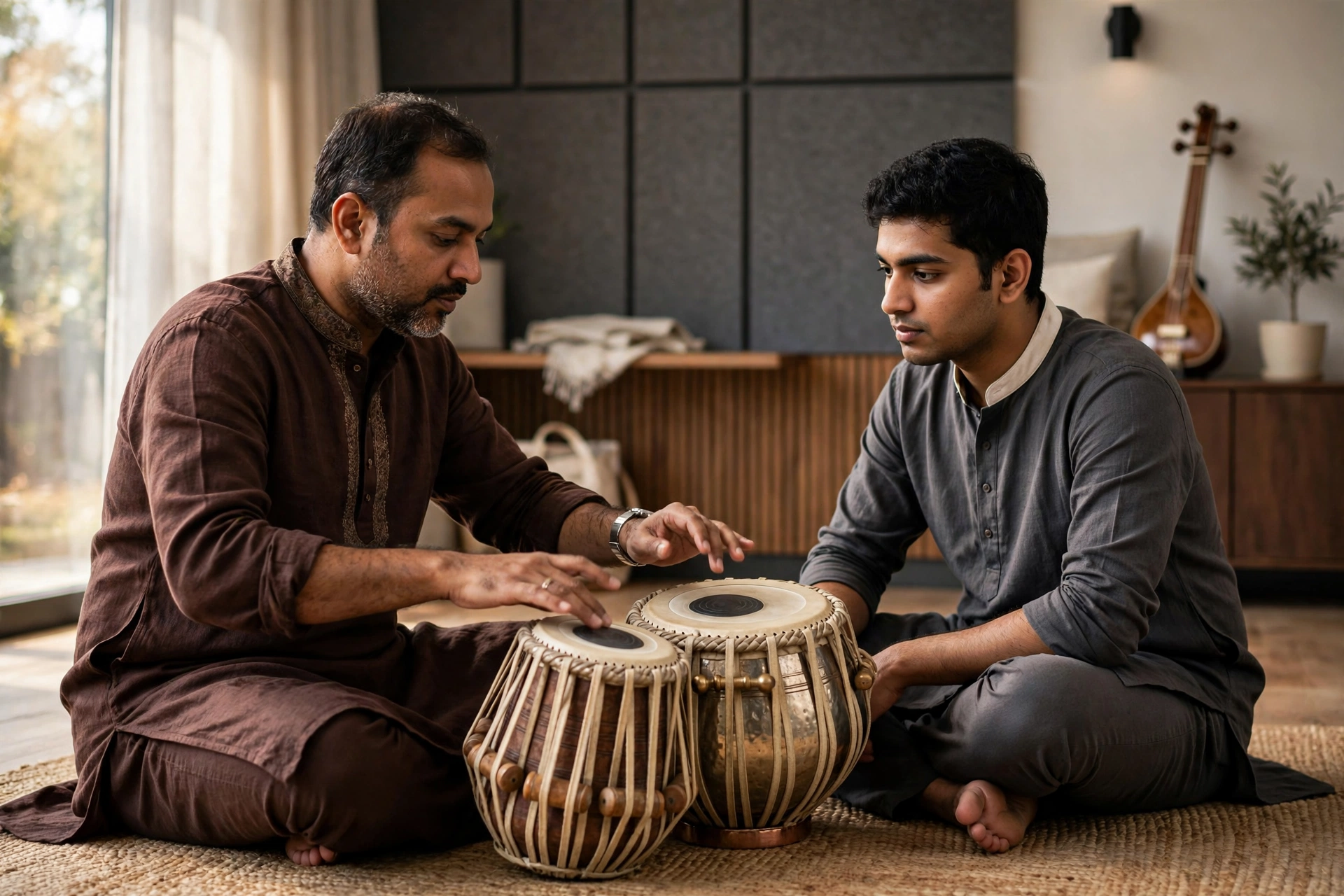
Tabla learning should build understanding, not just repetition.
Learning Tabla involves much more than memorising individual strokes. A strong foundation connects posture, hand technique, sound, rhythmic vocabulary, listening and regular practice.
As learners develop, these fundamentals can connect with bols, taal, laya, compositions, accompaniment and musical performance.
First understand the Tabla →Build correct fundamentals from the beginning.
Develop timing, coordination and rhythmic awareness.
Improve stroke control, clarity and movement.
Connect technique with real musical application.
From the first stroke to rhythmic expression.
A progressive Tabla learning experience can combine technical foundations with rhythmic understanding and practical musical application.
Posture & Position
Learn how to sit comfortably, position the instrument and establish a practical foundation for playing.
Basic Strokes
Develop controlled hand movement and learn the fundamental sounds used to construct Tabla vocabulary.
Bols & Taal
Connect spoken rhythmic syllables with patterns, rhythmic cycles and musical timing.
Laya & Timing
Build awareness of rhythmic flow, speed, consistency and control through guided practice.
Compositions
Progress toward structured patterns and compositions as technical confidence develops.
Musical Application
Apply Tabla technique through accompaniment, collaboration, rehearsal and performance contexts.
Good Tabla instruction turns practice into progression.
Clear demonstrations, correction, repetition and musical context can help learners understand what they are practising and why.
A pathway that can grow with the learner.
Tabla students may begin with foundational movement and gradually develop greater rhythmic control, musical understanding and performance confidence.
Start with confidence
Build the core habits needed to begin Tabla safely, comfortably and consistently.
- Instrument orientation
- Seating & hand position
- Fundamental strokes
- Basic rhythmic patterns
- Guided practice
Develop control
Strengthen rhythmic accuracy and begin connecting patterns with broader musical structures.
- Expanded bols
- Taal understanding
- Laya development
- Longer practice patterns
- Composition work
Develop musical expression
Refine technique, musical decision-making and performance-oriented application.
- Complex rhythmic work
- Compositions
- Accompaniment
- Performance preparation
- Musical interpretation
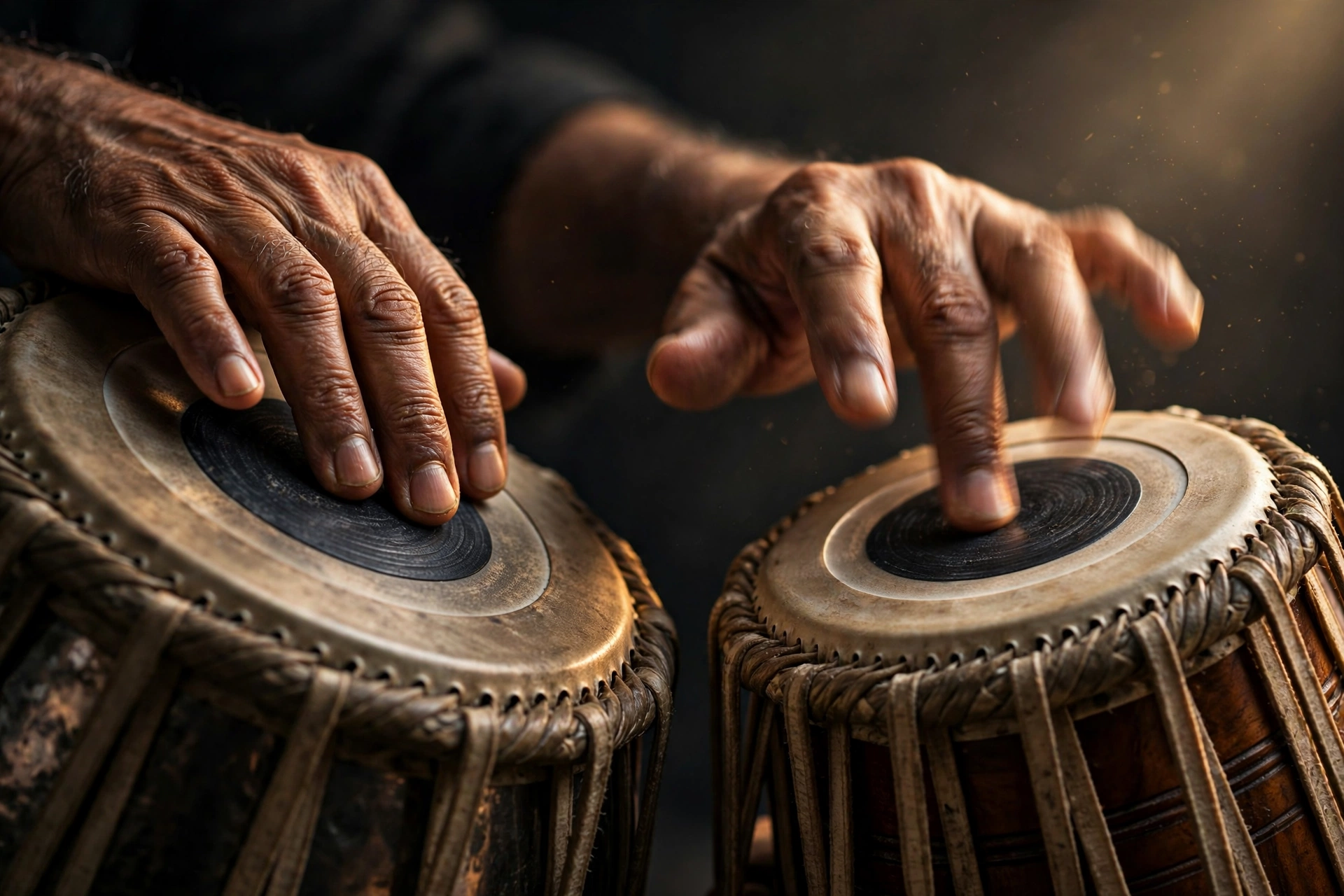
Learn the relationship between sound, stroke and rhythm.
Tabla education introduces a vocabulary through which students can hear, speak, understand and play rhythmic ideas.
Spoken syllables connected with Tabla strokes.
Rhythmic cycles that provide musical structure.
Awareness of rhythmic flow and speed.
Progress happens between lessons too.
A regular practice routine helps learners reinforce technique, develop coordination and gradually build rhythmic confidence.
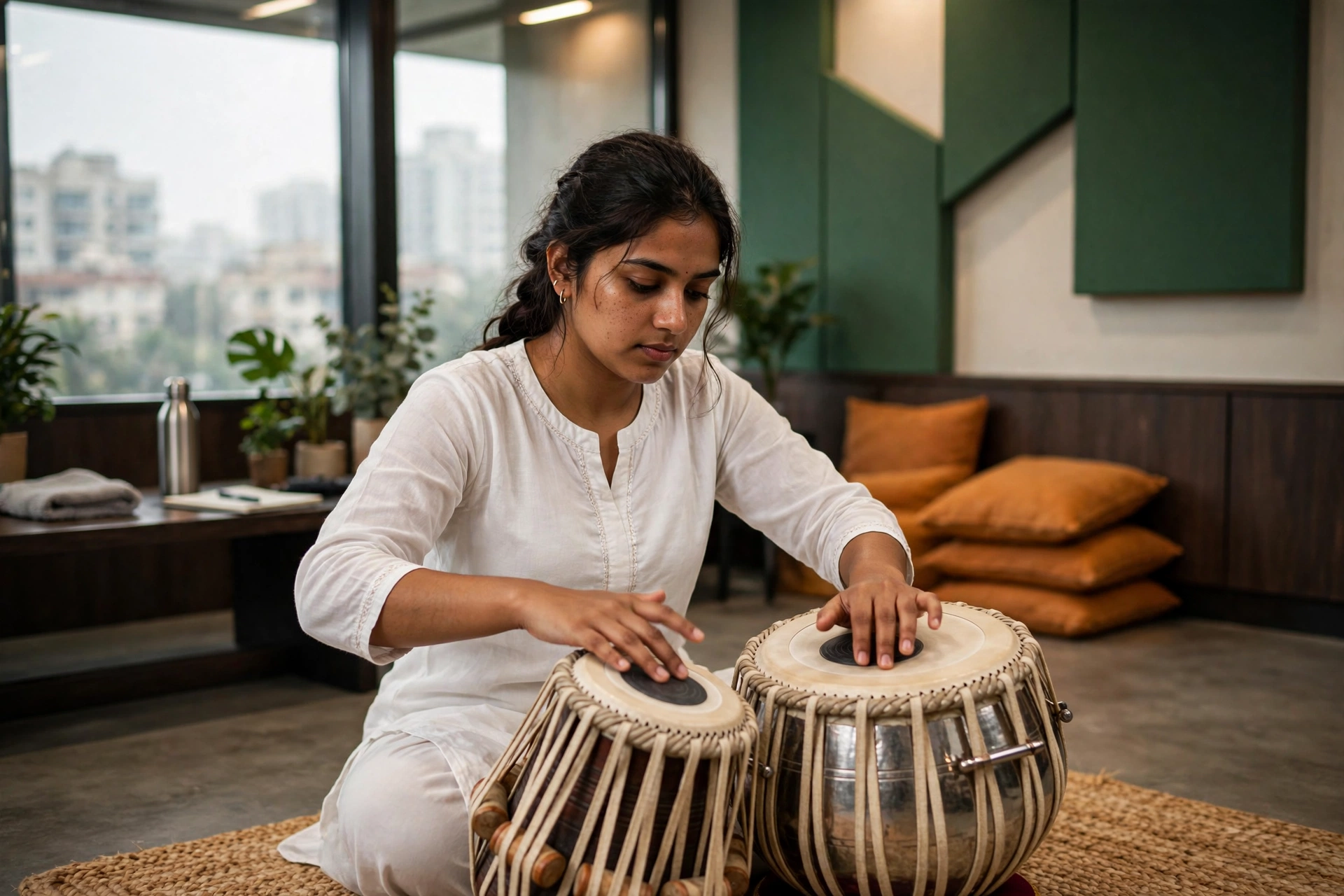
Prepare the hands and settle into a focused rhythm.
Repeat recently learned strokes, bols and patterns.
Work on one new technical or rhythmic challenge.
Develop musical awareness alongside physical technique.
Tabla learning for Mumbai and beyond.
Learners searching for Tabla classes may be looking for a convenient local learning environment in Goregaon or Mumbai, while others may prefer the flexibility of online instruction.
The important consideration is a learning format that supports regular instruction, practice, feedback and meaningful musical progression.
What can your first stages of Tabla learning look like?
Meet the instrument
Understand the Tabla set, posture, positioning and basic sound.
Build technique
Develop foundational strokes and coordinated hand movement.
Understand rhythm
Connect bols, taal, laya and structured rhythmic patterns.
Make music
Apply the learning through compositions, accompaniment and performance.
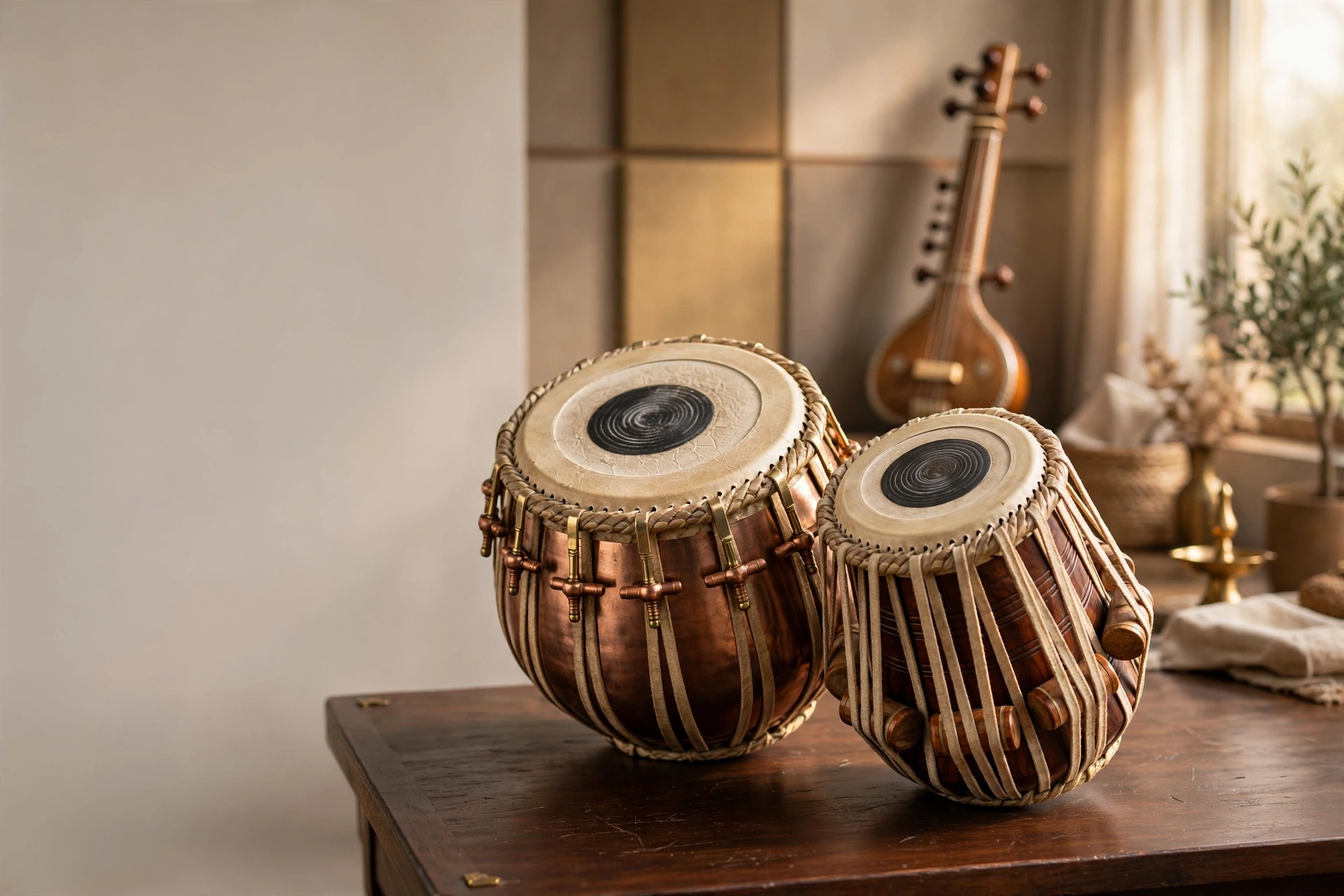
Build your Tabla foundation from the instrument itself.
Before beginning structured lessons, understanding what Tabla is, how its two drums work together and how its rhythmic vocabulary is formed can make the learning journey easier to follow.
Read: What Is Tabla? ↗Tabla can become part of a larger musical journey.
Learning may eventually connect with rehearsal, recording, collaboration, live performance and other professional music activities.
Indian Classical Music
Develop rhythmic understanding within Indian classical musical traditions.
Ensemble & Fusion
Explore rhythmic collaboration with other Indian and contemporary musicians.
Recording
Take Tabla into professional recording and music-production environments.
Performance
Apply learning through rehearsals, performances and music events.
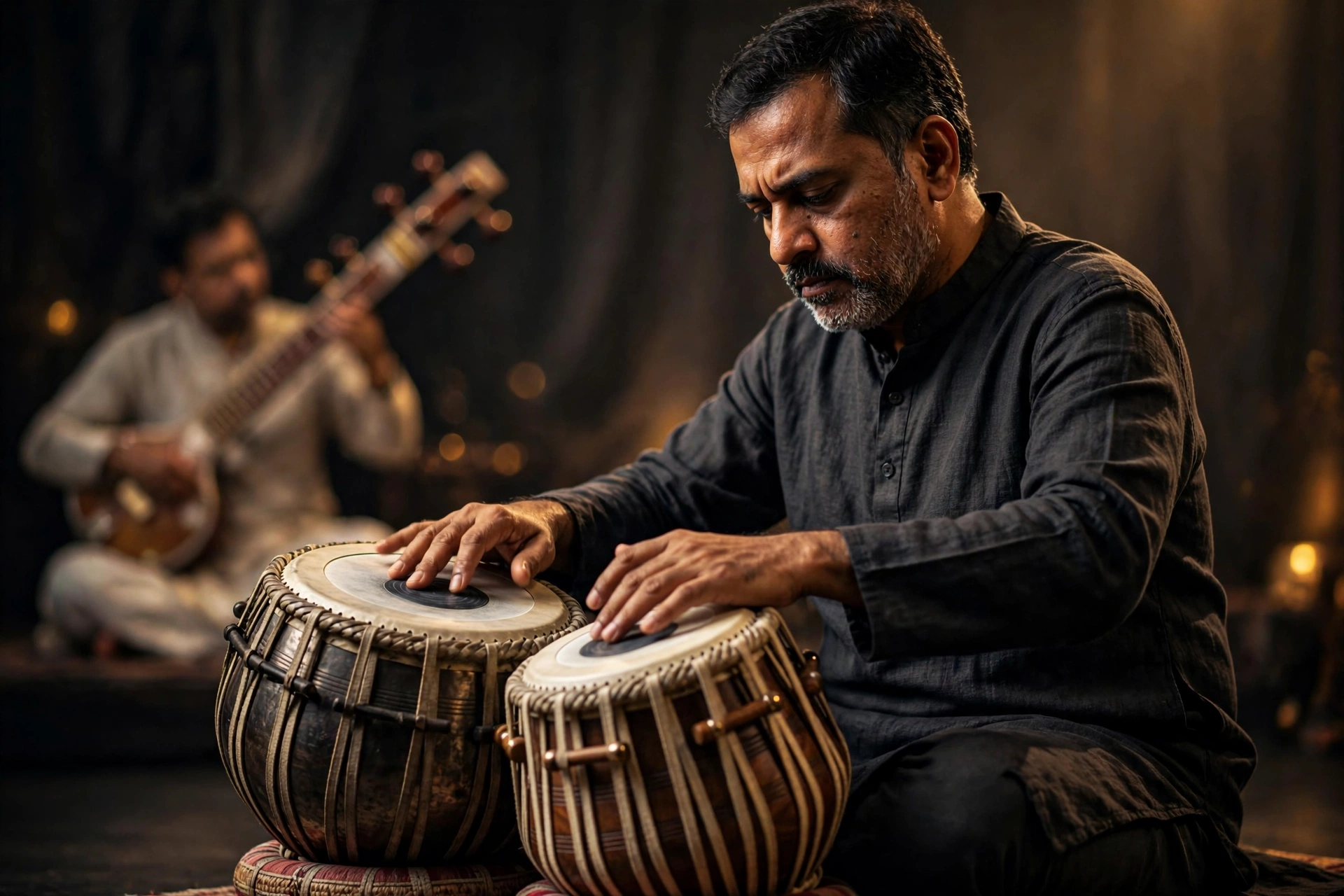
Technique becomes meaningful when it becomes music.
A developing Tabla player can continue growing through practice, rehearsal, collaboration, recording and performance.
More than classes.
The wider SoulFul ecosystem connects learning with instruments, practice, recording, performance, production, professional services and other areas of the music journey.
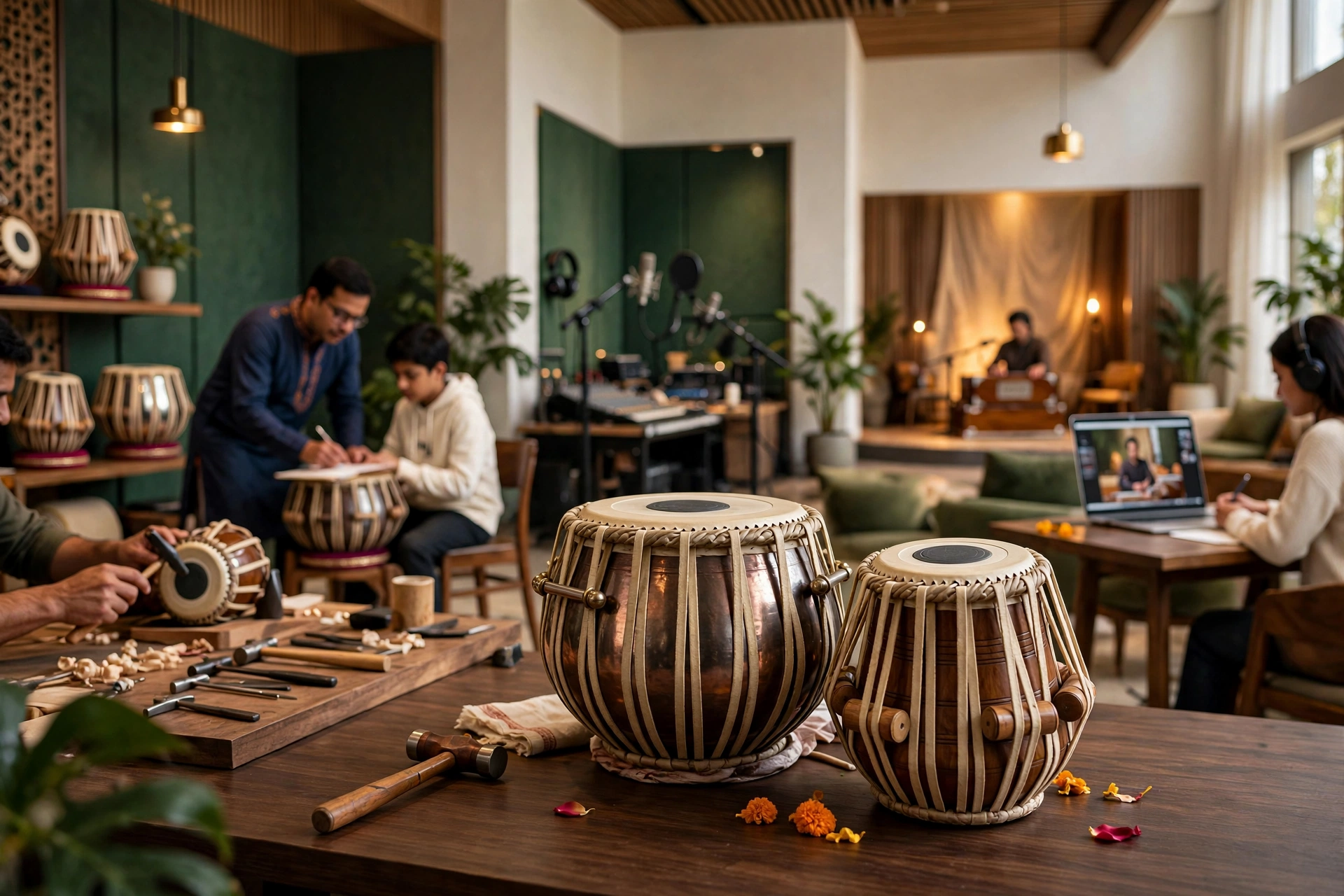
Structured music education and learning pathways.
↗ 02 / BUY SoulFul Musik StoreMusical instruments and music-related products.
↗ 03 / PRE-OWNED SoulFul Musik Store Pre-OwnedExplore pre-owned musical instruments.
↗ 04 / RENT & REPAIR Instrument Rentals & RepairsRental, maintenance and repair services.
↗ 05 / PRACTICE SoulFul Musik JampadRehearsal and collaborative music space.
↗ 06 / RECORD SoulFul Musik StudioProfessional studio and recording environment.
↗ 07 / MUSIC BUSINESS H.S. Musik CompanyDedicated SoulFul music company venture.
↗ 08 / DIGITAL SoulFul Digital WorldDigital-focused services within the ecosystem.
↗ 09 / ARTISTS SoulFul Artist ManagementProfessional artist-oriented services.
↗ 10 / EVENTS SoulFul Musik EventMusic events and live performance services.
↗ 11 / MANUFACTURING SoulFul Instrument ManufacturingInstrument manufacturing and craftsmanship.
↗ 12 / ACOUSTICS SoulFul Studio AcousticAcoustic-focused music-space solutions.
↗ 13 / PRO AUDIO SoulFul Pro Audio GearsProfessional audio equipment and solutions.
↗ 14 / GLOBAL SoulFul 1 WorldGlobal-facing SoulFul ecosystem initiative.
↗ 15 / GROW SoulFul Musik FranchiseFranchise opportunities across the music ecosystem.
↗ 16 / CAREERS SoulFul Recruitment & PlacementRecruitment and placement services.
↗ 17 / TRAINING SoulFul Celebrity TrainingSpecialized training within the SoulFul network.
↗ 18 / CERTIFICATION SoulFul CertificationsCertification-oriented music pathways.
↗ 19 / MEDIA SoulFul Podcast WorldPodcast and music-media ecosystem venture.
↗ 20 / NETWORK SoulFul Global TreeGlobal ecosystem and network initiative.
↗ 21 / COMPANY SoulFul Musik World Pvt LtdBroader corporate and ecosystem presence.
↗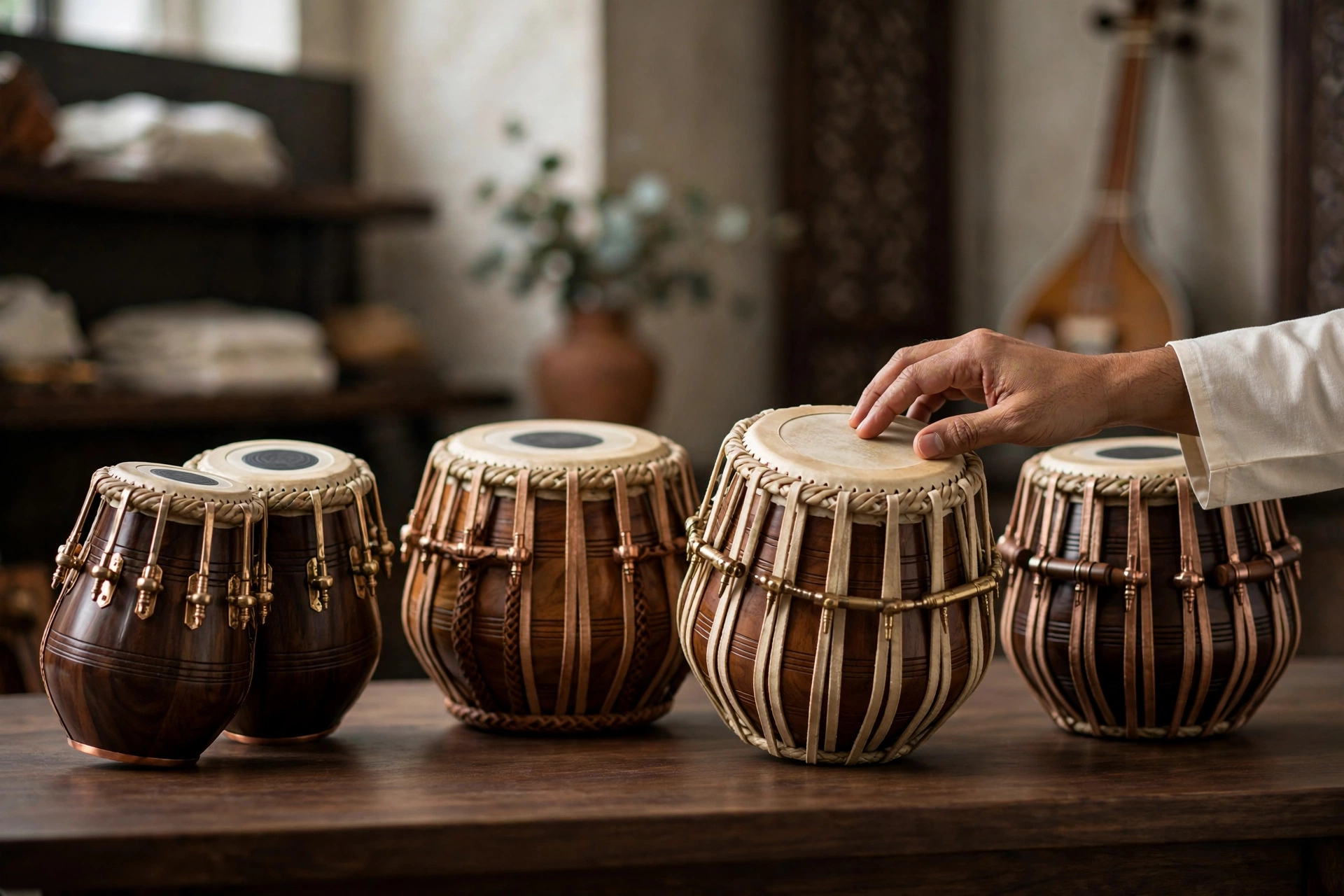
Learning Tabla also means understanding your instrument.
Students eventually need to think about instrument quality, suitability, tuning, care and practical access. These are part of building a sustainable music-learning routine.
Questions learners often ask.
Can a complete beginner join Tabla classes?
Yes. Beginners can start with instrument orientation, posture, hand positioning, fundamental strokes, listening and regular guided practice before moving toward more complex rhythmic work.
What do students learn in Tabla classes?
Tabla learning can include posture, basic strokes, bols, taal, laya, rhythmic patterns, compositions, practice techniques and musical application depending on the learner's stage.
Can I learn Tabla online?
Online learning can provide guided instruction, demonstrations, feedback and structured practice when the learner has a suitable instrument and a consistent practice environment.
Is Tabla suitable for adults and older beginners?
Tabla can be approached by learners at different stages of life. A progressive learning process can focus on realistic goals, consistency, coordination and musical development.
How much should a beginner practice Tabla?
A consistent and focused routine is generally more useful than occasional long sessions. Practice can be structured around technique, repetition, listening and the material currently being taught.
Can Tabla learning lead to performance?
As technique and musical understanding develop, learners can apply Tabla through compositions, accompaniment, collaboration, rehearsal and performance contexts.
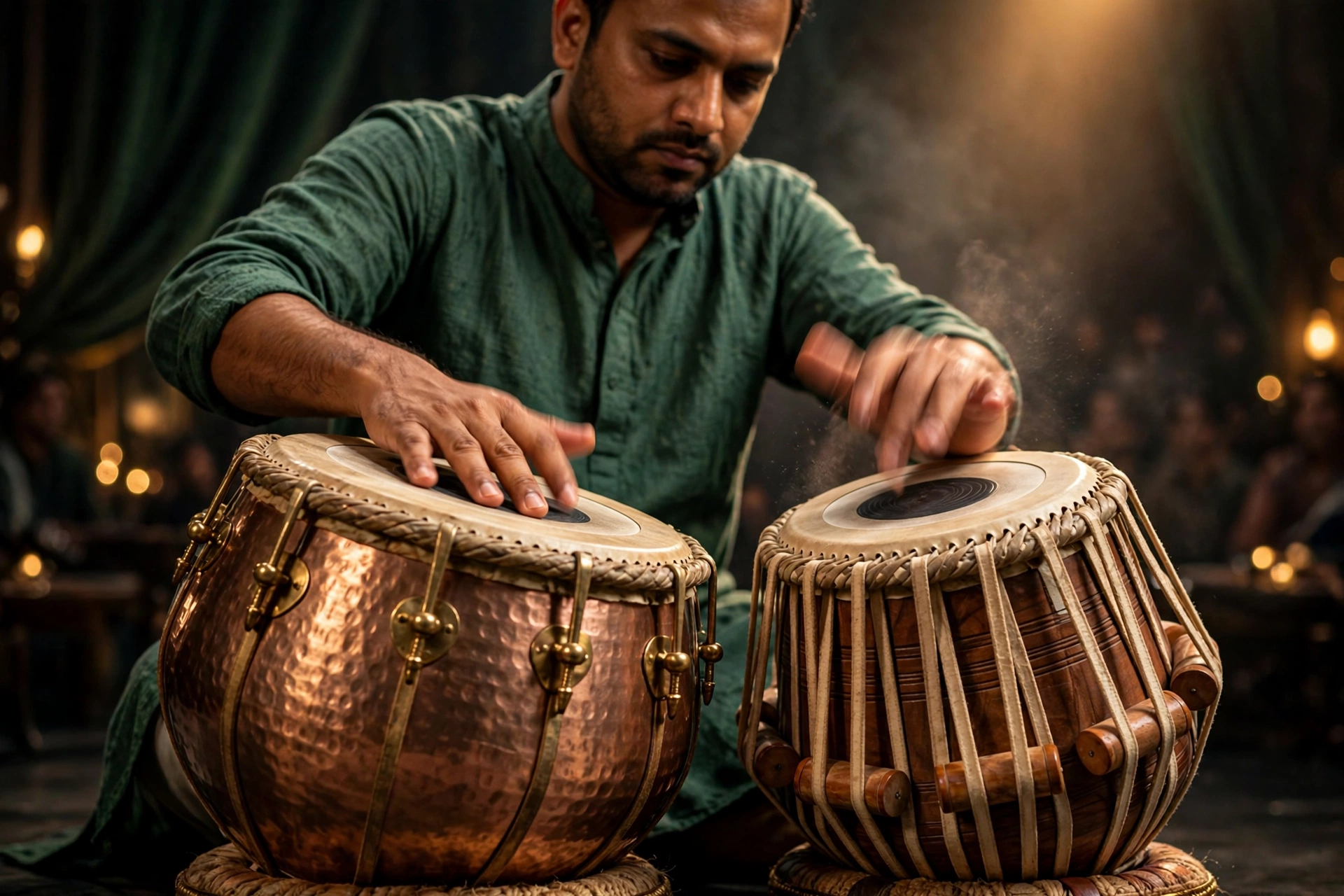
Learn Tabla. Build the rhythm.
Explore structured Tabla education and discover how your learning can develop from foundational technique toward confident musical expression.