
Veena The Sound, Story & World of an Indian Classical Instrument
Explore the Veena from its history and construction to its sound, musical traditions, learning journey and place within the wider world of Indian music.
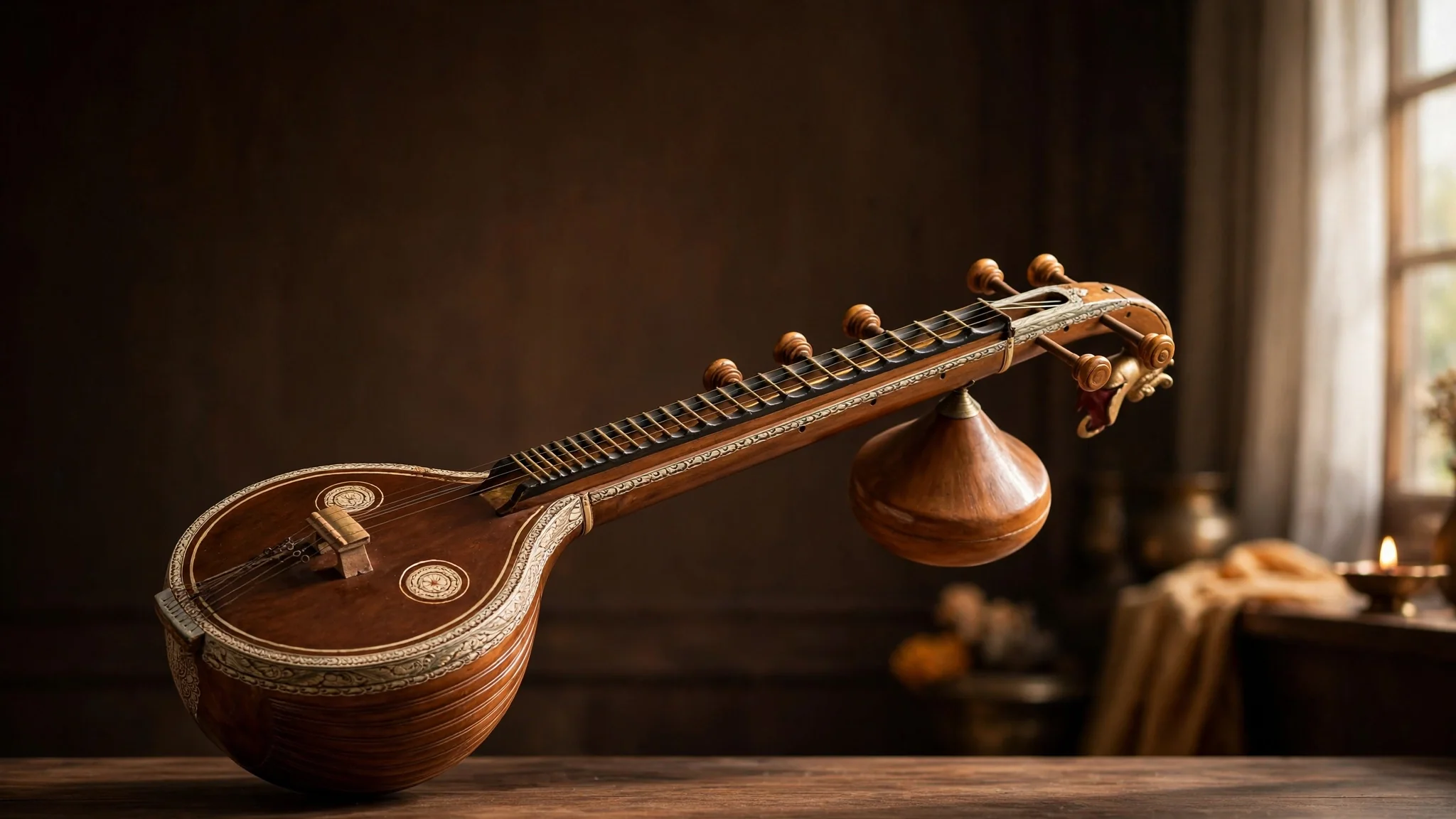
One instrument. Many layers of Indian musical culture.
“Veena” is used for a family of Indian string instruments. This hub focuses primarily on understanding the modern Saraswati Veena while also showing how different Veena traditions connect through history, craftsmanship, performance and learning.
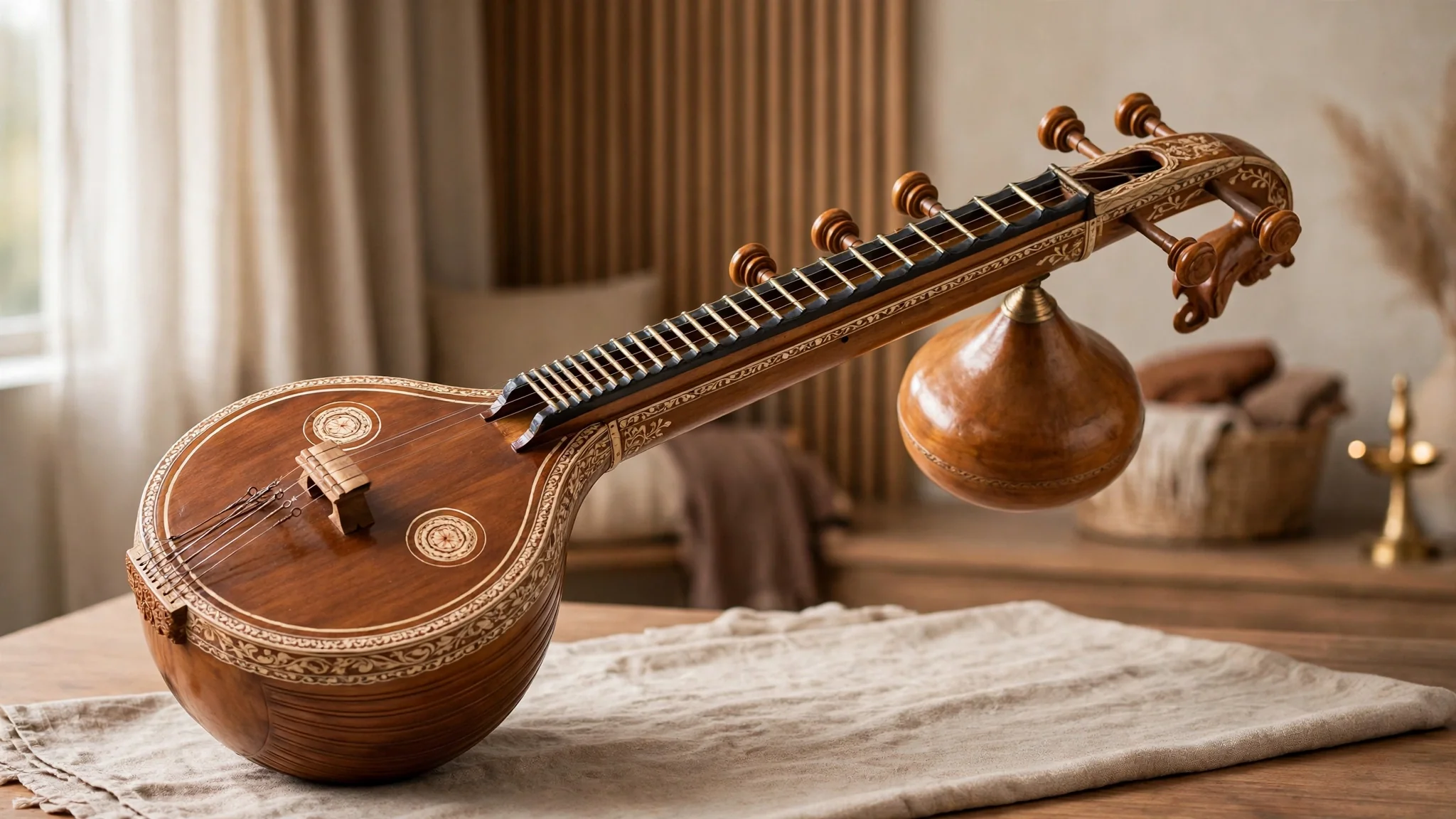
What is a Veena?
The Veena is one of the best-known names associated with traditional Indian string instruments. Different Veena forms developed in different musical traditions, so the word does not describe one single historical instrument.
For contemporary South Indian classical music, the Saraswati Veena is especially important. It is a plucked, fretted instrument with a resonating wooden body, strings, bridge, tuning mechanisms and a long playable section carrying fixed frets.
A musical lineage that spans centuries.
The history of the Veena is not a single straight timeline. Different instrument forms emerged across regions and musical traditions, creating a broader Veena family.
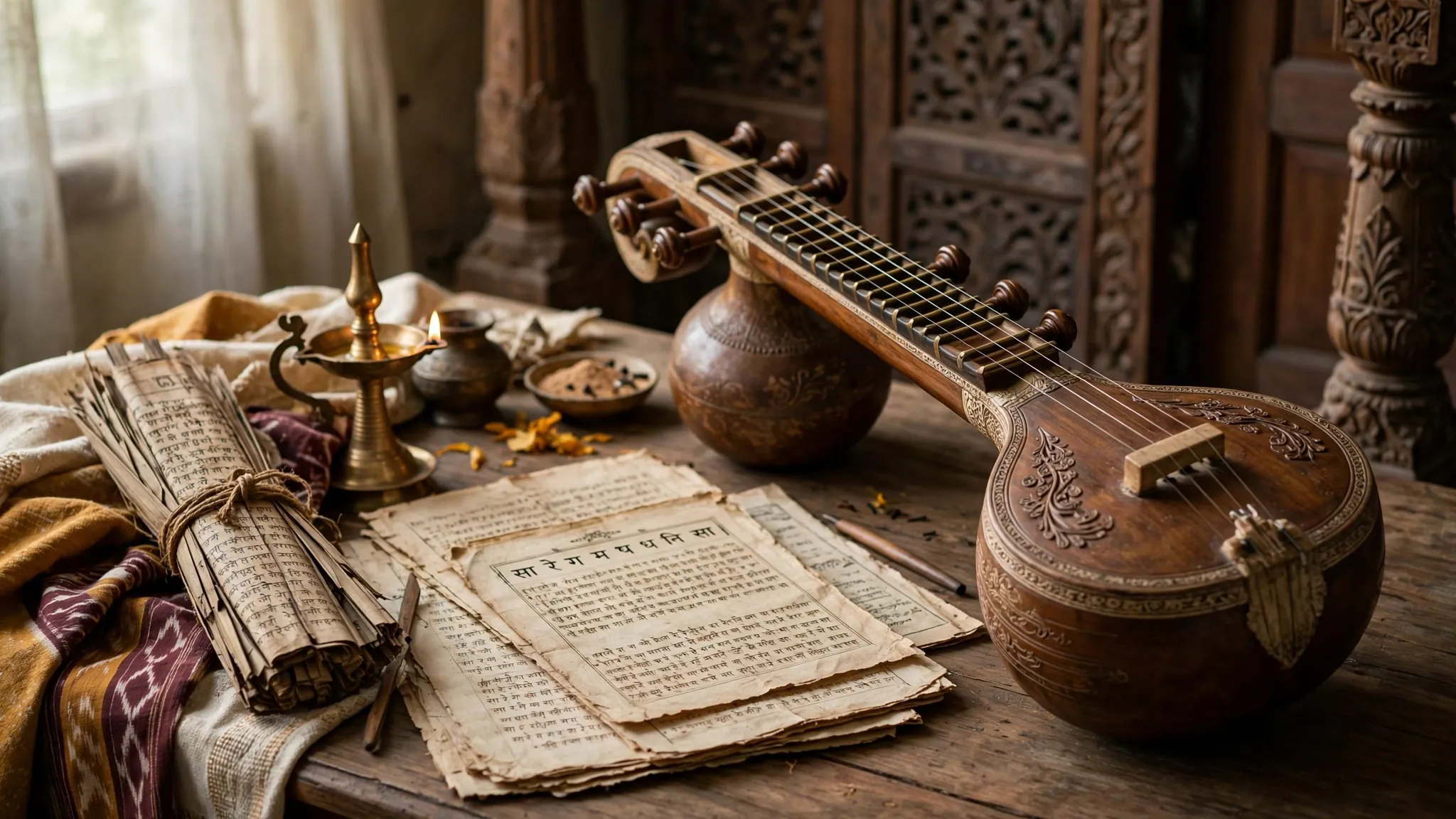
Ancient Indian string culture
Indian musical traditions included multiple stringed instruments and forms that contributed to the long history of instruments called Vina or Veena.
Different forms across India
Northern and southern musical traditions developed distinct instrument designs, playing systems and repertoire.
Saraswati Veena
The modern Saraswati Veena became strongly associated with South Indian classical music and refined fretwork, resonance and performance technique.
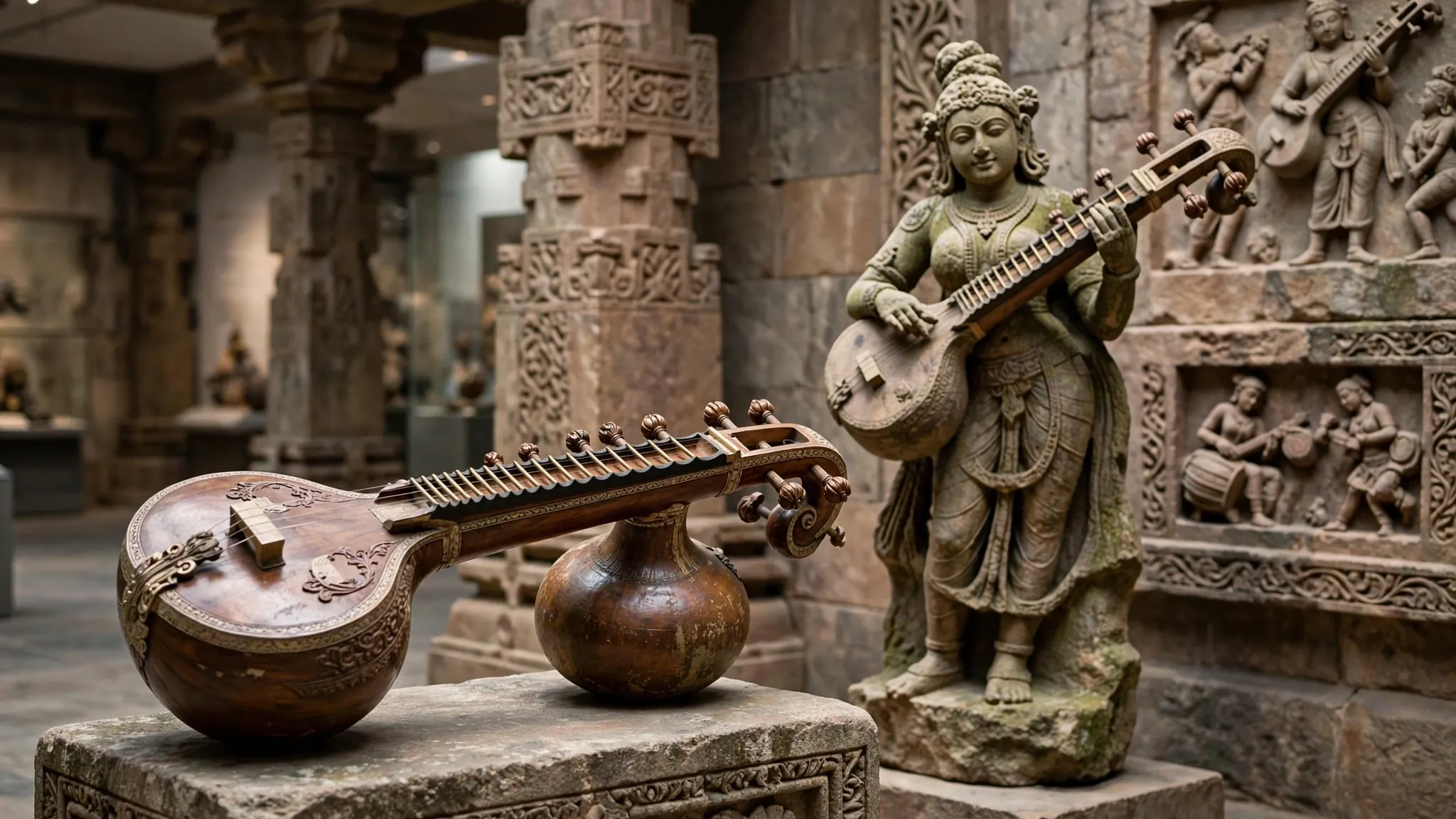
The word “Veena” represents a wider instrument family.
Museum collections document several Vina forms, showing why historical context matters when discussing the instrument today.
“Veena” is bigger than one instrument.
Understanding the differences between Veena-family instruments prevents historical and musical traditions from being treated as identical.
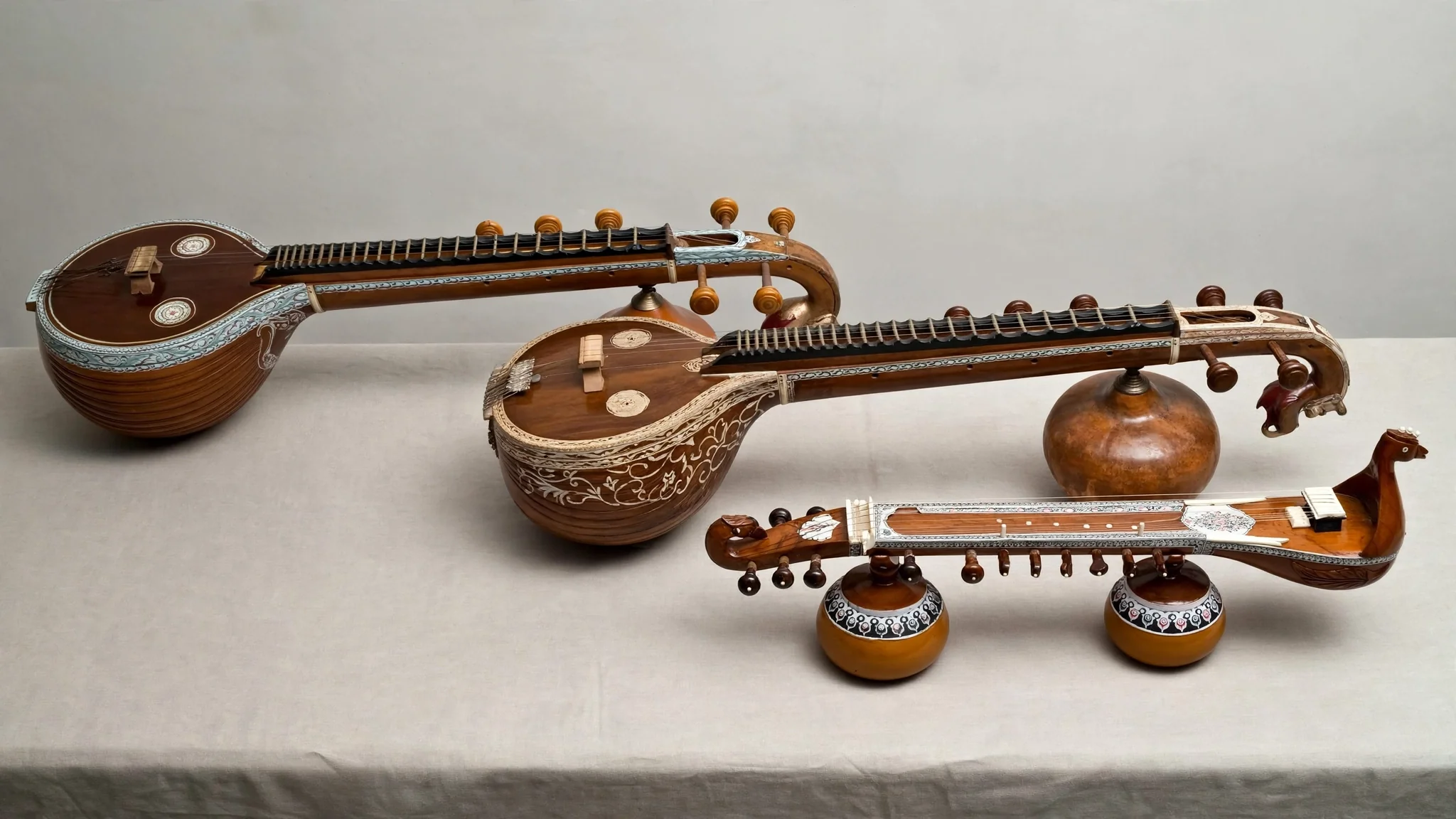
Saraswati Veena
A prominent fretted and plucked Veena associated with the Carnatic classical tradition.
Rudra Veena
A large fretted instrument associated with historical Hindustani traditions and especially linked with dhrupad.
Vichitra Veena
A fretless Veena-family instrument whose playing system uses a slide instead of fixed frets.
Other Vina Forms
Historical collections document additional instruments that use the Vina or Veena name in different contexts.
Every curve and component has a musical role.
The Saraswati Veena combines structure, resonance and controlled pitch movement in one integrated instrument.
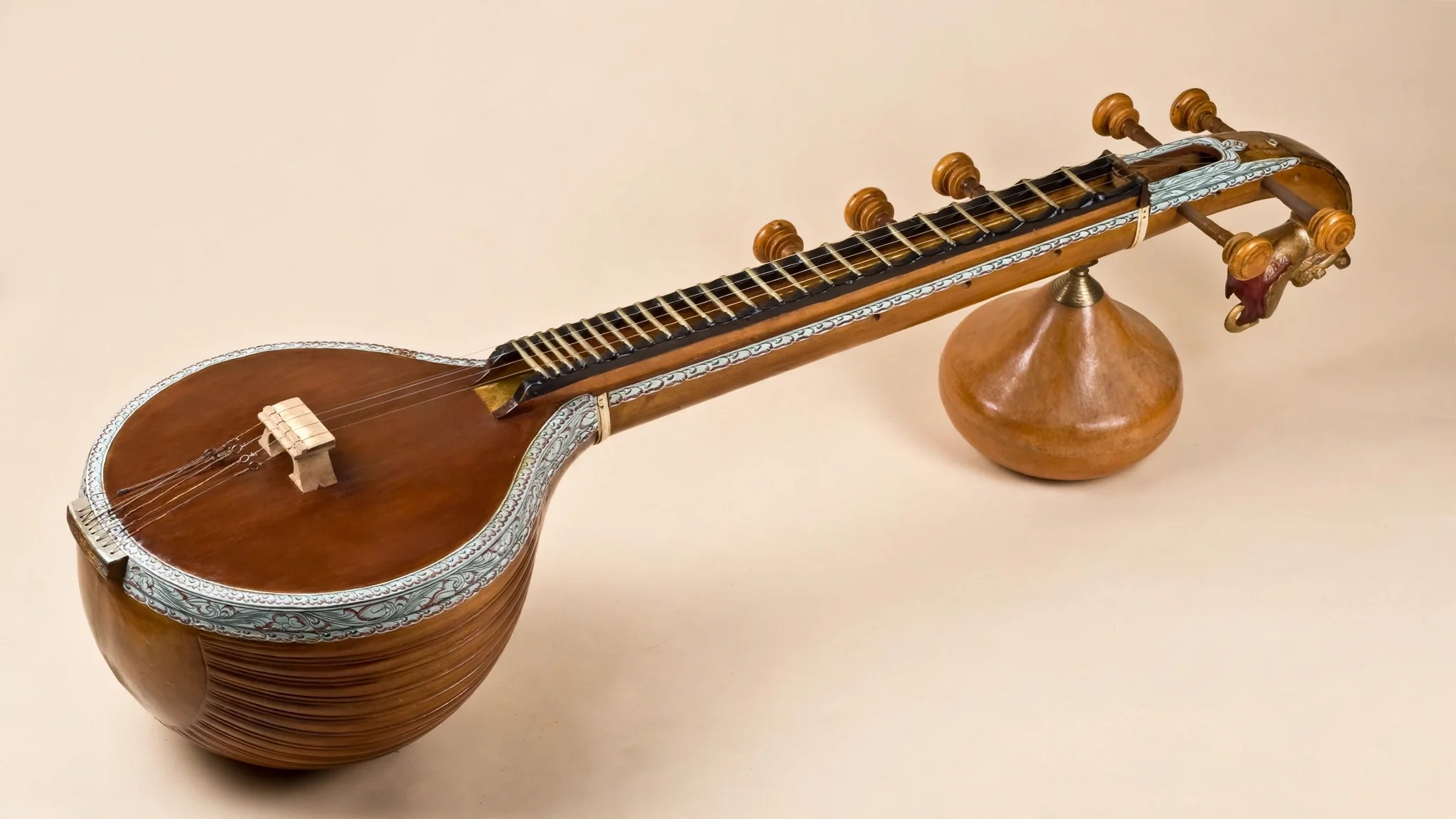
Main resonating body.
Long playable neck.
Fixed note positions.
Transfers string vibration.
Melodic and tala functions.
Adjust string tension.
Decorative carved finial.
Supports acoustic response.
Strings generate vibration, the bridge transfers energy, and the resonating structure helps shape the audible tone.
How the Veena turns touch into tone.
The instrument's sound begins with a vibrating string and is shaped by the player's technique and the acoustic structure of the Veena.
The playing hand activates the selected string.
The other hand controls the playable pitch and expression.
String energy moves through the bridge into the body.
The instrument's structure shapes the resulting tone.
Melody, rhythm and resonance work together.
The Saraswati Veena is commonly described with four melody strings and three additional tala or open strings.
The Veena can become a lifelong musical journey.
Beginners benefit from a gradual progression that combines instrument familiarity, technique, rhythm, ear training and musical expression.
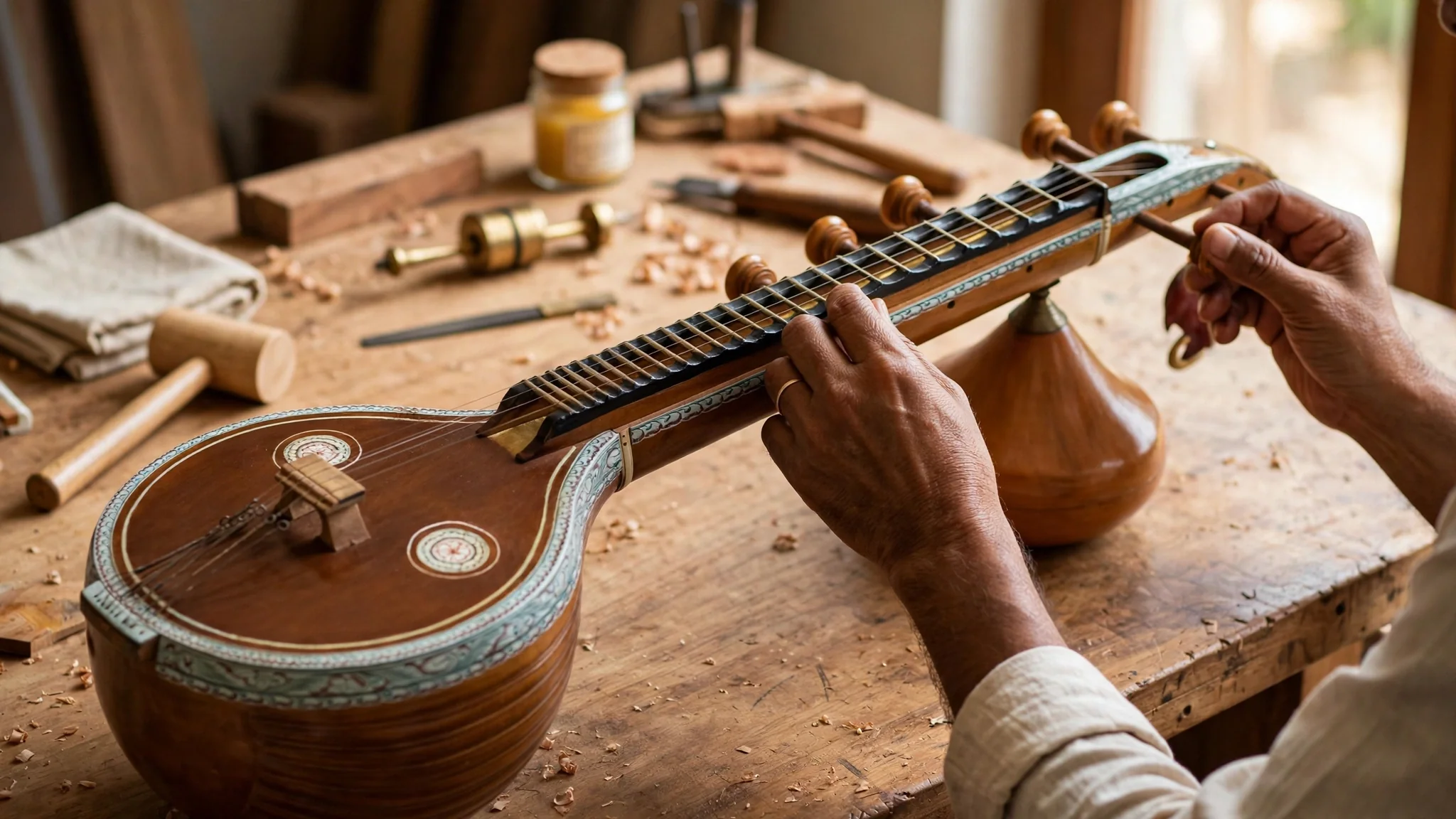
Know the instrument
Learn the parts, strings, posture and basic tuning system.
Build technique
Develop plucking, fingering and controlled note movement.
Build rhythm & repertoire
Connect technical exercises with rhythmic structures and pieces.
Explore musical detail
Gradually develop ornamentation, phrasing and raga-oriented expression.
One musical world. 21 connected ventures.
Veena learning sits inside a broader ecosystem covering music education, instruments, practice, production, artists, events, digital experiences, careers and global music initiatives.
Explore the Veena from every angle.
The hub is designed to connect visitors naturally to deeper information without mixing different search intents together.
What Is Veena?
History, parts, sound, technique and how the instrument works.
Veena History
Understand how different traditions and instrument forms evolved.
Veena Types
Compare Saraswati, Rudra, Vichitra and historical Veena forms.
Veena Sound
Explore strings, resonance, articulation and expressive technique.
Veena Learning
Understand the progression from beginner fundamentals to expression.
Veena Care
Learn why tuning, instrument care and maintenance matter.
Veena questions, made clearer.
A practical starting point for anyone discovering the instrument for the first time.
What is a Veena? +
Veena is a broad term used for several traditional Indian string instruments. The Saraswati Veena is one of the best-known modern forms and is strongly associated with South Indian Carnatic classical music.
Is Saraswati Veena the same as every Veena? +
No. Different Veena forms can vary in construction, string arrangement, fretting system, playing method and musical tradition.
How many strings does a Saraswati Veena have? +
A standard Saraswati Veena is commonly described with four melody strings and three additional tala or open strings.
How many frets does a Saraswati Veena have? +
Modern Saraswati Veena designs are commonly described with 24 fixed frets.
Is Veena suitable for beginners? +
Yes. A beginner can start with posture, instrument knowledge, tuning, simple plucking and fingering before progressing into rhythm, repertoire and expressive playing.
Why is the Veena important in Indian music? +
The Veena has a long presence in Indian musical and artistic traditions and remains especially significant within South Indian classical music through the Saraswati Veena.
Discover the Veena. Then discover where music can take you.
Explore the instrument, understand its traditions and continue deeper into the world of Indian music through SoulFul Musik Academy and the wider SoulFul ecosystem.