
What Is Violin? A Complete Beginner's Guide to the Instrument
Learn what a violin is, explore its history and main parts, understand how sound is produced, discover common violin types and see how the instrument fits into Indian, Western and modern music.
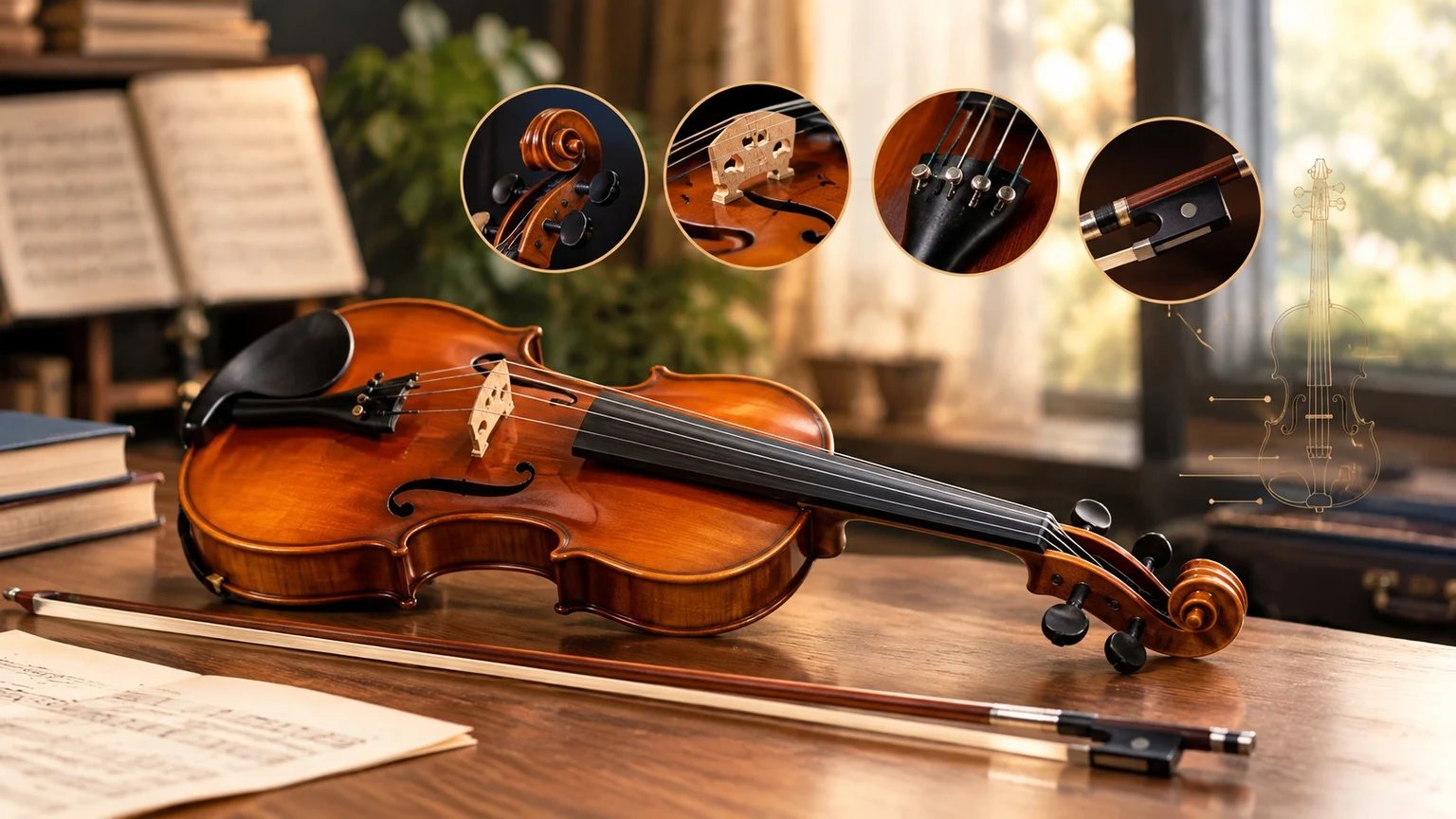
What is a violin?
A violin is a small bowed string instrument with four strings. A player creates sound by drawing a bow across the strings and changing pitch by placing the fingers of the left hand on the fingerboard.
The instrument is known for its expressive tone and wide dynamic range. It can be used in Western classical music, Indian classical traditions such as Carnatic music, folk and contemporary arrangements, chamber music, studio recording and live performance.
A violin is more than four strings and a bow
The familiar violin shape is the result of centuries of instrument-making and playing practice. Its hollow wooden body helps amplify the vibration of the strings, while the neck, fingerboard, bridge, tailpiece, pegs and other components work together to support tuning, pitch, resonance and playability.
Standard violin setups use four strings tuned to different pitches.
The bow excites the strings so they vibrate and transfer energy into the instrument.
Players change the effective vibrating length of a string with the left hand.
The wooden body helps project and shape the sound produced by the strings.
From European craftsmanship to a global musical voice
The modern violin emerged in 16th-century Europe and developed through generations of instrument craftsmanship. Italian makers played a major role in establishing the instrument's familiar form and construction traditions.
As the violin travelled across regions, musicians adapted it to different repertoires and performance practices. In India, it became an important instrument in classical performance, especially in Carnatic music, and it also appears in film, fusion, devotional, folk and contemporary arrangements.
Its continued presence in very different musical settings reflects the violin's combination of portability, expressive range and adaptable technique.
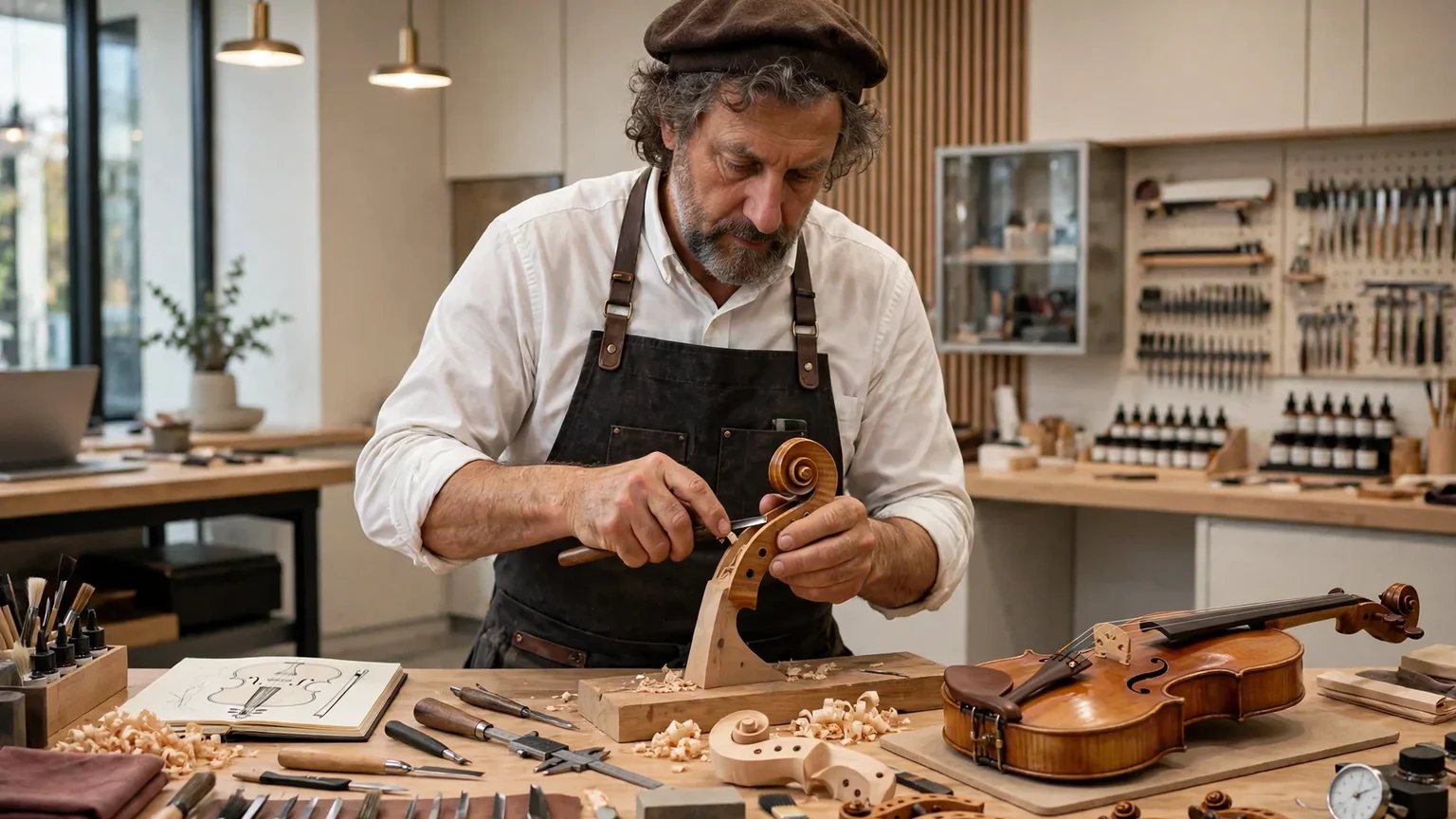
What are the main parts of a violin?
Knowing the names of the main violin parts makes beginner lessons, maintenance and instrument shopping easier. Each component has a practical role in producing, controlling or supporting the sound.
Body
The hollow wooden body is the main resonating structure. Its shape and construction strongly influence the instrument's acoustic response.
Neck & fingerboard
The neck supports the fingerboard, where the player places the fingers to change pitch and play different notes.
Bridge
The bridge supports the strings and helps transfer their vibration into the body of the instrument.
Tuning pegs
The pegs are used for tuning the strings by changing their tension.
Tailpiece
The tailpiece anchors the strings at the lower end of the instrument and contributes to the overall setup.
Bow
The bow is the primary tool used to set the strings vibrating. Its hair contacts the strings as the player moves it across them.
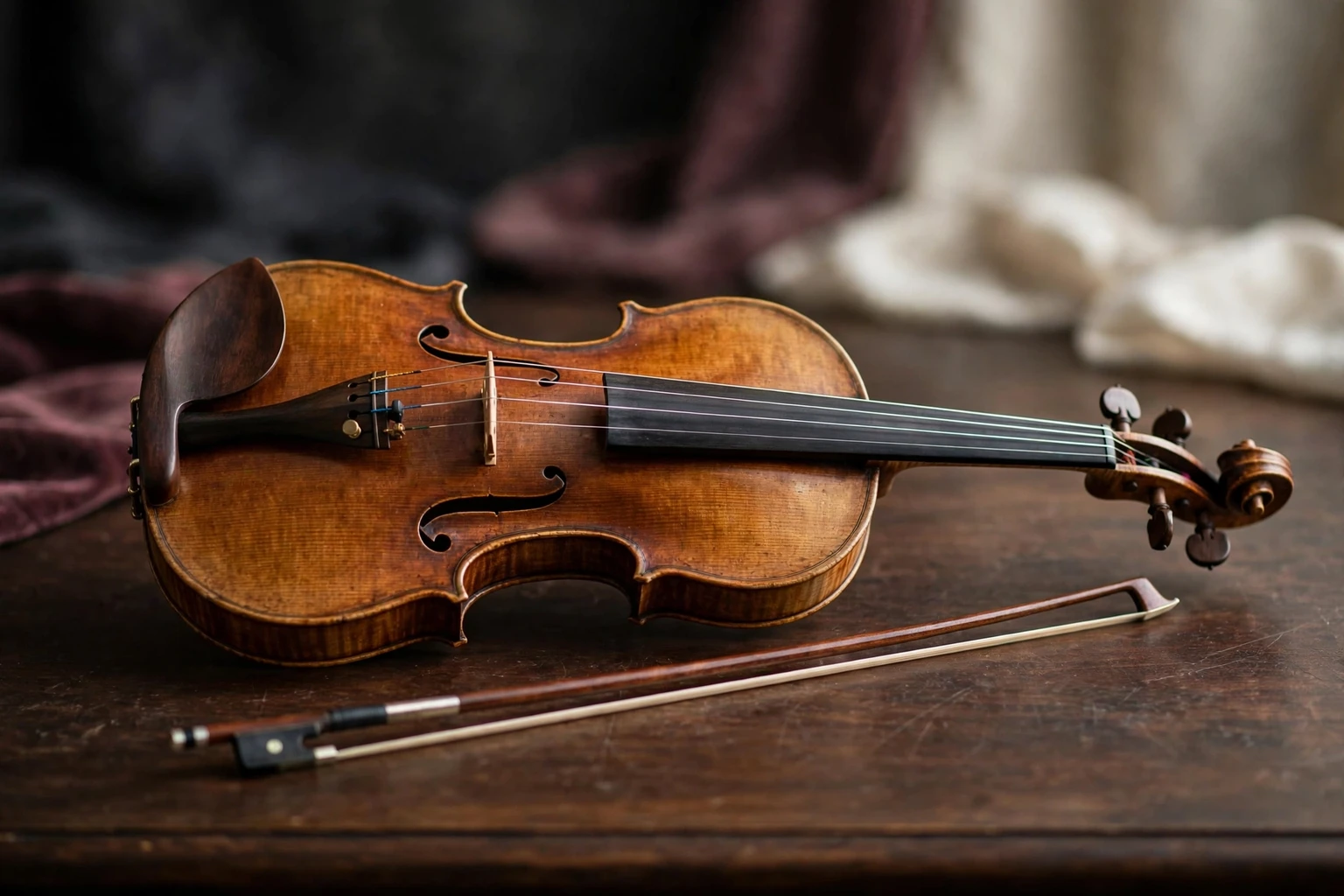
How does a violin work?
A simple way to understand a violin is to follow the path from movement to vibration to resonance:
The strings are set into motion, most commonly with the bow.
The vibrating string produces the initial sound source.
The bridge transfers string movement into the instrument's body.
The hollow body amplifies and shapes the vibrating energy into the sound we hear.
What do violin strings and the bow do?
These two elements form the heart of the violin's playing technique.
Different strings, different pitches
A standard violin has four strings arranged from lower to higher pitch. Players select, combine and articulate them to create melodies, harmonies, double stops and expressive phrasing.
The bow shapes articulation and tone
Bow direction, speed, pressure and contact point can change the character of a note. These details are central to developing a smooth and expressive playing style.
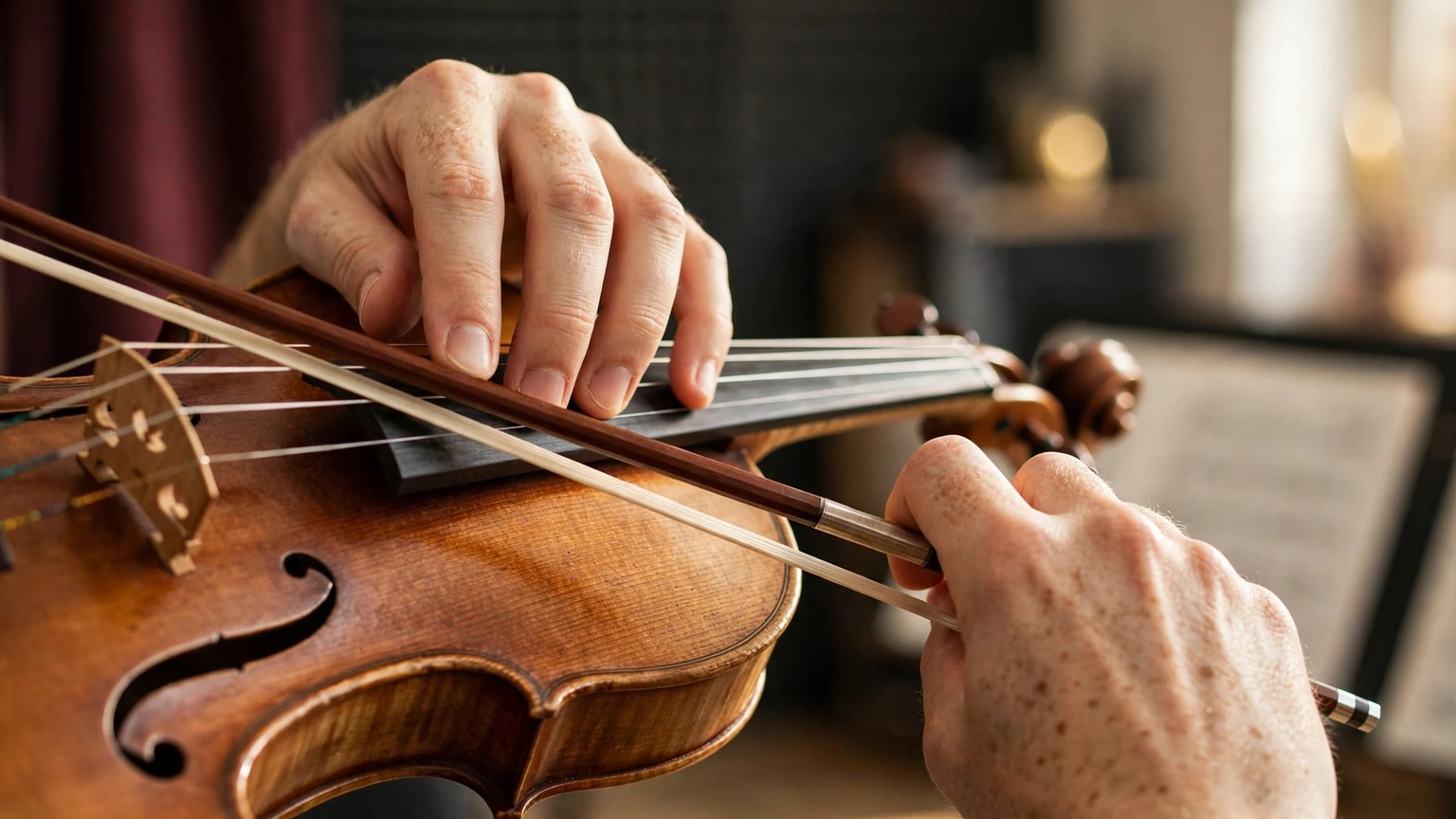
What are the different types of violins?
When beginners search for "types of violin," they may be referring either to instrument construction, size and setup, or to the musical traditions in which violin is played. The learning context is often more useful than a single label.
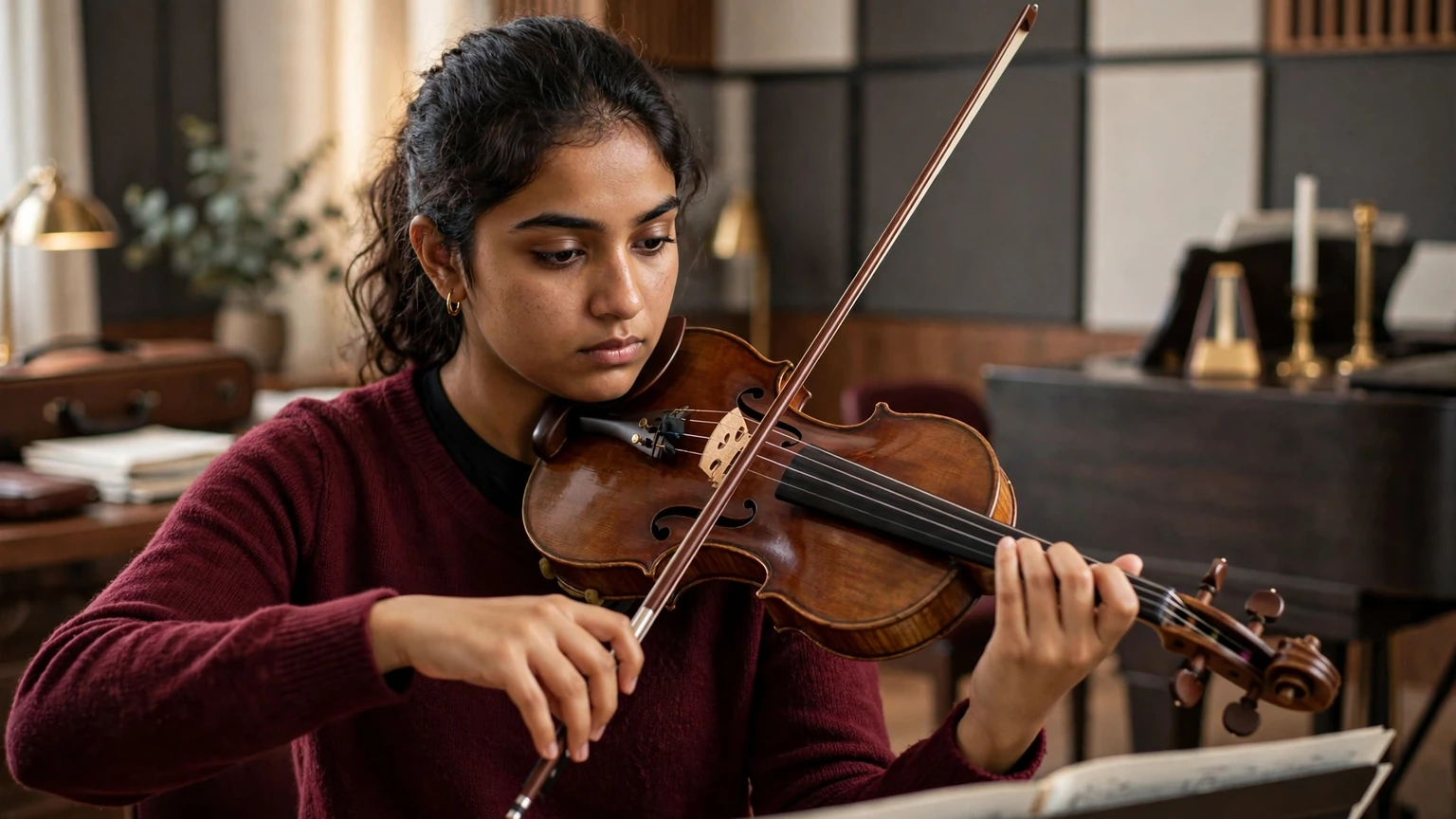
Western classical violin
Commonly taught through notation, scales, bowing technique, repertoire, ensemble playing and performance preparation.
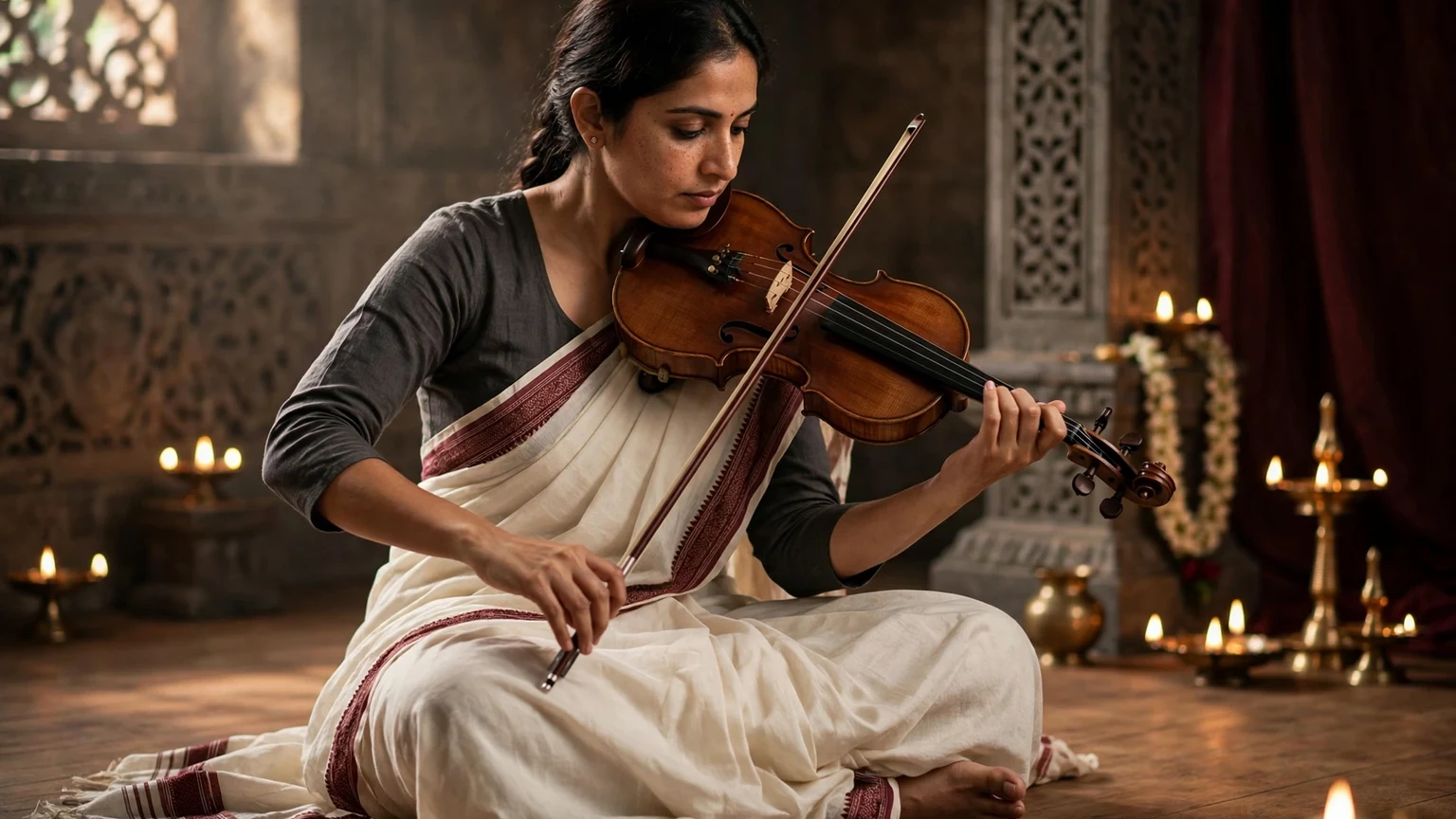
Violin in Carnatic music
In Carnatic performance, the violin can support vocalists and instrumentalists while following melodic phrases and expressive ornamentation.
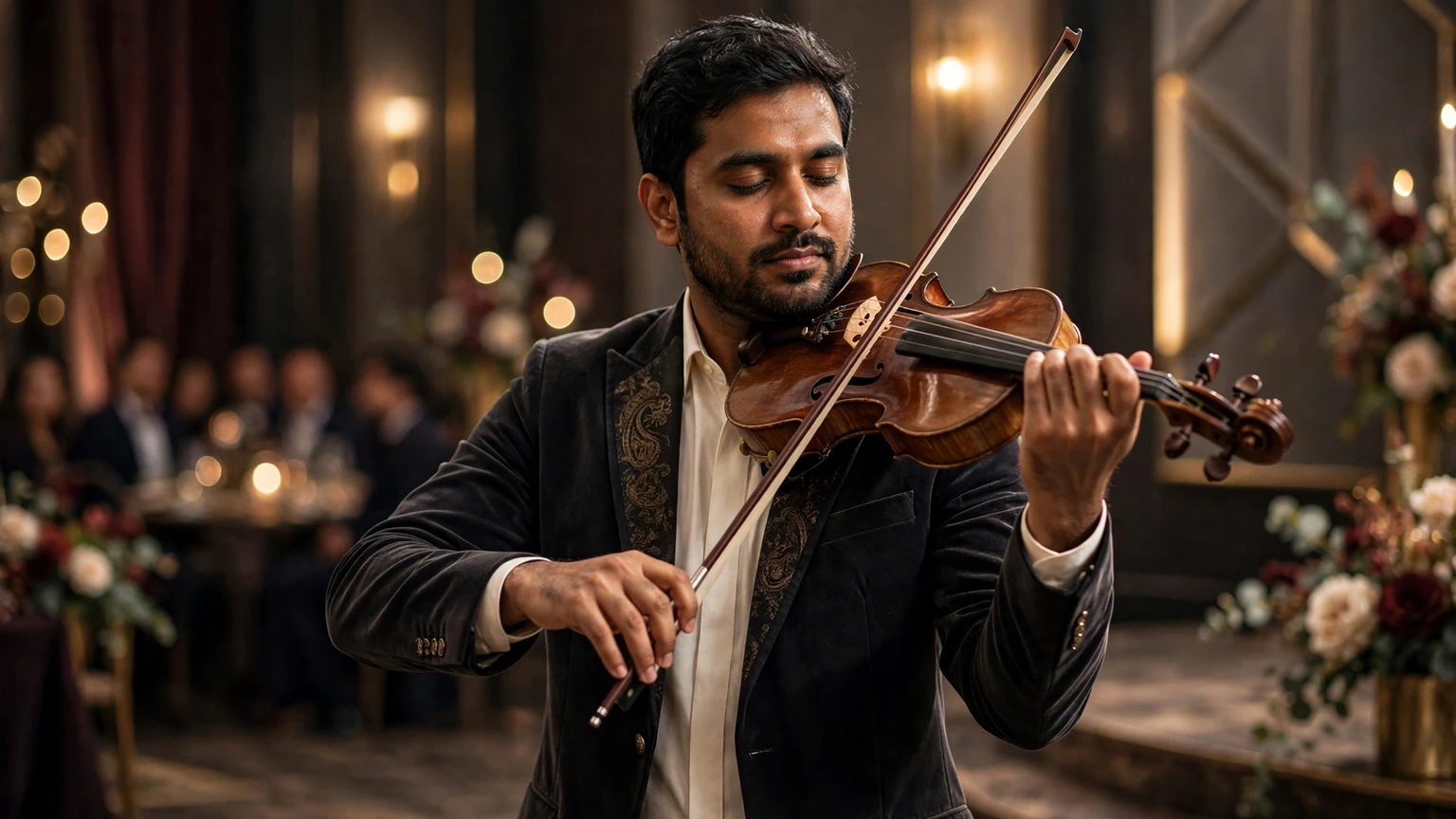
Film, live and modern music
Violin can appear in recordings, stage shows, weddings, cultural programs, fusion arrangements and other live or digital productions.
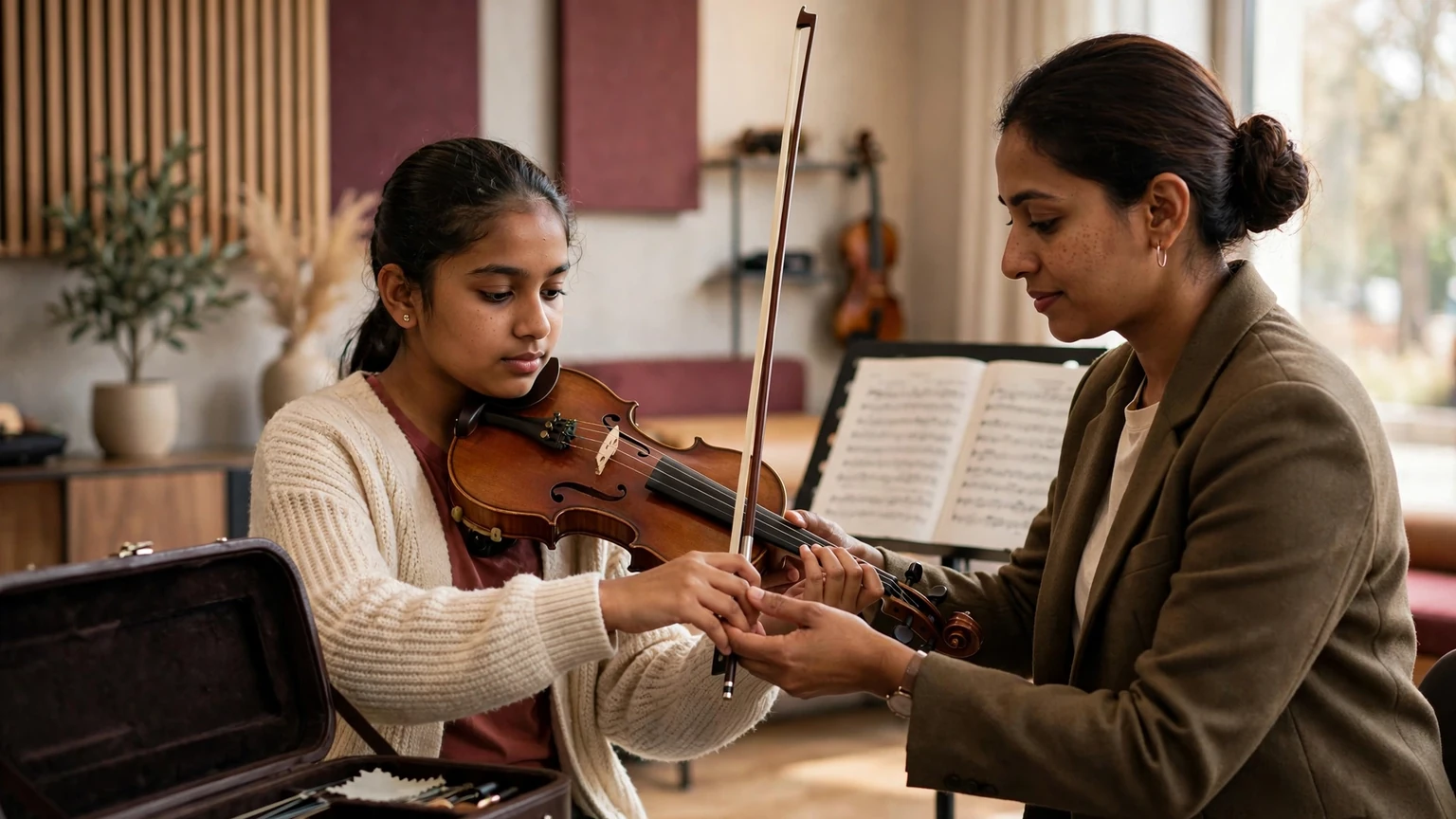
Is violin difficult to learn?
Violin has a learning curve because the instrument does not use fixed frets to mark pitch. Beginners typically spend time building posture, bow control, finger placement, intonation, rhythm and listening skills before those elements become more natural.
Progress is often easier to manage when learning is structured around an appropriate level and regular practice. Beginners can start with simple exercises and melodies, while developing players can work on scales, shifting, repertoire and expression.
Explore Violin Classes →Who can learn violin?
Violin learning can be adapted for children, teenagers, adults, hobby learners and students preparing for more advanced performance. The right learning format depends on goals, available practice time, previous musical experience and the style the learner wants to explore.
Build strong fundamentals
Start with posture, instrument handling, bow control, simple rhythm and short musical exercises.
Learn around a schedule
Private or online learning can fit practice around work, studies and other commitments.
Strengthen technique
Focus on intonation, scales, phrasing, bowing patterns, repertoire and performance confidence.
From understanding the instrument to actually playing it
Once you understand what a violin is and how its main parts work together, the next step is learning how to hold the instrument, control the bow, place the fingers and practise with a consistent routine.
Where your violin journey can continue
Explore the relevant SoulFul ventures for learning, instruments, practice, maintenance and live musical work.
Frequently asked questions about violin
What is a violin used for?
Violin is used for solo performance, ensemble playing, Western classical music, Carnatic music, folk and contemporary arrangements, recordings, weddings, concerts and other live events.
How many strings does a violin have?
A standard violin has four strings. Their pitches are different, and players combine finger placement and bowing to produce melodies and musical phrases.
What is the bow used for on a violin?
The bow sets the strings vibrating and helps shape articulation, dynamics and tone through changes in speed, pressure and contact point.
Can adults learn violin?
Yes. Adults can learn violin through structured lessons, private tuition or online learning, with the pace adapted to their goals and practice routine.
Is violin suitable for beginners?
Yes. Beginners commonly start with posture, bow grip, string names, basic finger placement, rhythm and simple exercises before moving into longer pieces and more advanced technique.
Now that you know what a violin is, build the skills to play it.
Move from instrument knowledge to guided learning, regular practice and musical expression.