
Sitar: Complete Guide to Learning, Classes, Types, Benefits & the Indian Classical Instrument
Discover the Sitar, its role in Indian classical music, how beginners can learn it, what Sitar lessons involve, how to choose a teacher and what to know before starting your musical journey.
The Sitar is one of the most recognizable instruments associated with Indian classical music. Its long neck, curved frets, resonant body and distinctive tonal character make it both visually striking and musically expressive.
For a beginner, however, learning the Sitar is about much more than simply learning to pluck strings. A structured learning journey can involve posture, instrument handling, mizrab technique, swaras, rhythm, listening, raga understanding, regular practice and musical expression.
This complete guide explains what the Sitar is, how people learn it, what to expect from Sitar classes and lessons, how to choose a teacher and what beginners should know before starting.
What Is a Sitar?
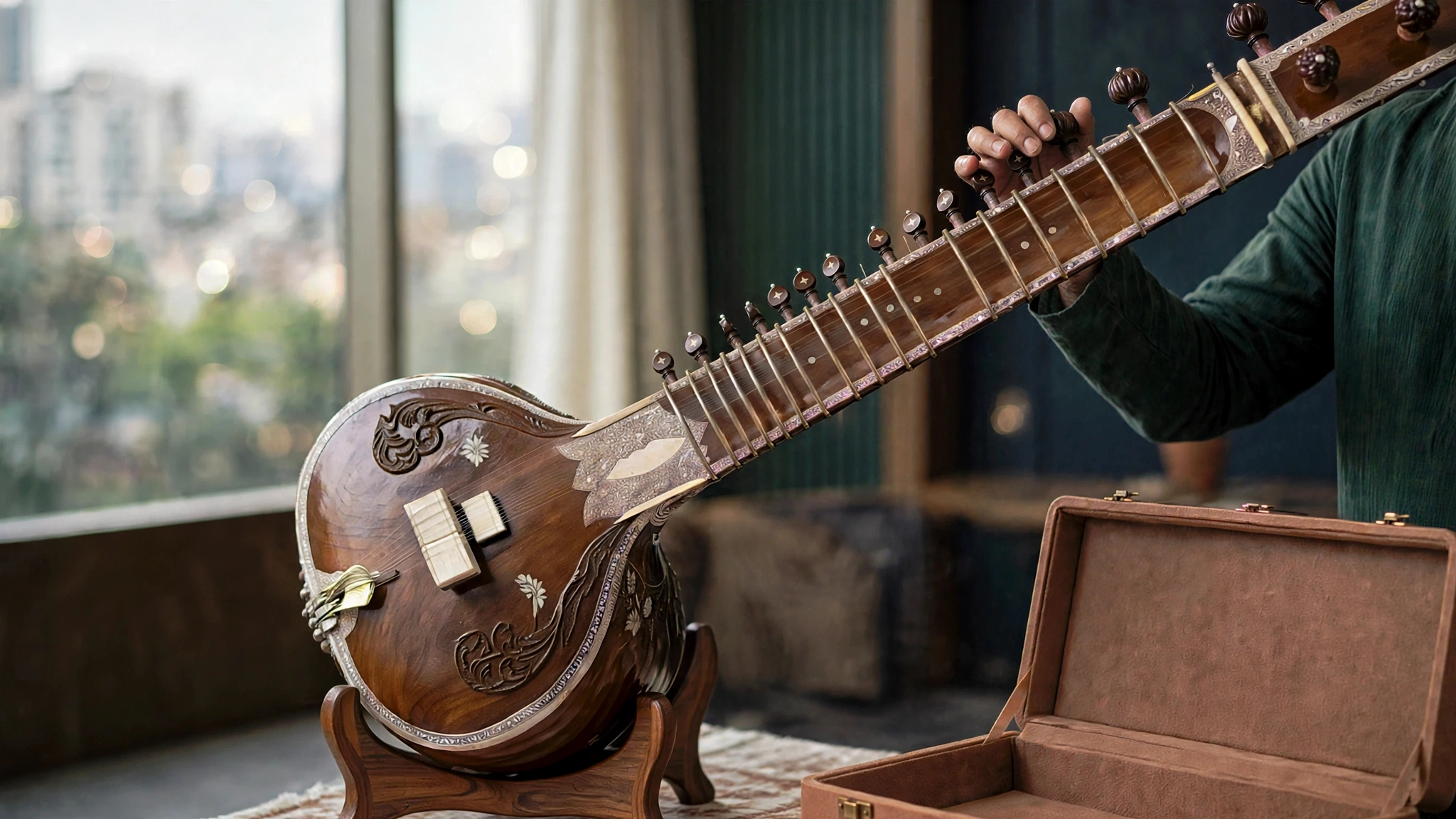
A Sitar is a plucked string instrument strongly associated with the Hindustani classical music tradition of North India. It is known for its long fretted neck, resonating body, sympathetic strings and expressive techniques that allow musicians to create sustained notes, bends and ornamentation.
The instrument is capable of producing both melodic detail and a rich resonant background, making it suitable for solo performance as well as classical musical settings.
What Is the Sitar Used For?
The Sitar is primarily used for melodic performance and improvisation. In Indian classical music, musicians work with melody, rhythm, pitch, ornamentation and raga-based development rather than relying only on fixed melodies.
Sitar in Indian Classical Music
Learning the Sitar can therefore introduce students to a wider musical vocabulary that includes swaras, tala, raga, listening and improvisational thinking.
Main Parts of a Sitar
Understanding the instrument itself is an important first step for anyone planning to learn Sitar. A beginner should become familiar with the major physical components before focusing heavily on advanced technique.
Main Resonating Body
The main body provides the instrument's characteristic acoustic resonance.
Long Neck
The long neck supports the frets and strings used for melodic playing.
Frets
The curved frets help the player locate pitches while also allowing expressive movement between notes.
Sympathetic Strings
These strings contribute additional resonance and help create the distinctive tonal character of the instrument.
Bridge / Jawari
The bridge area plays an important role in shaping the sound and response of the instrument.
Tuning Pegs
Tuning hardware allows the player to prepare the instrument for the chosen pitch and musical setup.
Is Sitar Difficult to Learn?
The difficulty of learning Sitar depends on the student's consistency, musical background, access to guidance and the level they want to reach. Beginners do not need to master advanced techniques immediately.
A good learning process breaks the instrument into manageable skills and gradually develops technique, listening and musical understanding.
Learning the Sitar is a gradual musical journey: build the fundamentals first, then develop technique, listening, rhythm and expression through regular practice.
What Beginners Learn First
- How to hold and position the instrument.
- Basic mizrab handling and strokes.
- Instrument tuning and string awareness.
- Basic swaras and pitch relationships.
- Simple rhythmic patterns.
- Listening and coordination skills.
How Long Does It Take to Learn Sitar?
There is no universal timeline for learning Sitar. A learner practising consistently with structured guidance may progress more efficiently than someone who practices only occasionally. The time required also depends on whether the goal is recreational playing, foundational Indian classical music, performance preparation or advanced musicianship.
How to Learn Sitar
Students generally choose between structured learning with a teacher, Sitar classes, private Sitar lessons or online learning formats. The best option depends on location, schedule, preferred teaching style and learning goals.
Understand the Instrument
Begin with the physical structure of the Sitar, posture, handling, strings, tuning and basic terminology.
Build Basic Technique
Learn controlled strokes, hand coordination and the basic mechanics required to produce a clean sound.
Develop Musical Understanding
Gradually work with swaras, rhythm, melody, listening and introductory raga concepts.
Establish Regular Riyaz
Consistent practice is essential for developing coordination, intonation, timing and confidence.
Sitar Classes and Sitar Lessons
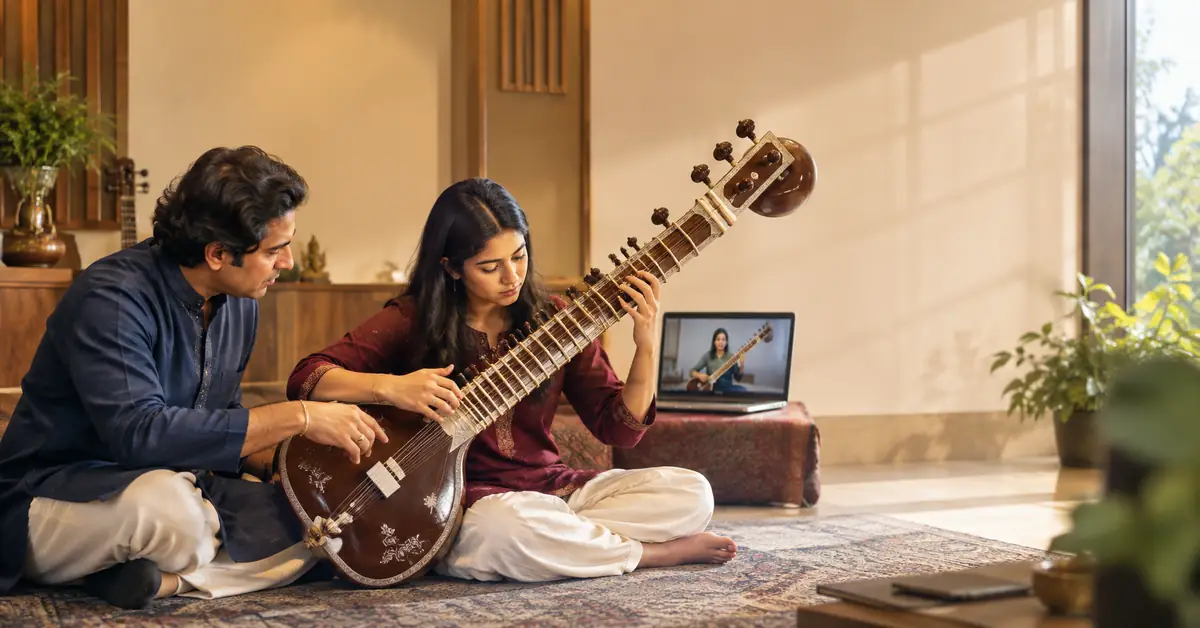
Sitar classes can offer a more structured learning environment for students who want regular guidance and a clear progression. Depending on the program, lessons may include technique, repertoire, rhythm, ear training and Indian classical music concepts.
Private Sitar Lessons
One-to-one instruction can be useful for students who need direct feedback and a learning pace tailored to their level.
Structured Sitar Classes
A structured class can provide a regular schedule, progressive material and a defined learning pathway.
Online Sitar Lessons
Online learning can be useful for students who cannot regularly attend an in-person class, provided the lesson format works well for the learner.
Learning Sitar at Home
Home practice becomes particularly valuable when students have clear exercises, guidance and realistic practice goals.
Sitar for Beginners
Beginners often wonder whether they need previous musical experience before starting. In many structured learning environments, students can begin with fundamental concepts and gradually build their playing skills.
What Beginners Should Know
- You do not need to rush into advanced technique.
- Correct posture matters from the beginning.
- Regular practice is more useful than occasional long sessions.
- Listening is an important part of musical development.
- A teacher can help identify and correct technical problems early.
Common Beginner Mistakes
- Trying to play too fast too soon.
- Ignoring posture and hand position.
- Skipping tuning and instrument care.
- Practising without listening carefully to pitch.
- Changing exercises constantly instead of building consistency.
Types of Sitar
Students may encounter different Sitar designs, configurations and stylistic preferences. The best instrument depends on the learner's goals, teacher's recommendations, playing style and level.

Different Instrument Characteristics
Factors such as body construction, string setup, bridge characteristics, weight, workmanship and overall response can influence the playing experience.
Choosing According to Learning Goals
A beginner should ideally choose an instrument with guidance rather than selecting one purely on appearance. The right Sitar should be suitable for the learner's level, budget, playing goals and learning environment.
For a more detailed purchasing discussion, see our complete Sitar buying guide .
How to Choose a Sitar Teacher
The teacher can have a major influence on a student's technique, practice habits and long-term musical understanding. Look beyond location or class price and consider how the teacher actually teaches.
Musical Experience
Look for a teacher with a strong command of the instrument and a clear understanding of the musical tradition being taught.
Teaching Approach
A strong teacher should be able to explain techniques clearly and adapt instruction to the student's level.
Structured Progress
Students benefit from a learning path that develops skills progressively rather than moving randomly between exercises.
Practice Guidance
Good guidance should help students understand what to practise between lessons and why it matters.
Sitar Classes in Mumbai and Goregaon
Students searching for Sitar classes in Mumbai or Sitar classes in Goregaon should evaluate more than just the location. The teaching approach, class size, schedule, teacher experience, learning format and progression can all influence the experience.
What to Look for in a Learning Program
- A clearly explained learning structure.
- Teacher guidance suited to the student's level.
- Regular opportunities for feedback.
- Realistic practice expectations.
- A convenient location or suitable online format.
Local vs Online Sitar Learning
In-person learning can provide direct physical observation and immediate correction, while online lessons can be more convenient for students who live farther away or have demanding schedules. The right choice depends on the learner and the quality of the teaching format.
Read our dedicated guide to choosing Sitar classes in Mumbai and Goregaon for a more detailed comparison.
Sitar Practice and Learning Journey
Progress on the Sitar comes from regular, focused practice rather than simply spending a large amount of time with the instrument.
Start Small
Begin with manageable sessions and focus on accuracy rather than speed.
Repeat Deliberately
Repetition is useful when you pay attention to sound, movement and consistency.
Listen Closely
Develop the habit of listening critically to pitch, tone, rhythm and phrasing.
Track Progress
A structured practice routine helps students see improvement and identify areas that require more work.

Explore the Sitar Learning Journey
Once you understand the basics, the next step is to explore the part of the journey that matches your current goal.
Frequently Asked Questions About Sitar
Can beginners learn Sitar?
Is Sitar difficult to learn?
How long does it take to learn Sitar?
Can I learn Sitar online?
Do I need previous musical experience?
How should I choose my first Sitar?
Where can I find Sitar classes in Mumbai?
Are Sitar classes available in Goregaon?
Start Your Sitar Learning Journey
Whether you are completely new to the instrument, looking for structured Sitar lessons or exploring Indian classical music more deeply, the right learning path begins with strong fundamentals and consistent guidance.