
Sambhal (Sambal): A Traditional Maharashtrian Double Drum
Discover the paired drums, distinctive tippari technique and cultural role of Sambhal in Gondhal, devotional music and Maharashtra's living folk traditions.
It consists of two connected drums with different registers and is played with wooden beaters, including a distinctive curved-tip stick.
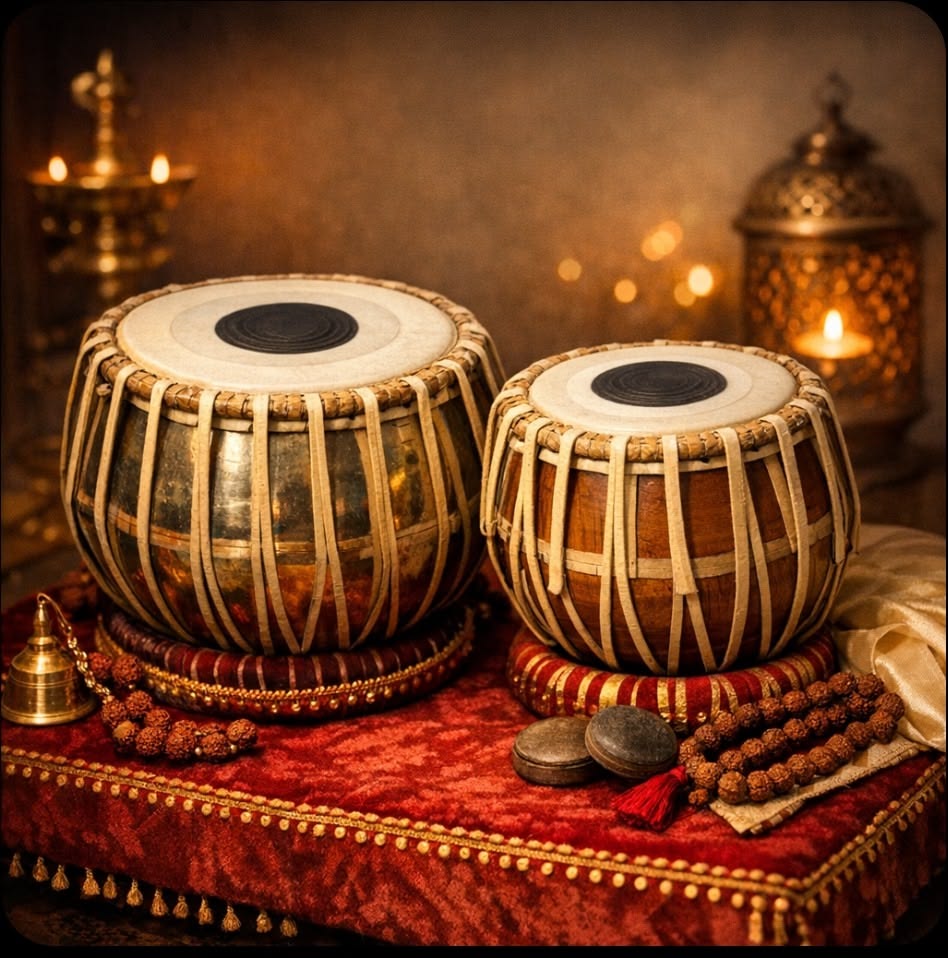
What Is Sambhal (Sambal)?
Sambhal, also spelled Sambal, is a traditional double-drum percussion instrument associated with western India and strongly connected with Maharashtrian folk and devotional traditions. The Marathi Vishwakosh describes sambal as a principal instrument of the Gondhal ritual and notes the alternate term “jod samel.”
The instrument is visually distinctive because two drums are joined side-by-side. One is larger and gives a lower register while the other is smaller and gives a higher register, allowing a performer to create a compact but powerful rhythmic palette.
Paired Drum Design
Two connected drum bodies create complementary registers within one portable percussion instrument.
Distinctive Beaters
Two wooden beaters are used, with one commonly formed with a curved or ringed tip.
Gondhal Tradition
Sambhal is a key rhythmic voice in Gondhal and related devotional folk performance.
Performance Mobility
The instrument can be suspended with a strap so the performer can move while playing.
Where Is Sambhal Used?
Sambhal is particularly associated with Gondhal, a traditional Maharashtrian ritual performance. It can accompany devotional singing, narration and energetic movement in ceremonial settings.
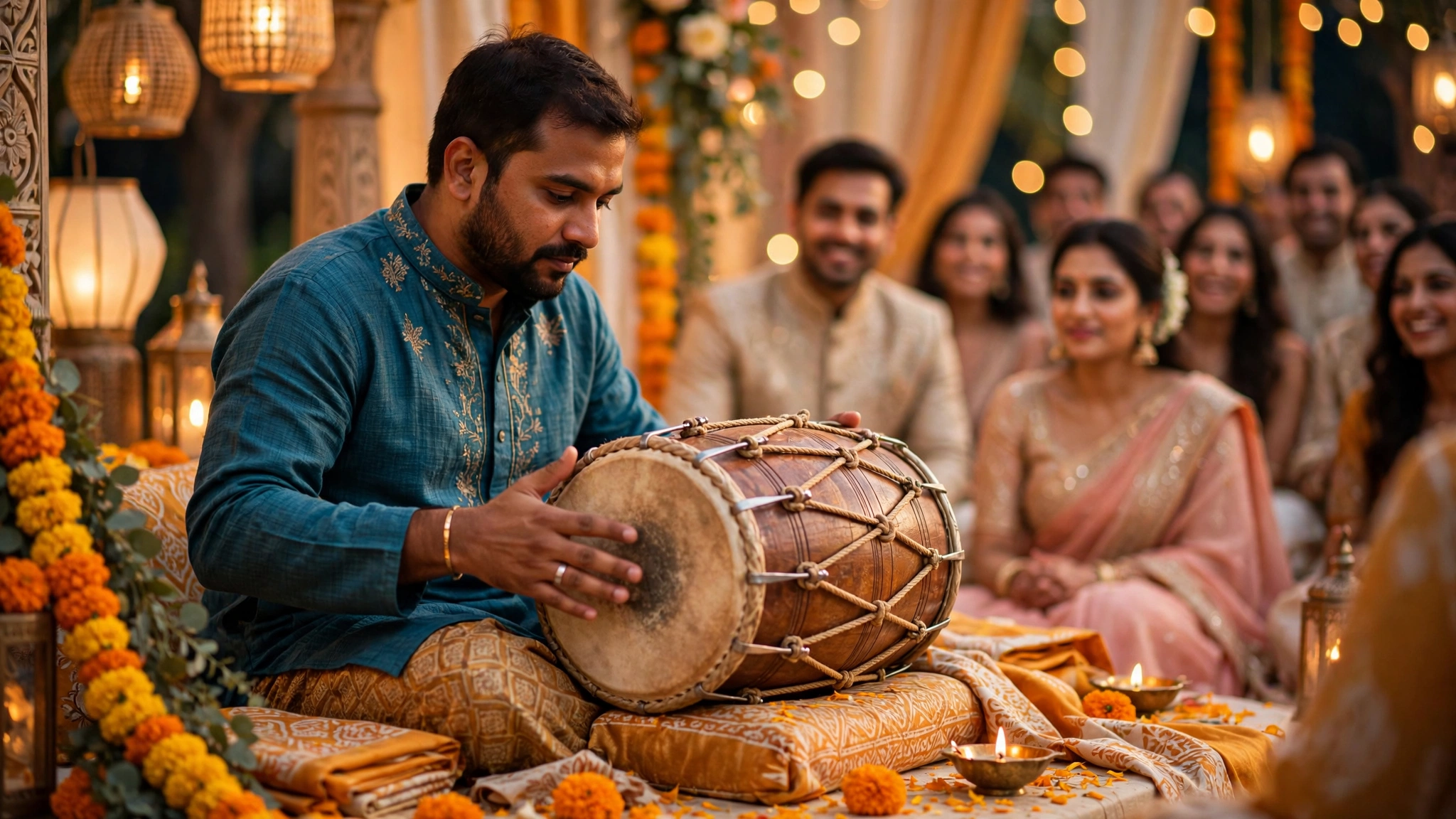
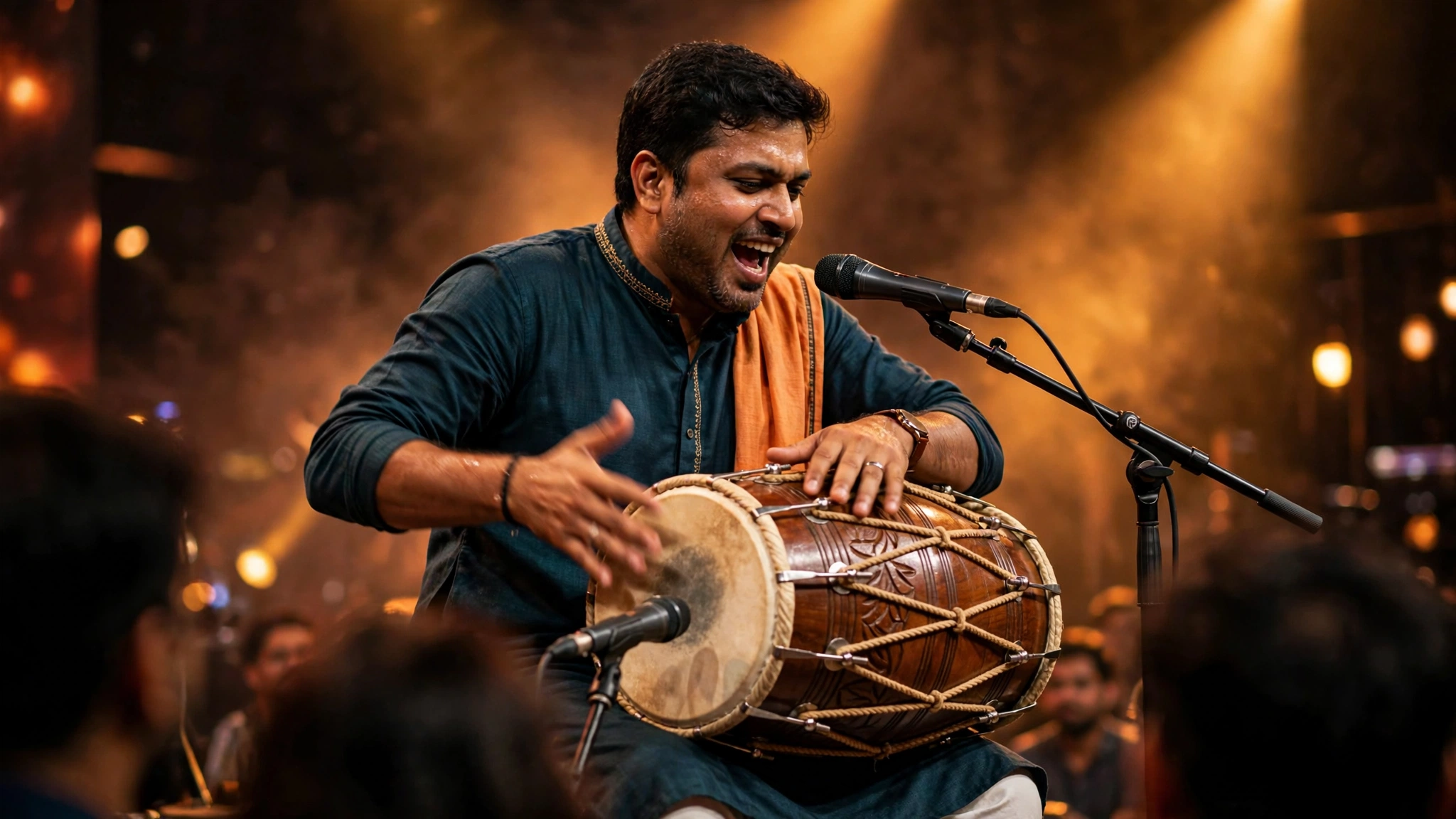
Sambhal in Gondhal
Gondhal combines devotional themes with singing, narration, movement and ritual performance. Historical and contemporary descriptions consistently identify sambal among the important instruments used in this tradition.
Devotional and Festival Settings
Sources on Maharashtrian cultural practice connect Gondhal with worship of local deities and with auspicious occasions such as marriages and festival-period performances. The sambal supplies a strong rhythmic foundation within that ensemble.
How Is the Sambhal Made?
Descriptions of sambal vary by locality and instrument maker, but its defining construction is the pairing of two drum shells. Documentary descriptions identify wooden bodies, stretched hide membranes and cord-based tensioning as common features.
| Element | Typical description | Why it matters |
|---|---|---|
| Drum bodies | Two connected shells, often made from wood; some descriptions also document other construction variants. | Provides the paired low/high rhythmic relationship. |
| Drumheads | Stretched hide or leather membranes. | Creates the vibrating surface that produces the drum tone. |
| Tension system | Cords, rings or related hardware depending on the build. | Helps hold the membranes under performance tension. |
| Beaters | Two wooden sticks, including a curved-tip form in common descriptions. | Shapes attack, accents and characteristic articulation. |
For a specific instrument, materials and dimensions should be treated as maker- and region-dependent rather than as a single universal specification.
Why Does Sambhal Have Two Different Pitches?
The paired-drum format gives Sambhal a contrasting register relationship. The larger drum generally produces the lower voice, while the smaller drum gives a comparatively higher sound. This allows one performer to create rhythmic contrast without changing instruments.
Think of the two drums as one rhythmic system.
The power of Sambhal comes from the dialogue between its paired heads: low and high, broad and sharp, pulse and accent.
How Is Sambhal Played?
Sambhal is played with two wooden beaters. Descriptions of the instrument commonly distinguish a straighter stick from a curved or loop-like tip used for characteristic articulation. The performer alternates strokes and accents across the two drumheads to build the rhythmic pattern.
The Tippari Beaters
The beaters are central to Sambhal technique. A curved tip can be used for a distinctive rubbing, dragging or sliding-style accent on the membrane, creating an articulation that differs from a simple straight strike.
Movement While Playing
The instrument is traditionally suspended from the neck or waist with a strap. This leaves the hands free and supports energetic movement during performance rather than requiring the drum to remain on a stand.
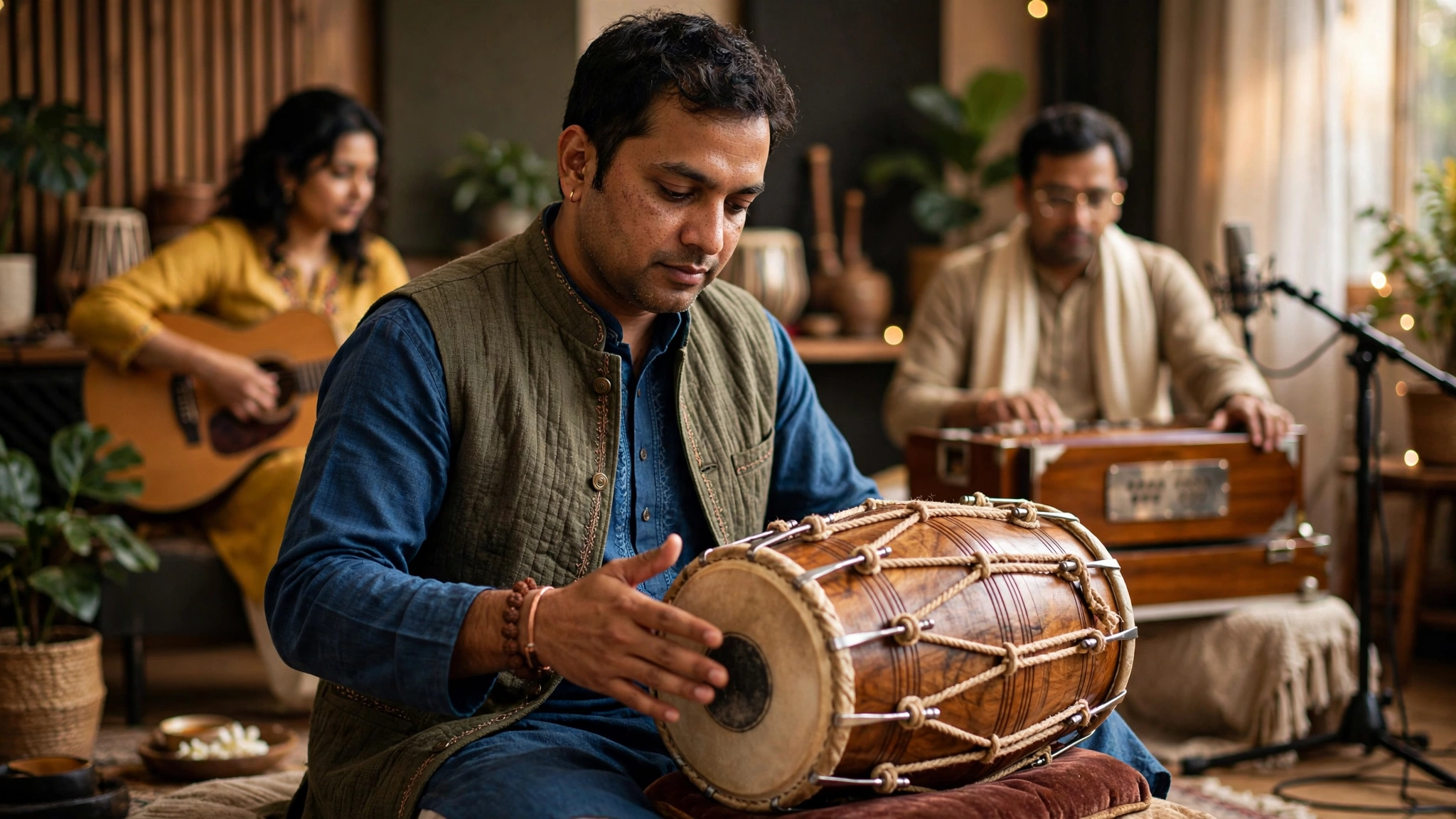

Sambhal and the Gondhali Tradition
The Gondhali tradition is closely associated with devotional performance in Maharashtra. Contemporary documentation of Gondhal describes sambal as one of the instruments supporting the performance's singing, movement and ritual atmosphere.
Historical descriptions also place sambal alongside instruments such as tuntuna and cymbals. In some local descriptions, additional percussion instruments can appear as part of the ensemble, so the exact lineup can vary by performance context.
Sambhal Performance Ensemble
Sambhal does not always function alone. In Gondhal and related performance contexts, it can be heard within a broader soundscape of voice, string, metal and percussion instruments.
Tuntuna
A simple single-string instrument frequently associated with Gondhal and other folk traditions.
Manjira / Taal
Small metal cymbals used to reinforce rhythmic cycles and accents.
Halgi
A frame-drum family instrument used in a range of Maharashtra's festival and processional contexts.
Voice & Movement
Devotional singing, narration, dance and gesture are central to the expressive character of Gondhal.
How Is Sambhal Worn During Performance?
The instrument can be suspended from the performer's neck or body with a cloth or cord strap, allowing the drums to rest at a playable height. This setup is important to the energetic performance style because the player can move, turn and dance while maintaining the rhythm.
Sambhal vs Other Indian Percussion Instruments
Sambhal should not be treated as simply another name for Dholki, Dhol or generic double-headed drum. Its distinctive identity comes from the paired side-by-side drum design, its particular beaters and its cultural association with Gondhal.
| Instrument | Distinctive feature | Typical context |
|---|---|---|
| Sambhal / Sambal | Paired side-by-side drums with contrasting registers | Gondhal, devotional and Maharashtrian folk performance |
| Dholki | Compact barrel-shaped double-headed drum | Folk, devotional, film, bhajan and contemporary performance |
| Dhol | Larger, loud double-sided drum designed for powerful projection | Processions, celebrations, wedding and stage performance |
Explore the related comparison article: Dhol vs Dholki.
Explore Sambhal Learning, Practice, Instruments & Performance Resources
This article explains the Sambhal tradition and instrument. For broader Indian percussion learning, instrument access and performance support, these SoulFul resources provide separate pathways for Mumbai, India and online audiences.
Goregaon, Mumbai & India
Explore SoulFul Musik Academy for music education, percussion learning and structured training resources.
Explore the Academy →Online Learning & Practice
Use online music-learning resources for practice, rhythm development and broader percussion study.
Explore Online Classes →Buy & Pre-Owned
For instruments and music equipment, explore new and pre-owned inventory through SoulFul Musik Store.
Visit Musik Store →Rent & Repair
For temporary instrument access, maintenance and repair support, visit SoulFul InstruRentals & Repairs.
Rentals & Repairs →Live Shows & Events
Explore event and performance services for cultural programmes, live shows and music-led experiences.
SoulFul Musik Event →Musicians & Artist Management
For artist-led performances and professional musician opportunities, explore the dedicated artist ecosystem.
Artist Management →Learning Maharashtrian Percussion
Learning Sambhal requires more than memorising beats. A strong foundation includes posture, instrument positioning, stick control, right-left coordination, dynamic control, rhythmic vocabulary and listening to the performance tradition around the instrument.
For beginners, the best starting point is usually slow controlled patterns before moving to faster combinations and performance-oriented movement. Because Sambhal has a distinctive technique and cultural setting, guided instruction from a teacher familiar with Indian percussion can be valuable.
Explore Indian Percussion Learning
SoulFul Musik Academy offers structured music education and learning formats in Mumbai, India and online. Explore the academy and related percussion resources.
Sambhal in Modern Cultural Performances
Traditional instruments can continue to evolve without losing their cultural identity. Sambhal can appear in contemporary cultural showcases, curated folk programmes, educational demonstrations and stage productions where audiences encounter Maharashtra's devotional and folk heritage in a modern presentation.
The goal should be thoughtful presentation: preserve the instrument's distinctive technique and cultural context while creating opportunities for new listeners and younger performers to experience it.
Frequently Asked Questions About Sambhal
What is Sambhal?
Sambhal is a traditional paired-drum percussion instrument associated with Maharashtra, especially the Gondhal performance tradition.
Is Sambhal also called Sambal?
Yes. Sambhal and Sambal are commonly used spelling variants for the instrument.
How many drums does Sambhal have?
It consists of two connected drum bodies that provide contrasting registers.
What are Sambhal tippari?
Tippari are the wooden beaters used to strike the paired drumheads; one may have a curved tip.
What is Gondhal?
Gondhal is a traditional Maharashtrian ritual performance featuring devotional singing, narration, movement and music.
Can beginners learn Sambhal?
Yes. Beginners can start with posture, stick control, coordination and simple rhythmic patterns under suitable guidance.