
Best Music Classes in Malad East, Mumbai: How to Choose the Right Academy
A practical guide to comparing music classes in Malad East by teaching quality, course structure, learning format, practice, performance and the needs of each student.

Instead of judging by the word “best” alone, compare how a program teaches, how students practise, and what opportunities exist beyond the weekly lesson.
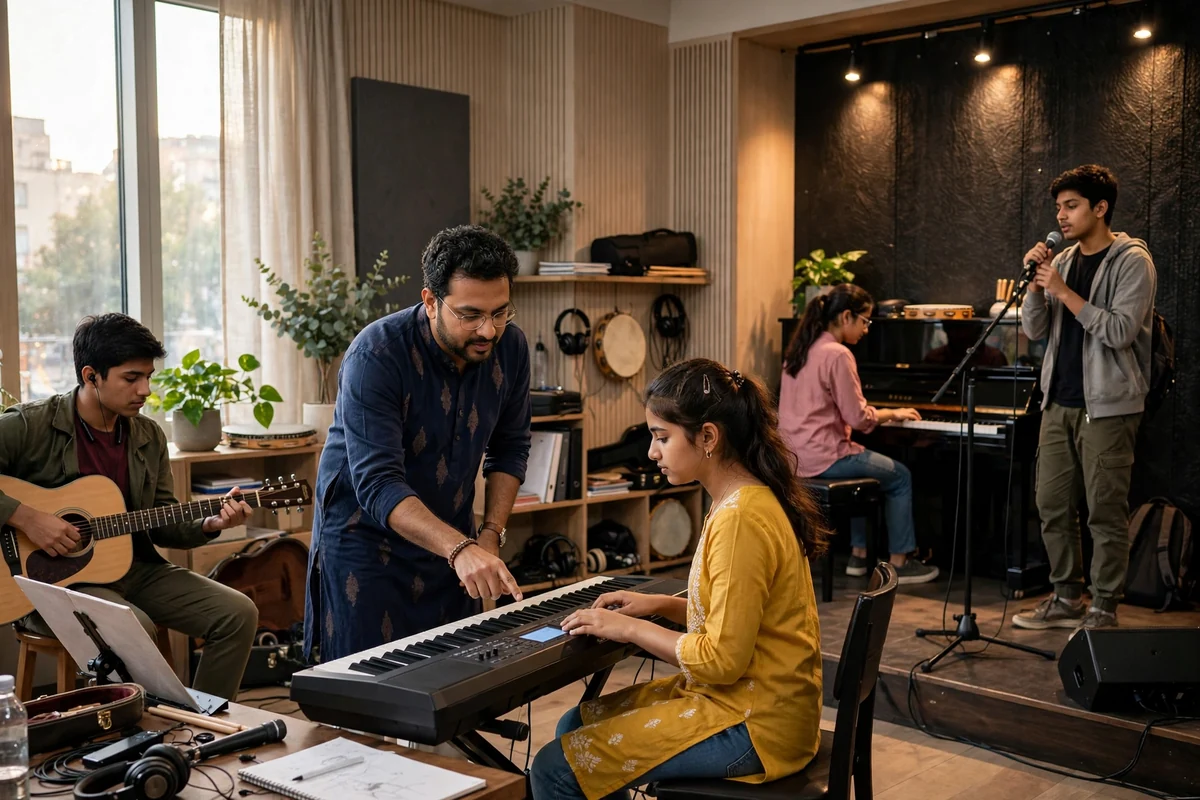
What Makes a Music Class One of the Best?
“Best” is subjective. For one student, the most important factor may be a patient beginner teacher; for another, it may be private tuition, performance preparation, flexible scheduling or an instrument-specific curriculum.
A useful comparison therefore looks beyond promotional labels and asks whether the class provides a clear path from the student's starting point to the outcome they actually want.
Teacher Quality
Look for clear explanations, practical feedback, patience and an approach suited to the learner's level.
Course Structure
A structured progression makes it easier to move from fundamentals to confident, independent playing or singing.
Student Fit
The right format depends on age, schedule, goals, preferred instrument and how much individual attention is needed.
How to Compare Music Classes in Malad East
When comparing music classes in Malad East, use a consistent checklist rather than making a decision from a headline or a single photograph.
| What to Compare | What to Look For | Why It Matters |
|---|---|---|
| Teachers | Experience, communication and teaching method | Good instruction should help students understand and correct technique. |
| Course structure | Clear beginner-to-advanced progression | Students need a learning path rather than disconnected lessons. |
| Class format | Private, group, offline and online options | Different learners benefit from different levels of attention and flexibility. |
| Practice | Guidance, routines and feedback | Progress depends on what happens between classes as well as inside them. |
| Performance | Recitals, live shows or practical opportunities | Performance can build confidence and help students apply what they learn. |
| Convenience | Location, schedule and travel time | A sustainable schedule makes regular learning easier to maintain. |
Which Music Courses Should You Look For?
A broad music academy may offer several paths. The best choice is not the one with the longest list; it is the one with the right depth for the student's goal.
Guitar Classes
Useful for students looking for acoustic or electric guitar development, chords, technique, rhythm and performance skills.
Piano & Keyboard
Structured keyboard or piano learning can cover coordination, repertoire, rhythm, technique and musical understanding.
Violin Classes
Look for careful attention to posture, bow control, intonation, listening and step-by-step progression.
Vocal & Singing
Strong vocal training should consider breath, pitch, listening, repertoire and healthy technique.
Indian Percussion
Traditional and contemporary percussion paths can develop rhythm, coordination, patterns and performance confidence.
Music Development
Music theory, ear training and broader musicianship can support students alongside practical instrument work.
Teacher Experience & Teaching Approach
The teacher has one of the biggest effects on a student's experience. Look for an instructor who can explain technique clearly, adapt lessons to the learner and give specific feedback that leads to better practice.
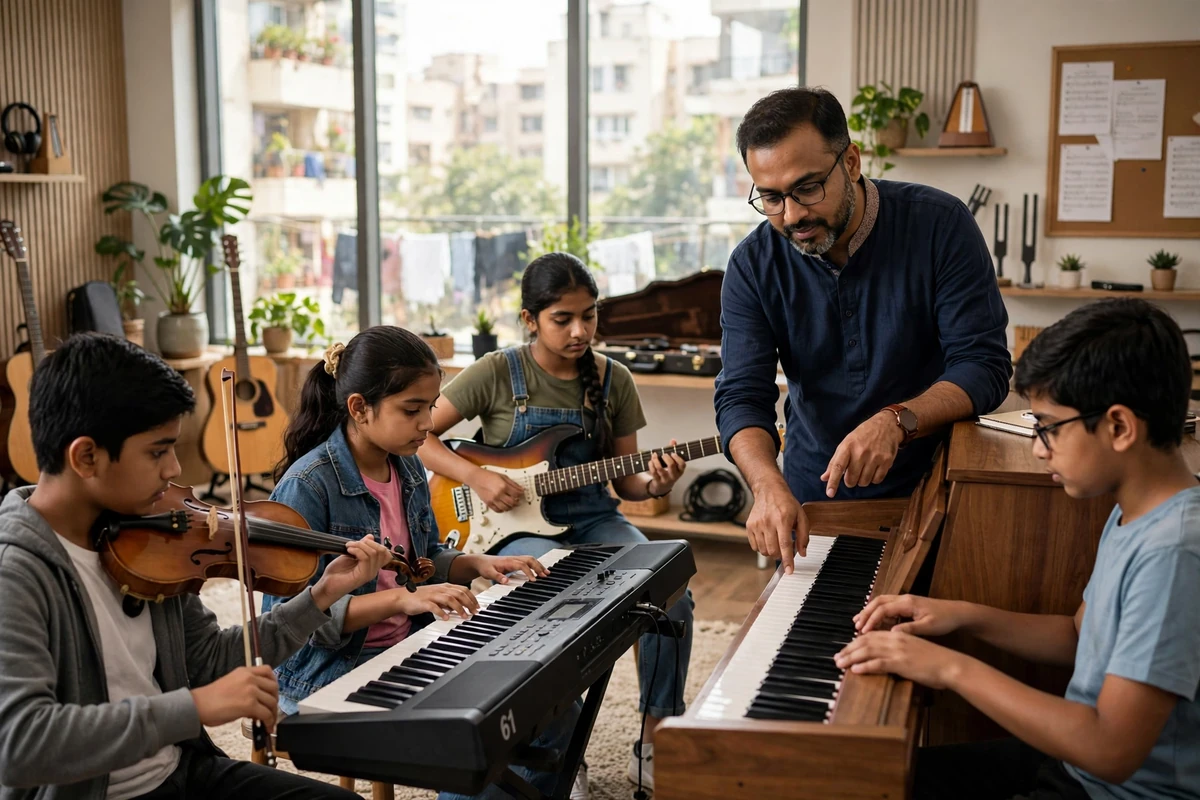
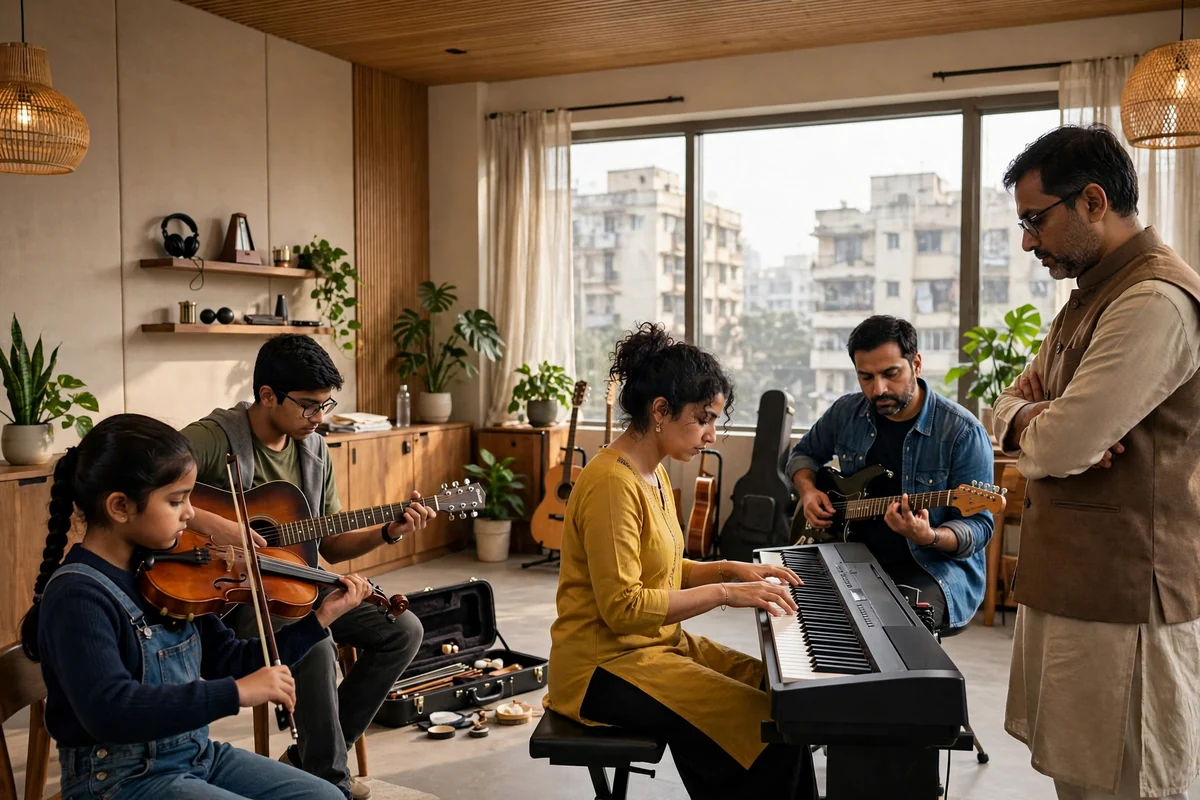
Best Music Classes for Kids, Teens & Adults
Age should influence the learning approach. Children may need short, engaging activities and strong encouragement. Teenagers may want technique, repertoire and performance goals. Adults may value flexible scheduling, practical outcomes and focused one-to-one attention.
Kids
Focus on fundamentals, engagement, listening, simple practice and steady confidence-building.
Teens
Support technique, repertoire, musical identity, performance goals and consistent practice habits.
Adults
Flexible, goal-oriented learning can work well for hobby, personal development or structured musical progress.
Private Music Tuition vs Group Classes
Neither format is automatically better. Private tuition usually creates more time for individual feedback, while group classes can add social learning, ensemble interaction and shared motivation.
Students who need targeted correction or a faster personalised pace may prefer private tuition. Students who enjoy collaboration and shared activities may prefer group learning.
Offline Music Classes vs Online Lessons
Offline learning can make in-person demonstration, instrument setup and immediate physical observation easier. Online lessons can offer scheduling flexibility and access from home.
For technique-heavy instruments, choose the format that allows the teacher to observe posture, movement and sound clearly. For theory, revision and some guided practice, online learning can be highly convenient.
Music Practice, Performance & Development
Class quality matters, but progress also comes from what students do outside lesson time. A useful academy culture encourages focused practice, listening, repetition, reflection and gradual performance exposure.
Performance Opportunities, Live Shows & Events
For students who want to perform, ask whether the wider music ecosystem provides opportunities to rehearse, appear in curated shows, participate in events or work with musicians and artists.
Learning becomes stronger when students can apply it.
Practice, rehearsal and performance can connect classroom learning with real musical situations, from small showcases to larger event environments.
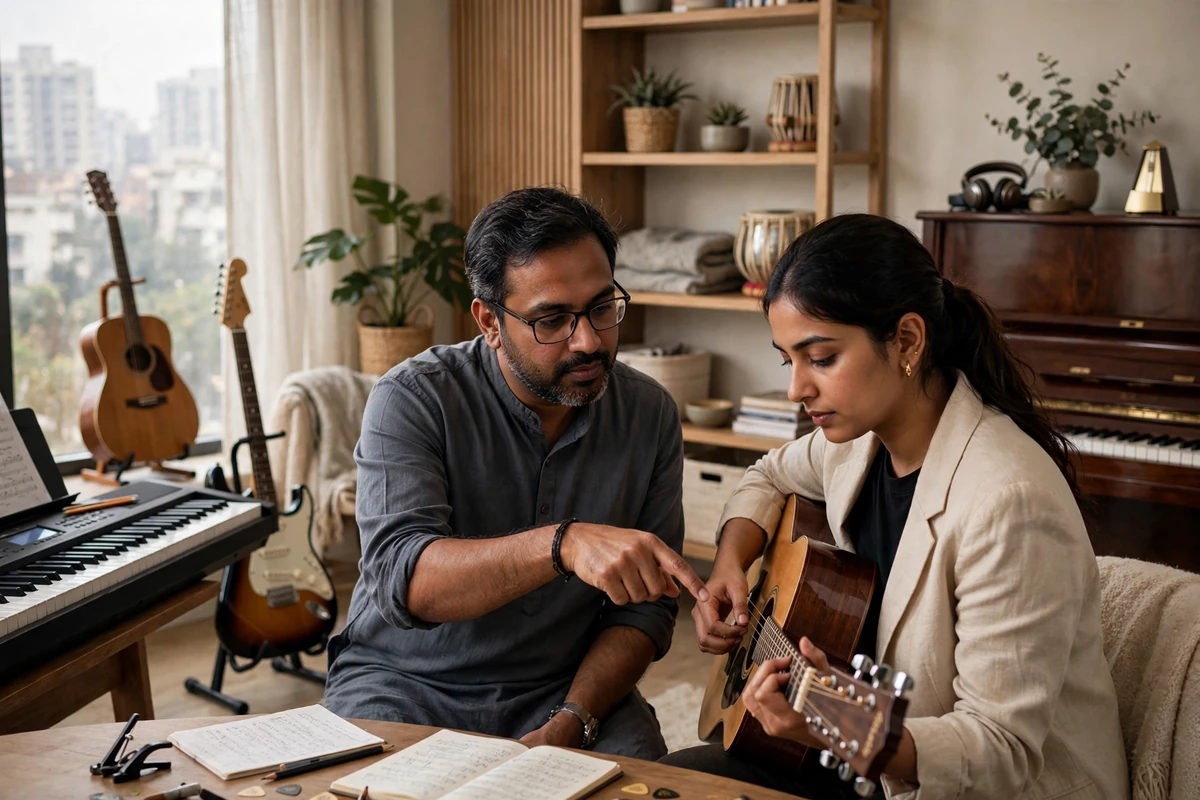
Buying, Pre-Owned, Rental & Repair Support
An integrated music ecosystem can also help students after the lesson itself. Depending on actual service availability, learners may value access to new instruments, pre-owned instruments, rentals, repairs, studio support and performance resources.
Buy & Pre-Owned
Explore the right instrument path for a learner's budget, skill level and intended use.
Rent & Repair
Rental and repair support can reduce friction when a student needs an instrument temporarily or requires maintenance.
Why Consider SoulFul Musik Academy in Malad East?
SoulFul Musik Academy can be evaluated as part of the wider Malad East music-learning ecosystem, with a focus on structured education and connected music services. The right decision should still come from the student's actual needs, available course, teacher fit and practical schedule.
For the broad local-service page, see Music Classes in Malad East. For child-focused learning, see Music Classes for Kids in Malad East.
Frequently Asked Questions
The best option depends on the learner's goals, teacher support, course structure, class format, practice needs and available opportunities. Compare those factors rather than choosing by a “best” label alone.
Compare instructors, course progression, class size, private versus group formats, practice support, performance opportunities, schedule and convenience before enrolling.
Beginner programs should start with fundamentals, posture, listening, basic technique and simple practice routines before progressing to more advanced material.
Private lessons can provide more individual attention, while group lessons can support collaboration and shared motivation. The better choice depends on the learner.
Yes. Adults can learn at beginner, intermediate or advanced levels when the schedule, pace and teaching approach fit their goals.
Some music education ecosystems also provide instrument buying, pre-owned, rental and repair services. Availability and terms should be verified for the specific service and location.
Start With the Right Malad East Music Resource
Use the main Malad East music-classes hub for broad service information, then explore the specialist pages that match your learning goal.
2 Responses